Home / Programmes / UAE Labour Law Training for HR and People Teams
UAE Labour Law Training for HR and People Teams
UAE Labour Law Training for HR teams who draft contracts, approve leave and handle exits under Federal Decree-Law No. 33 of 2021. Participants work hands on through their own policies and anonymised cases with a senior practitioner.
- Federal law, executive regulations, amendments
- Exercises on your own contracts and policies
- Free zone differences for DIFC and ADGM
- Rated 4.9/5 by 200,000+ professionals
- Certificate for every participant
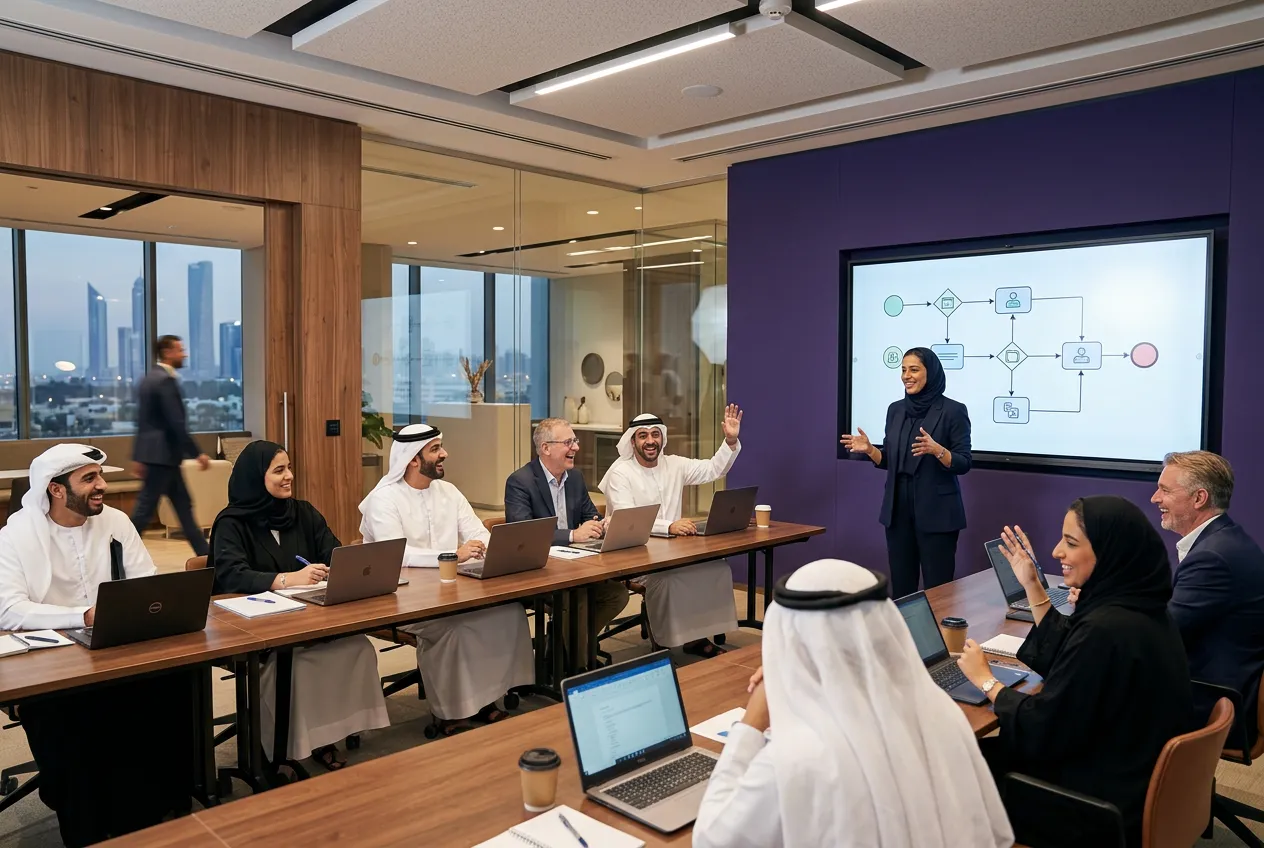
Why HR teams want a practical labour law refresher
The law keeps moving
The 2021 decree-law has been amended several times since it took effect. Policies written in 2022 may no longer match the current text.
Cases, not clause reading
Instead of reading articles aloud, the group works through realistic situations: a resignation during probation, a leave dispute, an end of service calculation.
Your documents in the room
We bring your contract templates, offer letters and handbook into the exercises so gaps show up where they actually sit.
Senior HR practitioners
Trainers have run HR and employee relations in UAE organisations. They explain how the rules work in daily practice and when to call a lawyer.
Certificate of completion
Each attendee is given a TrainingInUAE.com certificate recording the labour law topics studied, for CPD files and HR development plans.
A marker checked at day 90
We agree a practical marker with you, such as policy updates completed or fewer queries escalated to legal, and review it three months on.

How UAE Labour Law Training for HR works hands on
Reading a decree-law does not prepare anyone for the employee standing at the HR desk with a question. Confidence comes from applying the rules to real situations, checking your answer against the text and seeing where your own documents need work. That is the core of every session.
Scope the gaps
We talk to your HR lead about the questions that come up most, recent disputes, and which policies have not been reviewed lately.
Share your templates
You send contract templates, offer letters and handbook sections in advance. We prepare exercises around them with personal data removed.
Explain the rule
The trainer sets out one topic, such as notice periods or leave, with reference to the decree-law and executive regulations.
Apply it to cases
Groups work through anonymised employee situations, decide what the law requires and note where advice from counsel is needed.
Check your documents
Participants mark clauses in their own templates that may need updating, building a review list for your legal team.
Close the actions
HR owns the review list after the session. Three months later we sit down together and compare progress with the agreed marker.

Cases and document reviews take up roughly 80% of the time. The trainer briefly explains a topic, then small groups apply the rules to your templates and anonymised scenarios, and compare answers.
- Laptops open from the first 15 minutes
- Your own documents, data and tasks
- A finished output from every lab
- Prompt library to keep using on Monday
What the UAE labour law course covers
The outline follows the employment relationship from hiring to exit, with a final module on free zone rules. The one day format teaches the essentials. Adding a second day brings deeper case work on disputes, discipline and end of service.
Module 1. The legal framework and scope
Federal Decree-Law No. 33 of 2021, its executive regulations in Cabinet Resolution No. 1 of 2022, later amendments, who the law covers and which workers fall under other rules.
🛠 Participants practise: Map which law applies to each employee group in your organisation
Module 2. Recruitment and employment contracts
Work permits, offer letters, contract terms, the work models the law recognises such as full time, part time, temporary and flexible, and probation of up to six months.
🛠 Participants practise: Review your offer letter and contract template against the current rules
Module 3. Working hours, wages and the WPS
Normal working hours, overtime, rest days, Ramadan hours, paying wages through the Wage Protection System and permitted deductions.
🛠 Participants practise: Work through three overtime and payroll cases and check the answers
Module 4. Leave entitlements
Annual leave, sick leave, maternity and parental leave, bereavement and study leave, and how unused leave is handled at the end of employment.
🛠 Participants practise: Calculate leave balances for anonymised employees with tricky histories
Module 5. Workplace conduct and protection
The law's prohibitions on discrimination, harassment and bullying, health and safety duties, and how HR policies and investigations should reflect them.
🛠 Participants practise: Audit your harassment and grievance policy against the law’s wording
Module 6. Discipline, grievances and disputes
Disciplinary steps, documenting fairly, internal grievances and the route a labour complaint takes through MoHRE and, where needed, the courts.
🛠 Participants practise: Sequence the steps for a realistic disciplinary case from your sector
Module 7. Ending employment and end of service
Resignation and termination, notice periods, the end of service gratuity calculation for full time workers, final settlement and cancelling permits.
🛠 Participants practise: Calculate a full final settlement for an anonymised leaver
Module 8. Free zones, Emiratisation and insurance
Where DIFC and ADGM part ways with the federal rules, how other free zones apply their own regulations, Emiratisation duties and the unemployment insurance scheme.
🛠 Participants practise: Compare one policy across mainland, DIFC and ADGM requirements
Shaped around your workforce and jurisdictions
A mainland contractor with thousands of site workers and a DIFC firm with fifty professionals face different questions. We find out where your people are employed, which policies you use and where queries pile up, and design the cases from there.
Workforce and jurisdiction check
We confirm where your entities are licensed, mainland or free zone, and which employee groups and work models you use.
Exercises on your documents
Your contract templates, handbook and common cases, anonymised, become the material groups work through during the day.
Pitched to each HR role
HR specialists, HR managers and line managers each get suitable depth, and sessions can switch between Arabic and English.

Built for every level
HR directors and heads
Policy risk, recent amendments, free zone differences and when to involve legal counsel in a decision.
HR specialists and officers
Contracts, leave, payroll questions and end of service calculations handled correctly every day.
Payroll and finance teams
Wages, overtime, deductions, the WPS and final settlement figures, worked through on real examples.
Line managers
What managers must know about hours, leave, conduct and discipline before they talk to an employee.
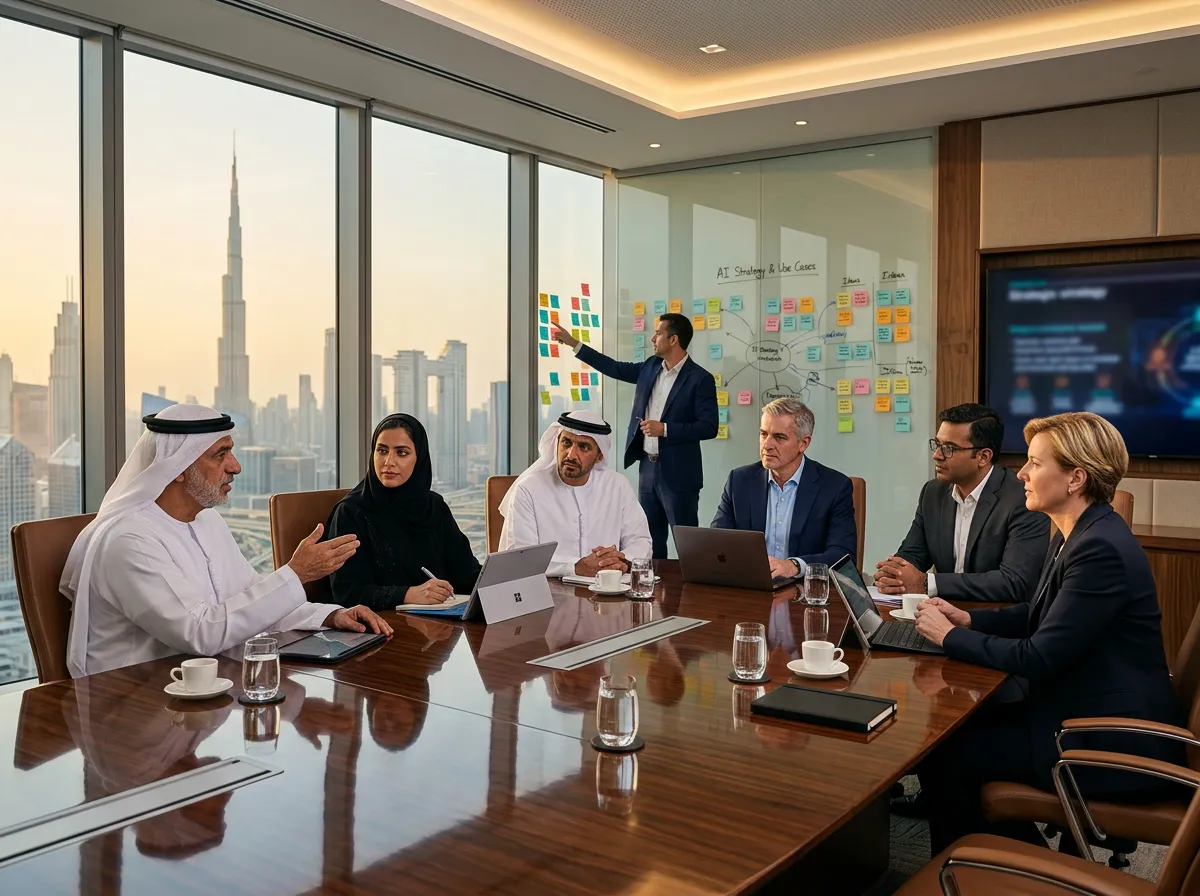
A certificate for every HR participant
Everyone completing the course gets a TrainingInUAE.com completion certificate naming each labour law topic studied. It supports CPD and development records. It is not a legal qualification and is not accredited by any government body.
- Issued to every participant who completes the hands on labs
- Shows the programme name, hours, tools covered and date
- Digital PDF, ready to add to LinkedIn and HR records
- Attendance and lab completion report for HR or L&D, on request

Organisations that book this course
Every private sector employer works with the labour law, but some face more complex questions because of workforce size, shift patterns or several jurisdictions at once.
Construction and contracting
Large site workforces, overtime, accommodation and safety duties, often with several entities across emirates.
Hospitality and retail
Shift rotas, part time and temporary staff, rest days and high staff turnover with frequent final settlements.
Financial services
Groups with mainland, DIFC and ADGM entities that need HR teams to know which rules apply to whom.
Healthcare
Clinical and support staff on varied shifts, with licensing, working hours and leave questions every week.
Logistics and manufacturing
Warehouse, transport and factory workforces where hours, overtime and safety need careful handling.
Free zone companies
Firms licensed in zones such as JAFZA, DMCC or RAKEZ that need to understand their zone's rules alongside federal law.
Teams our trainers have worked with















Plus 400+ enterprise clients across 16+ countries.
Trainers who have handled UAE employee relations
Our facilitators are senior HR and employee relations practitioners who have applied UAE labour rules in large organisations. They teach practical application and are clear about where legal advice is needed.
Leadership and management faculty
For managers, senior leaders and leadership offsites
- Senior people who have run teams and led change
- Drawn from a visiting faculty network across 9 IIMs
- Coaching, decision making and difficult conversations
- English, Arabic or bilingual delivery
Sales and customer trainers
For sales, account and service teams
- Practitioners who have closed deals and run sales teams
- Role plays built on your real deals and customers
- Discovery, objection handling and negotiation
- B2B, retail and hospitality experience
AI and digital trainers
For AI adoption and productivity programmes
- 17+ years in AI and corporate training
- Have trained 200,000+ professionals in 16+ countries
- Copilot, ChatGPT, Claude and Gemini on real work
- Part of a pool of around 300 trainers worldwide
Why labour law knowledge matters for UAE HR teams
Federal Decree-Law No. 33 of 2021 took effect on 2 February 2022 and governs most private sector employment, with detail set out in Cabinet Resolution No. 1 of 2022. It has been amended since. In 2022 the three year cap on fixed term contracts was removed, and changes in force from 31 August 2024 extended the time limit for labour claims to two years and gave MoHRE power to decide smaller disputes.
Free zones add another layer. DIFC applies its own Employment Law No. 2 of 2019 and ADGM its Employment Regulations 2024, in force since 1 April 2025, while other free zones run their own regulations alongside the federal law. UAE Labour Law Training for HR gives teams a clear working picture of these rules. We deliver across all emirates and online. This is training, not legal advice.

How the course can run
Half day update briefing
Recent amendments and their practical impact, for HR teams who already know the basics well.
One day core course
The full employment cycle from hiring to exit, built around cases and your own templates.
Two day practitioner course
Adds deeper work on discipline, disputes, end of service and free zone comparisons.
Line manager module
A short, focused session on what managers must know before acting on hours, leave or conduct.
Virtual live sessions
Interactive online delivery with breakout case work for HR teams spread across emirates.
UAE Labour Law Training for HR: FAQs
Does the course give us legal advice on our cases?
No. The course explains what Federal Decree-Law No. 33 of 2021, its executive regulations and the main free zone rules say, and how HR teams apply them in practice. For a specific dispute or decision you still need a qualified lawyer. Participants learn to recognise when a situation needs legal counsel and what information to prepare.
Does the course cover the latest amendments?
Yes. We review the current text before each programme, including the 2022 change to fixed term contracts and the 2024 amendments on labour claims and dispute handling. If a new change is announced shortly before your session, we include it and explain what is confirmed and what still awaits detail.
Do you cover free zone employment rules?
We do. DIFC and ADGM have their own employment laws, and other free zones apply their own regulations alongside the federal law. The final module compares the key differences, such as DIFC’s workplace savings scheme in place of a traditional gratuity. We go deeper on the zones where your entities are licensed.
Will we review our own contracts and policies?
If you share them, yes. Groups check your contract templates, offer letters and handbook sections against the current rules and list clauses that may need updating. That list goes to your legal team or adviser for final review. We do not redraft legal documents ourselves.
Who should attend?
HR officers, specialists and managers who deal with contracts, leave, payroll and exits. Payroll and finance staff benefit from the wages and end of service modules. Line managers attend a shorter module focused on what they must know before acting. Mixed groups work well when roles share the same cases.
Is an Arabic version of the course available?
Yes, the whole course can run in Arabic, or bilingually with English. The Arabic text of the law is the official version, so some HR teams prefer to work with it directly. Materials can reference key terms in both languages so participants can explain rules to employees in either.
Does it include end of service calculations?
Yes. Participants work through gratuity and final settlement examples for full time workers, including unused leave, notice and deductions. We use anonymised cases with realistic histories, such as unpaid leave or changes in basic salary, and compare answers against the law and your policy.
How quickly can we run a session?
Send us a clear brief and our proposal arrives in 24 to 48 hours. A standard course can start soon after, subject to trainer availability. If you want exercises built on your own templates, allow time for you to share them and for us to prepare anonymised cases.
Check your HR practice against the law
Keep exploring
Related programmes
- AI Training for HR Teams in the UAE
- Compliance and AML Training in UAE for Frontline and Risk Teams
- Performance Management Training UAE for Line Managers
- First Time Manager Training in UAE
- Conflict Resolution Training in Dubai for Managers and Teams
- AML Training for Real Estate Agents UAE
- AML Training UAE for Front Line, Compliance and Leadership
- Budgeting and Forecasting Training UAE for Finance and Managers
- Corporate Tax Training UAE for Finance and Tax Teams
- UAE E-Invoicing Training for Finance, Tax and IT Teams
- Finance for Non-Finance Managers UAE
- Data Protection Training UAE
The UAE’s one stop shop for corporate training. Hands on workshops delivered across Dubai and all seven emirates. Licensed UAE company registered in Ajman, with a delivery team based in Dubai.
- AI Agents and Automation Training: Build Working Workflows
- ChatGPT Training for Everyday Business Work
- Claude AI Training for Document Heavy Teams
- Microsoft Copilot Training for Microsoft 365 Users
- Prompt Engineering Training Across Every Major AI Tool
- Business Writing Training
- Communication Skills Training
- Presentation Skills Training
- All programmes
© 2026 TrainingInUAE.com. All rights reserved.