Home / Programmes / Conflict Resolution Training in Dubai for Managers and Teams
Conflict Resolution Training in Dubai for Managers and Teams
Conflict Resolution Training in Dubai and the wider UAE for managers, HR partners and teams who need to settle friction before it becomes a grievance. People practise hands on with disputes drawn from their own workplace.
- Rehearse disputes from your own teams
- Mediation steps managers can use tomorrow
- Arabic, English or bilingual delivery
- Rated 4.9/5 by 200,000+ professionals
- Certificate for every participant
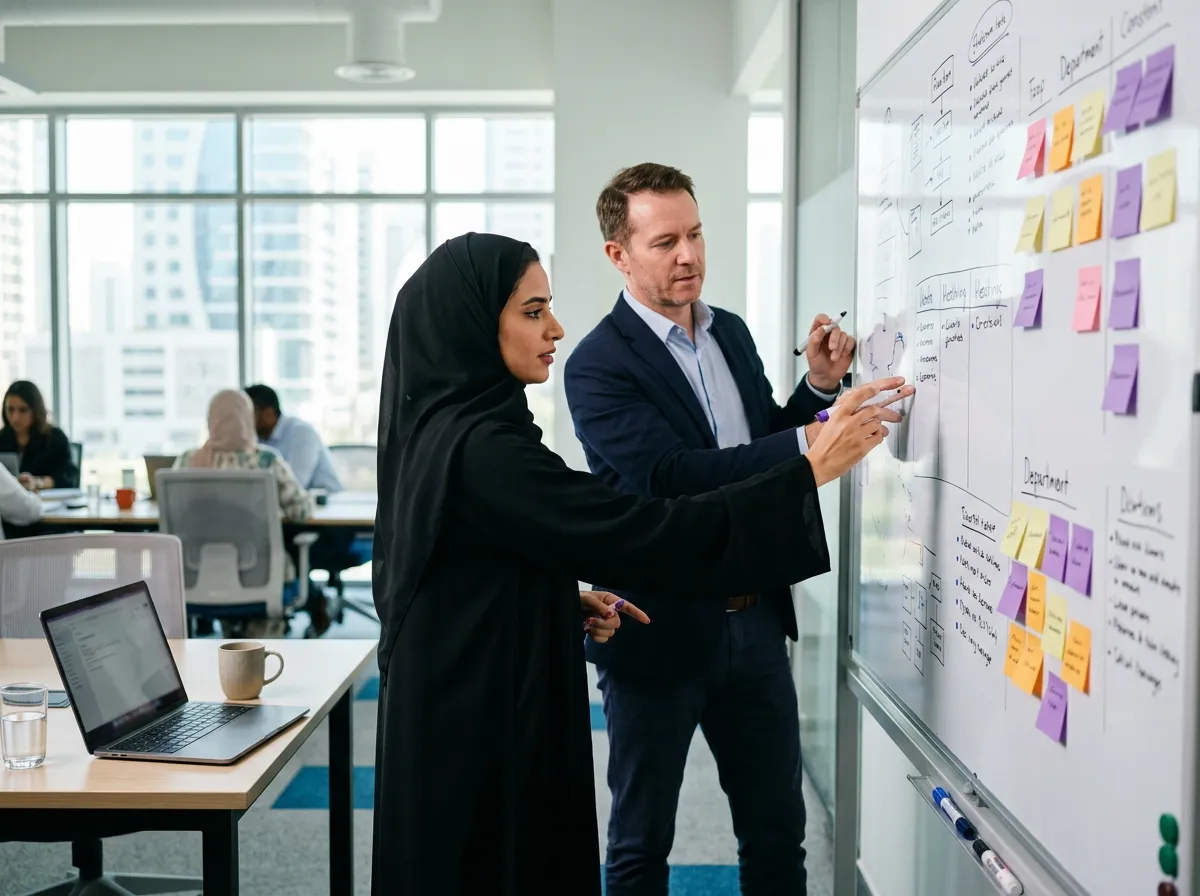
Why organisations bring us in when tension is rising
Early action, lower cost
Most workplace disputes start as a small irritation nobody named. We teach people to raise it in week one, when a ten minute talk still fixes it.
Conversations, not lectures
Participants spend the day running the talks they dread, with colleagues playing the other side, until the opening sentence sounds calm and fair.
Cases from your floor
We build scenarios from anonymised situations in your business: a shift swap gone wrong, a credit taken, a manager accused of favouritism.
Facilitators with experience
Our trainers have handled team disputes, restructures and tense client relationships themselves. They coach from practice and can say what worked for them.
Certificate for each person
Everyone who completes the workshop receives a TrainingInUAE.com certificate of completion for their learning record and development plan.
A measure agreed up front
We choose one indicator with you, such as formal complaints, HR escalations or team pulse scores, and report on it at 90 days.

How Conflict Resolution Training in Dubai works in practice
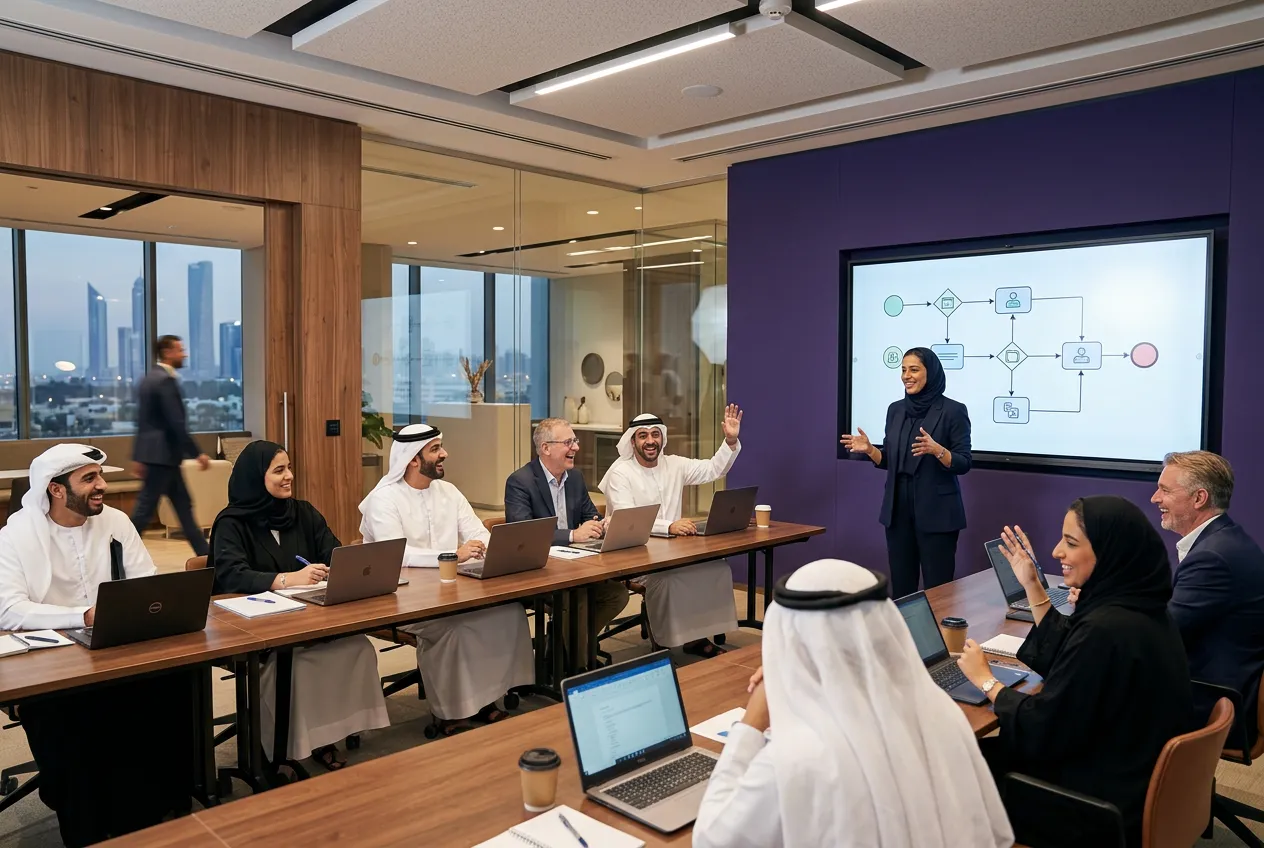
Knowing a conflict model does not help much when someone raises their voice across the desk. What helps is having said the calming sentence before, in a safe room, and felt it work. So the workshop is built around repeated, coached rehearsal of real disagreements.
Map the friction
We talk to HR and line managers about where disputes keep appearing, between which roles, and how they are currently handled or avoided.
Bring a live case
Each participant prepares one disagreement from their work, past or current, with names and sensitive details removed before the session.
Learn one move
The trainer demonstrates a single technique, such as separating positions from interests, using a short scene from a Gulf workplace.
Rehearse in trios
One person runs the conversation, one plays the other side, one observes. Then they swap, so everybody practises every role.
Debrief honestly
Observers report the exact words that helped or hurt. The speaker reruns the moment that went badly until it lands better.
Follow through at work
Each person chooses one real conversation to hold within two weeks, and we review results with HR at the 90 day point.

Roughly 80% of the time goes to role play and debrief. The trainer gives a short input, then trios rotate between speaker, other party and observer on each person’s own case.
- Laptops open from the first 15 minutes
- Your own documents, data and tasks
- A finished output from every lab
- Prompt library to keep using on Monday
What the conflict resolution course covers
The outline follows the life of a dispute, from the first signs of tension to repairing the relationship afterwards. A one day workshop covers the core; the two day version adds mediation practice and deeper work on difficult personalities.
Module 1. How conflict starts and grows
Why small disagreements escalate, the common triggers in busy teams and the cost of avoidance. Participants map where their own team sits on the escalation curve.
🛠 Participants practise: Map a current team tension and mark where it could have stopped
Module 2. Your own conflict style
Whether you tend to compete, avoid, accommodate or compromise, and when each helps or harms. A short self assessment followed by peer discussion.
🛠 Participants practise: Compare your default style with how a colleague sees you react
Module 3. Culture, hierarchy and saving face
How views on directness, seniority and public disagreement differ across nationalities, and how to raise a problem without causing embarrassment in front of others.
🛠 Participants practise: Reword a blunt message so it respects seniority and still gets heard
Module 4. Opening the difficult conversation
Choosing the moment, stating the issue without blame and inviting the other view. The first thirty seconds matter most, so we rehearse them repeatedly.
🛠 Participants practise: Open a conversation you have been postponing, three times with feedback
Module 5. Listening under pressure
Staying calm when you disagree, reflecting back what you hear and asking questions that lower the temperature instead of winning the point.
🛠 Participants practise: Handle an emotional colleague without interrupting or defending yourself
Module 6. Finding interests and options
Moving from fixed positions to the needs underneath, generating options together and testing them against what each side can accept.
🛠 Participants practise: Turn a two sided standoff from your work into three workable options
Module 7. Mediating between team members
A simple structure for a manager or HR partner sitting between two people: preparation, ground rules, separate and joint conversations, and a written agreement.
🛠 Participants practise: Mediate a role played dispute between two team members end to end
Module 8. Agreements, follow up and repair
Writing clear next steps, checking in afterwards and rebuilding trust once the heat has gone. Closes with each person's plan for a real conversation.
🛠 Participants practise: Draft the follow up note and check in plan for your own case
Adapted to the disputes your organisation actually has
Friction between shifts in a hotel looks different from tension between consultants and partners in a firm. We find out where conflict sits in your organisation and design the role plays around it.
Confidential discovery
We hold short conversations with HR and selected managers to understand recurring disputes, without asking anyone to name individuals.
Scenarios from your context
Anonymised situations become the practice cases, from customer disputes and shift clashes to disagreements between departments or partners.
Fit to level and language
Supervisors, managers and HR partners each get the depth they need, delivered in English, Arabic or both.
Built for every level
Senior leaders
Handling disagreement at leadership level, conflict between departments and setting the tone for how disputes are raised.
Managers and supervisors
Spotting tension early, holding the hard conversation and mediating between team members before HR is involved.
HR and employee relations
Structured mediation, documenting agreements and coaching managers through difficult team situations.
Frontline and customer teams
Calming angry customers or colleagues, keeping composure and knowing when and how to escalate a situation.
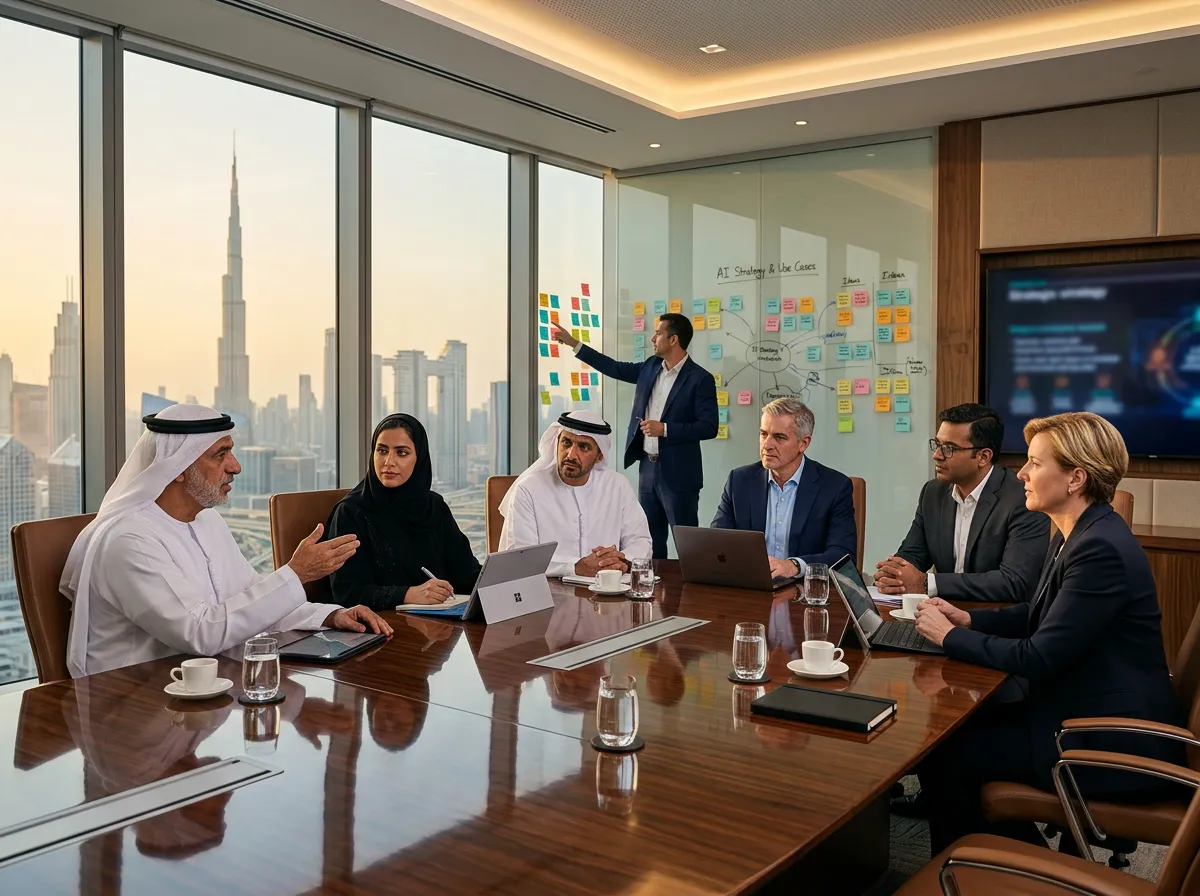
Every participant leaves with a certificate
Each person who completes the workshop receives a certificate of completion from TrainingInUAE.com, listing the conflict resolution skills practised. It is a corporate training record for development plans, not a government accredited or legal qualification.
- Issued to every participant who completes the hands on labs
- Shows the programme name, hours, tools covered and date
- Digital PDF, ready to add to LinkedIn and HR records
- Attendance and lab completion report for HR or L&D, on request

Sectors where we resolve the most friction
Conflict appears everywhere, but it costs most where teams work long shifts, under pressure, with customers or partners watching. These are the sectors where we often run this programme.
Hospitality
Hotel and restaurant teams where shift rotas, guest complaints and mixed nationality crews create daily friction to manage.
Healthcare
Hospitals and clinics where clinical and administrative staff disagree under pressure and families can become upset quickly.
Construction and contracting
Project teams handling disputes with subcontractors, consultants and clients over scope, delays and site responsibilities.
Logistics and operations
Warehouse and transport teams where supervisors manage large crews, tight deadlines and handovers between shifts.
Professional services
Firms where senior specialists clash over credit, priorities and client ownership, and partners need calm, fair resolution.
Government and public service
Service centres and departments dealing with frustrated customers and cross team disagreements on process and responsibility.
Teams our trainers have worked with














Plus 400+ enterprise clients across 16+ countries.
Trainers who have sat in the difficult chair
Our facilitators are senior practitioners who have led teams through disputes, restructures and tough negotiations in the region. They coach role plays with honesty and practical examples.
Leadership and management faculty
For managers, senior leaders and leadership offsites
- Senior people who have run teams and led change
- Drawn from a visiting faculty network across 9 IIMs
- Coaching, decision making and difficult conversations
- English, Arabic or bilingual delivery
Sales and customer trainers
For sales, account and service teams
- Practitioners who have closed deals and run sales teams
- Role plays built on your real deals and customers
- Discovery, objection handling and negotiation
- B2B, retail and hospitality experience
AI and digital trainers
For AI adoption and productivity programmes
- 17+ years in AI and corporate training
- Have trained 200,000+ professionals in 16+ countries
- Copilot, ChatGPT, Claude and Gemini on real work
- Part of a pool of around 300 trainers worldwide
Why conflict skills matter in UAE workplaces
UAE teams bring together colleagues from many countries, and ideas about directness and respect for seniority vary widely. A comment that one person sees as honest can feel disrespectful to another. The UAE labour law, Federal Decree-Law No. 33 of 2021, prohibits bullying and verbal or psychological violence at work, so how managers handle tension carries real weight for employers.
When disputes do escalate, the Ministry of Human Resources and Emiratisation expects them to be raised with it first so an amicable settlement can be attempted, and free zones run their own processes. Conflict Resolution Training in Dubai helps teams settle issues well before that stage. We deliver on site in Dubai and across all seven emirates, and online for GCC colleagues. This is skills training, not legal advice.
Ways to run the programme
Half day module
Focused on one area, such as opening hard conversations, ideal as part of a wider manager programme.
One day workshop
The core course from early signs to agreement, with most of the day spent in rehearsal on real cases.
Two day programme
Adds structured mediation practice and difficult personalities, suited to managers and HR partners.
Manager series
Short sessions over several weeks, with a real conversation held between each one and reviewed next time.
Live online sessions
Interactive virtual workshops with breakout rehearsals for teams spread across emirates or offices.
Conflict Resolution Training in Dubai: FAQs
Who should attend conflict resolution training?
Managers and supervisors benefit most, because they are usually first to see tension in a team. HR and employee relations staff join for the mediation modules. Frontline teams who handle upset customers attend a shorter version focused on staying calm, listening and knowing when to escalate. We can run mixed groups or separate sessions by level.
How long is the workshop?
The core course runs as one full day. A two day version adds a structured mediation module and more time on difficult personalities. Single modules can be delivered as half days inside a wider leadership or first time manager programme, and some clients prefer a short series with real conversations held between sessions.
Will participants practise on real situations?
Yes, that is the centre of the day. Each person brings an anonymised disagreement from their own work, and the group rehearses it in trios with feedback. Real cases make the practice stick, because participants walk out with the exact words they will use in a conversation they actually need to have.
Is it suitable for multicultural teams?
It is designed for them. One module focuses entirely on how culture, hierarchy and the wish to save face shape conflict. Participants compare how the same situation is read differently, then practise raising problems in a way that respects seniority and still gets the issue resolved.
Can you deliver it in Arabic?
Yes. We deliver in English, in Arabic or bilingually. Conflict is an emotional topic, and many people find it easier to rehearse a difficult conversation in their first language. For mixed groups the trainer moves between languages and materials can be prepared in both.
Do you cover UAE labour law?
We explain the context at a practical level, for example that the labour law prohibits bullying and harassment and that disputes go to MoHRE or the free zone authority before the courts. We do not give legal advice. For specific legal questions we recommend your legal team or adviser.
Can sessions be recorded?
Input segments can be recorded for internal use if it is agreed in advance. We normally do not record the role plays, because people practise much more openly when they know a rehearsal of a sensitive conversation is not being filmed.
How quickly can you start?
A proposal reaches you within 24 to 48 hours of a clear brief. The start date then depends on how much discovery and custom scenario writing you want, and on trainer availability. When tension in a team is already high, we can usually agree a short first session quickly and build the full programme around it.
Settle tension before it escalates
Keep exploring
Related programmes
- Soft Skills Training in Dubai and Across the UAE
- Emotional Intelligence Training in UAE
- Negotiation Skills Training in UAE
- Workplace Culture Training in UAE for Diverse Teams
- First Time Manager Training in UAE
- Critical Thinking Training Dubai
- Stress Management Training in Dubai
- Workplace Wellbeing Training UAE for Healthier, Steadier Teams
The UAE’s one stop shop for corporate training. Hands on workshops delivered across Dubai and all seven emirates. Licensed UAE company registered in Ajman, with a delivery team based in Dubai.
- AI Agents and Automation Training: Build Working Workflows
- ChatGPT Training for Everyday Business Work
- Claude AI Training for Document Heavy Teams
- Microsoft Copilot Training for Microsoft 365 Users
- Prompt Engineering Training Across Every Major AI Tool
- Business Writing Training
- Communication Skills Training
- Presentation Skills Training
- All programmes
© 2026 TrainingInUAE.com. All rights reserved.