Home / Programmes / Corporate Tax Training UAE for Finance and Tax Teams
Corporate Tax Training UAE for Finance and Tax Teams
Corporate Tax Training UAE that takes your finance team from reading the law to preparing a defensible computation. Participants work hands on with anonymised figures from your own ledgers, contracts and related party arrangements, guided by senior finance trainers.
- Built on your own trial balance
- Checked against current FTA guidance
- Certificate for every participant
- Rated 4.9/5 by 200,000+ professionals
- Certificate for every participant

Why finance directors choose this programme
Computation, not commentary
Most of the day is spent moving from accounting profit to taxable income on real schedules. People leave knowing which adjustments apply to their entity and why.
Your structure on the table
Mainland companies, free zone entities and groups with several licences face different questions. We build exercises around the entities you actually run.
Current rules only
Content is reviewed against the latest Federal Tax Authority guides, Ministry of Finance decisions and public clarifications before every delivery, so nobody learns a rule that has since changed.
Trainers who have filed
Our facilitators are senior finance and tax practitioners who have sat with auditors, prepared returns and answered awkward questions from a CFO.
Certificate on completion
Each participant who attends in full receives a TrainingInUAE.com certificate of completion listing the modules covered, useful for CPD records and appraisals.
A 90 day check
We agree a readiness measure up front, such as open adjustment items or documentation gaps, and report on it with your finance lead 90 days later.

How Corporate Tax Training UAE works in the room
Tax law reads clearly until you apply it to a messy ledger. Interest expense, a payment to a sister company or a fine paid last quarter all raise questions a slide cannot answer. So participants work through those items themselves, and the trainer challenges every conclusion.
Share sample data
Before the session you send anonymised extracts: a trial balance, a few intercompany agreements and a list of unusual expenses from the last year.
Short rule briefing
The trainer explains one area at a time, for example deductibility of entertainment costs, in plain language with the relevant article named.
Apply it in groups
Small groups mark up your schedules, decide which adjustments apply and note where they need more facts or an adviser’s view.
Challenge and review
Each group presents its reasoning. The trainer and peers test it the way an auditor or the FTA might, so weak arguments surface early.
Build the working file
Participants assemble a computation template and documentation checklist they can reuse at year end, adapted to your chart of accounts.
Follow up at 90 days
We meet the finance lead again to review the agreed measure and list what still needs attention before the next filing.

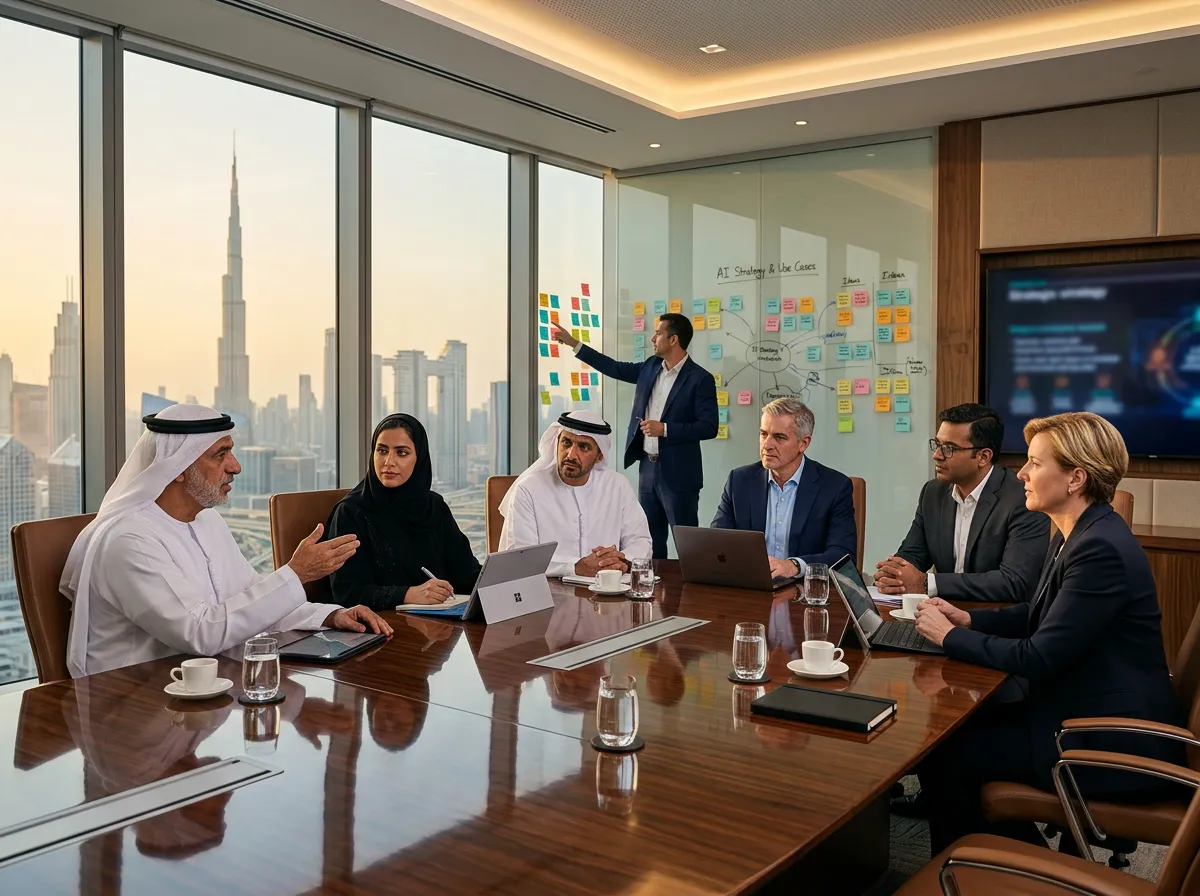
Roughly four fifths of the session is practical. Short explanations of a rule are followed by groups applying it to schedules drawn from your business, then defending their answer to the room.
- Laptops open from the first 15 minutes
- Your own documents, data and tasks
- A finished output from every lab
- Prompt library to keep using on Monday
What our Corporate Tax Training UAE covers
Eight modules follow the order a finance team meets the tax in practice, from understanding who is in scope to filing and keeping records. Depth can shift towards free zones, groups or transfer pricing depending on your structure.
Module 1. The law and who is in scope
Federal Decree-Law No. 47 of 2022, the start for financial years beginning on or after 1 June 2023, resident and non resident persons, and exempt categories.
🛠 Participants practise: Classify each entity in your group and record why it is in scope
Module 2. Rates, reliefs and registration
The 0% and 9% bands, how Small Business Relief works as an election and its current end date, and registering through the FTA's EmaraTax platform.
🛠 Participants practise: Check registration status and relief eligibility for your own entities
Module 3. From accounting profit to taxable income
Starting from the financial statements, then working through exempt income, non deductible expenses, interest limitation and the treatment of provisions and fines.
🛠 Participants practise: Turn a real trial balance into a draft taxable income figure
Module 4. Free zone persons
What makes a Qualifying Free Zone Person, qualifying versus non qualifying income, substance requirements and why filing is still required at a 0% rate.
🛠 Participants practise: Sort a free zone entity’s revenue lines into qualifying and other income
Module 5. Transfer pricing and related parties
The arm's length principle, identifying related parties and connected persons, common intercompany charges and what documentation the FTA may ask to see.
🛠 Participants practise: Review one intercompany agreement and list the evidence that supports its price
Module 6. Groups, losses and the top-up tax
Tax groups, transferring losses, carrying losses forward, and the 15% Domestic Minimum Top-up Tax for large multinational groups from 2025.
🛠 Participants practise: Map your group structure and mark which rules affect each entity
Module 7. Returns, payment and penalties
Filing and paying within nine months of the end of the tax period, what the return asks for, and how penalties and voluntary disclosures operate.
🛠 Participants practise: Walk through a mock return using figures from your draft computation
Module 8. Records, controls and year end
Record keeping duties, building tax checks into the monthly close, working with auditors and advisers, and handling e-invoicing alongside tax data.
🛠 Participants practise: Write a year end tax checklist with owners and dates for your team
Customised to your entities and systems
A trading company with one mainland licence and a holding group with free zone subsidiaries need very different days. We shape the programme around your structure, your ERP and the questions your auditors raised last time.
Scoping call
A short call with your finance director or tax manager to map entities, year ends and the areas causing the most uncertainty.
Exercises from your ledgers
We turn anonymised extracts from your accounts and contracts into the case material, reviewed with you so nothing confidential leaves the room.
Pitched by role and language
Accountants get the line by line detail, managers get the decisions and risks, and delivery runs in English, Arabic or both.

Built for every role
CFOs and finance directors
Risk areas, governance, sign off responsibilities and the questions to put to advisers and auditors before filing.
Accountants and tax teams
Detailed computation, adjustments, free zone tests, transfer pricing files and preparing the return itself.
Business and budget owners
How commercial decisions such as intercompany charges, entertainment spend or new entities affect the tax position.
Audit, risk and internal control
Testing tax controls, documentation standards and how corporate tax fits into the wider control framework.
A certificate for every participant
Everyone who completes the programme receives a certificate of completion from TrainingInUAE.com showing the modules and practical work covered. It records in-house corporate training for your learning files. It is not a professional tax qualification or an FTA accreditation.
- Issued to every participant who completes the hands on labs
- Shows the programme name, hours, tools covered and date
- Digital PDF, ready to add to LinkedIn and HR records
- Attendance and lab completion report for HR or L&D, on request

Teams that benefit most
Corporate tax touches every sector, but some structures raise more questions than others. These are the teams we most often see in the room.
Trading and distribution
Import and re-export businesses with mainland and free zone entities, intercompany sales and stock moving between related parties.
Family groups and holdings
Groups with several licences, shareholder loans and shared services, deciding whether a tax group makes sense.
Real estate and construction
Developers and contractors dealing with long contracts, revenue timing, related party funding and project entities.
Professional services
Consultancies and agencies with cross border fees, staff costs recharged between entities and partners' arrangements.
Free zone businesses
Companies relying on the 0% rate that need to prove substance, separate qualifying income and keep their files in order.
Regional headquarters
Multinational groups based in the UAE that must consider transfer pricing and the Domestic Minimum Top-up Tax together.
Teams our trainers have worked with















Plus 400+ enterprise clients across 16+ countries.
Senior finance practitioners, not lecturers
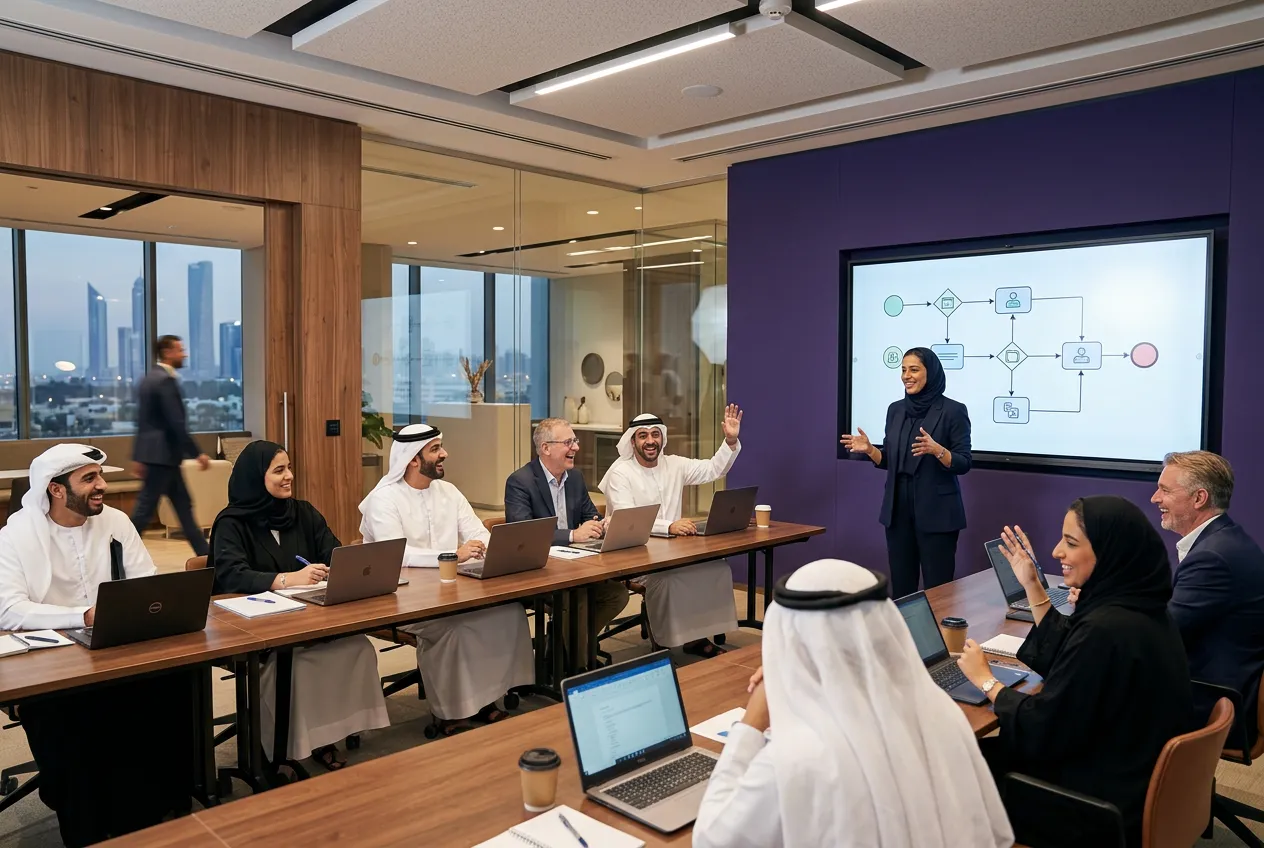
Your trainer has worked inside UAE finance functions and with tax advisers, preparing computations and supporting filings. We match the trainer to your structure, whether that is a single entity or a regional group.
Leadership and management faculty
For managers, senior leaders and leadership offsites
- Senior people who have run teams and led change
- Drawn from a visiting faculty network across 9 IIMs
- Coaching, decision making and difficult conversations
- English, Arabic or bilingual delivery
Sales and customer trainers
For sales, account and service teams
- Practitioners who have closed deals and run sales teams
- Role plays built on your real deals and customers
- Discovery, objection handling and negotiation
- B2B, retail and hospitality experience
AI and digital trainers
For AI adoption and productivity programmes
- 17+ years in AI and corporate training
- Have trained 200,000+ professionals in 16+ countries
- Copilot, ChatGPT, Claude and Gemini on real work
- Part of a pool of around 300 trainers worldwide
Why corporate tax readiness matters in the UAE
The UAE introduced a federal corporate tax under Federal Decree-Law No. 47 of 2022, applying to financial years that started on or after 1 June 2023. The Federal Tax Authority administers it, and returns and payment are due within nine months of each tax period ending. Even businesses with nothing to pay, including free zone entities on the 0% rate and those electing Small Business Relief, must still register and file.
The rules keep developing. A Domestic Minimum Top-up Tax of 15% applies to large multinational groups for financial years starting on or after 1 January 2025, and e-invoicing will change how invoice data reaches the authority. Corporate Tax Training UAE helps finance teams keep up without relying on one specialist. We deliver on site in all seven emirates and live online, and every session is a training programme, not tax advice.
Formats for busy finance teams
Half day leadership briefing
A focused session for CFOs and directors on obligations, risk areas and decisions that need their sign off.
One day practical workshop
A full day working from accounting profit to taxable income on your own schedules, ending with a checklist.
Two day deep dive
Extra time for free zone tests, transfer pricing files, groups and a complete mock return.
Year end clinic series
Short sessions in the months before filing, each tackling open items your team brings that week.
Live online sessions
Interactive virtual delivery for finance teams spread across several emirates or GCC offices.
Corporate Tax Training UAE: FAQs
Is this training a substitute for tax advice?
No. The programme teaches your team how the rules work and how to prepare their own analysis, but it does not give advice on your specific position. Where a question needs a formal opinion, we flag it for your tax adviser. Many clients invite their adviser to part of the session so open points can be discussed with the full context.
Who should attend corporate tax training?
Accountants and tax staff who prepare the numbers, finance managers who review them, and directors who sign off. Business owners and budget holders benefit from a shorter session because their decisions on contracts, spending and new entities affect the tax result. We often run a shared opening session and then split by role.
Do you cover free zone companies?
Yes. One full module covers Qualifying Free Zone Persons: the conditions, qualifying and non qualifying income, substance and the documentation needed to support the 0% rate. If your group is mostly free zone based, we can give this area more time and build the exercises around your actual revenue lines.
How current is the content?
We review the material against the latest Federal Tax Authority guides, Ministry of Finance decisions and public clarifications before each delivery. Corporate tax in the UAE is still developing, so where guidance is new or a point is unsettled, the trainer says so plainly rather than presenting it as fixed.
Can we use our own financial data?
Yes, and it is the most useful way to learn. We ask for anonymised extracts such as a trial balance, intercompany agreements and a list of unusual expenses. We sign a confidentiality agreement before receiving anything, and sensitive material can stay on your premises and be used only during the session.
How long is the programme?
Most teams choose one practical day. Directors often prefer a half day briefing, while groups with free zone entities or significant related party transactions usually need two days. A series of shorter clinics before the filing deadline also works well for teams that want to bring live questions.
Can the training be delivered in Arabic?
Yes. We deliver in English, Arabic or bilingually. Many finance teams use English terms for the ledger and law but prefer to discuss reasoning in Arabic, and the trainer moves between the two as needed. Handouts and the computation template can be provided in either language.
What affects the cost of the training?
The main factors are the number of days, group size, how much of your own data we prepare in advance, whether separate sessions are needed for directors and accountants, language and on site delivery outside Dubai. Share your structure on a short call and a proposal follows within 24 to 48 hours.
Get your finance team filing with confidence
Keep exploring
Related programmes
- UAE E-Invoicing Training for Finance, Tax and IT Teams
- Compliance and AML Training in UAE for Frontline and Risk Teams
- Corporate Training for Banks in UAE
- Leadership Development Programme in UAE
- AML Training for Real Estate Agents UAE
- AML Training UAE for Front Line, Compliance and Leadership
- Budgeting and Forecasting Training UAE for Finance and Managers
- Finance for Non-Finance Managers UAE
- Data Protection Training UAE
- UAE Labour Law Training for HR and People Teams
The UAE’s one stop shop for corporate training. Hands on workshops delivered across Dubai and all seven emirates. Licensed UAE company registered in Ajman, with a delivery team based in Dubai.
- AI Agents and Automation Training: Build Working Workflows
- ChatGPT Training for Everyday Business Work
- Claude AI Training for Document Heavy Teams
- Microsoft Copilot Training for Microsoft 365 Users
- Prompt Engineering Training Across Every Major AI Tool
- Business Writing Training
- Communication Skills Training
- Presentation Skills Training
- All programmes
© 2026 TrainingInUAE.com. All rights reserved.