Leadership Training in DIFC for Specialists Now Leading Specialists
Leadership Training in DIFC for people promoted because they were the best analyst, adviser or associate in the room. Leaders spend most of the session rehearsing real conversations from their own teams, coached by faculty who have managed high performers under regulatory scrutiny.
- Role plays drawn from your live team issues
- Senior faculty from finance and advisory backgrounds
- Impact reviewed against your metric at 90 days
- Rated 4.9/5 by 200,000+ professionals
- Certificate for every participant

Why DIFC leadership teams work with us
Your situations, not case studies
We collect the conversations your managers are avoiding, such as a star performer who ignores process, and turn them into the material for the day.
Faculty who have carried accountability
Our facilitators have run desks, practices and control functions. They know what it feels like to answer for a team's conduct as well as its numbers.
Rehearsal with honest feedback
Roughly four fifths of the time goes on doing: rehearsing a hard conversation, reworking a decision, coaching a peer, then hearing exactly how it landed.
Arabic, English or both
Sessions run in whichever language your leaders think in. Mixed groups can switch between the two so nobody holds back during practice rounds.
A certificate for each leader
Leaders who finish get a TrainingInUAE.com certificate that sets out the skills they rehearsed with us.
Measured again after three months
Before we start, the sponsor picks one measure, perhaps regretted attrition or one to one frequency. We baseline it and report back three months later.

How Leadership Training in DIFC runs in the room
Clever people can describe good leadership perfectly and still dodge the difficult conversation on Monday. Knowing is rarely the gap in this district. Doing it under pressure, with a sceptical team member opposite you, is the gap, and only repeated practice with feedback closes it.
Manager and 360 input
We gather views from the sponsor, line managers and, if you wish, a short 360 survey, so we see each leader’s habits from more than one angle.
Find where it hurts
Interviews with a few participants show where friction sits: retention of top earners, cross border reporting lines or decisions that stall in committee.
Design on live cases
Each exercise is built from an anonymised situation your leaders are handling now, using the language and pressures of your own firm.
Practise in the room
Leaders rehearse in trios with an observer, receive direct comments from faculty and peers, then try again with a better approach.
A 30 day challenge
Everyone leaves with one behaviour to apply at work for a month, agreed with their own manager so somebody notices the change.
Review at 90 days
We revisit the agreed measure with the sponsor, compare it to the baseline and recommend what the next stage of development should be.

Short inputs of ten or fifteen minutes, then long practice rounds. Leaders play themselves and their own team members, swap roles, and replay the conversation until the opening line and the close both work.
- Laptops open from the first 15 minutes
- Your own documents, data and tasks
- A finished output from every lab
- Prompt library to keep using on Monday
What Leadership Training in DIFC covers
Eight modules make up the full programme. Most firms choose the four or five that match their diagnosis, and every module is built around a practical exercise rather than a lecture on theory.
Module 1. Leading a multicultural regional team
Teams here often span Dubai, Riyadh, London and Mumbai. Leaders learn how expectations of hierarchy, directness and praise differ, and how to set one standard that everybody understands.
🛠 Leaders practise: Resetting team expectations with a colleague who reads directness as disrespect
Module 2. Coaching and feedback conversations
Moving from fixing a junior's work to developing their judgement. Structured questions, timely feedback and coaching that fits between client calls and committee papers.
🛠 Leaders practise: A fifteen minute coaching conversation on a real piece of work
Module 3. Delegation and accountability
Handing over client work without losing control or quality. Leaders agree clear outcomes, check points and ownership, then stop hovering over the detail.
🛠 Leaders practise: Delegating a live deliverable with agreed check points and a deadline
Module 4. Decisions under pressure
Making sound calls when information is incomplete and a regional head wants an answer today. A simple framework for weighing options, risk and timing.
🛠 Leaders practise: Working through a time boxed decision and defending it to peers
Module 5. Leading change
System migrations, integrations and new operating models are common in the centre. Leaders practise explaining why, handling resistance and keeping performance steady.
🛠 Leaders practise: Briefing a sceptical team on a change they did not choose
Module 6. Influence and stakeholder management
Getting support from head office, risk, compliance and peers without formal authority. Mapping stakeholders and framing a case each one will hear.
🛠 Leaders practise: Pitching a proposal to a resistant stakeholder played by faculty
Module 7. Building high performing teams
Turning a group of strong individuals into a team that shares information, covers for each other and argues productively about the right things.
🛠 Leaders practise: Drafting a team operating agreement with owners and review dates
Module 8. Leading with AI and data
Setting expectations for AI assisted work, reviewing outputs responsibly and keeping clear human accountability for client advice and regulated decisions.
🛠 Leaders practise: Agreeing team rules for using AI on client facing work
Shaped around the pressures on your leaders
A partnership, a bank desk and a fintech scale up all need leadership, but not the same version of it. We design each programme from what your own managers tell us, then adjust as the cohort progresses.
Start with a diagnostic
A call with the sponsor and short interviews with participants identify the two or three leadership behaviours that matter most for your firm this year.
Write cases from your firm
We draft scenarios using your reporting lines, client types and culture, removing names and figures so people can discuss them openly.
Fit level and language
A first time manager and a managing director get different pace, depth and tone, delivered in Arabic, English or bilingually.

Programmes for every leadership level
First time managers
Newly promoted specialists learning to run one to ones, delegate and give feedback to people who were recently their peers.
Middle managers
Team heads who lead other managers and must translate regional strategy into clear priorities for their part of the business.
Senior leaders and executives
Managing directors, partners and function heads aligning as a leadership team and setting the culture for the whole office.
High potential talent
Future leaders identified by the firm, preparing for a bigger role with stretch assignments and peer coaching between sessions.
Certificates for every leader who completes
At the end of the programme, each leader is awarded a TrainingInUAE.com certificate of completion naming the modules they worked through. It records in-house corporate training. It is not a KHDA accredited qualification or a professional body award.
- Issued to every participant who completes the hands on labs
- Shows the programme name, hours, tools covered and date
- Digital PDF, ready to add to LinkedIn and HR records
- Attendance and lab completion report for HR or L&D, on request

Leaders we develop in the centre
Leadership groups in DIFC come from a handful of sectors, each with its own pressures. We match faculty and case material to the world your managers work in.
Banks and investment firms
Heads of desk, coverage and operations leading high earners under tight commercial targets and close regulatory oversight.
Law and advisory practices
Partners and directors balancing billable work with developing associates and shaping the culture of their practice.
Insurers and reinsurers
Underwriting, claims and risk leaders managing experienced specialists whose decisions carry long tail consequences.
Wealth and asset managers
Investment and client teams where leaders must coach relationship managers and protect trust with demanding clients.
Fintech and scale ups
Founders and early hires moving from doing everything themselves to building teams and managers who can run without them.
Control functions
Compliance, risk and audit heads who need to lead their own teams and influence the business without being seen as blockers.
Teams our trainers have worked with














Plus 400+ enterprise clients across 16+ countries.
Faculty who have led in regulated firms
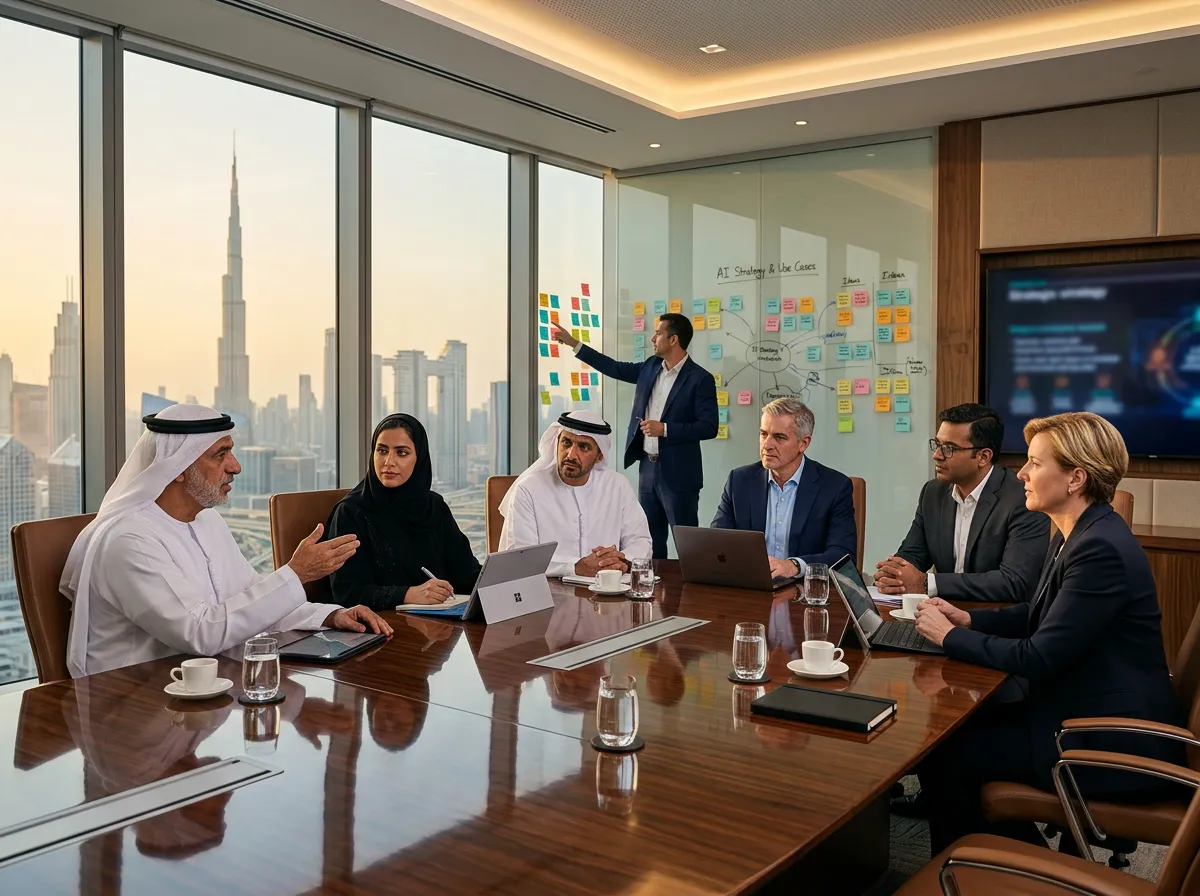
Our leadership faculty are senior practitioners who have managed teams, led restructures and sat on management committees. They challenge respectfully, speak from experience and adapt quickly to a room of opinionated, highly qualified people.
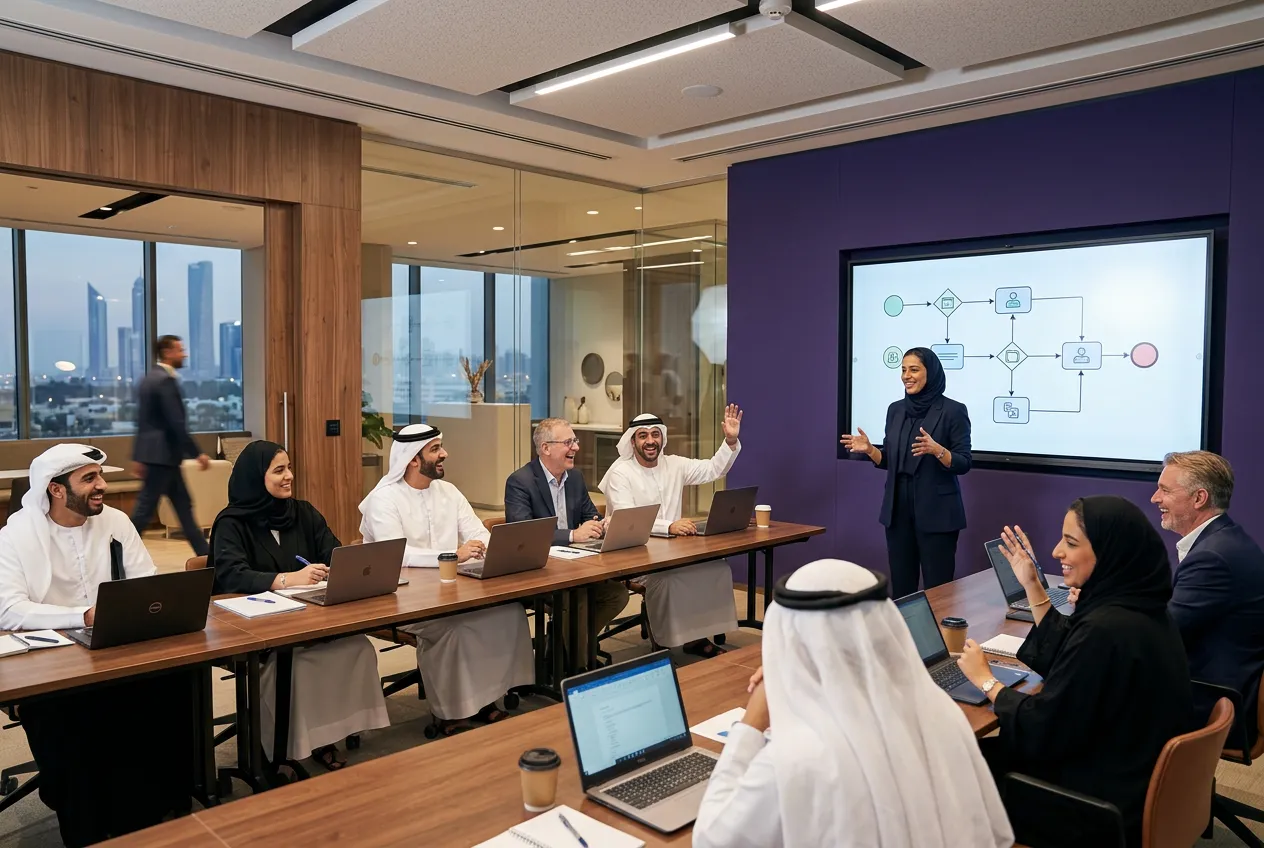
Leadership and management faculty
For managers, senior leaders and leadership offsites
- Senior people who have run teams and led change
- Drawn from a visiting faculty network across 9 IIMs
- Coaching, decision making and difficult conversations
- English, Arabic or bilingual delivery
Sales and customer trainers
For sales, account and service teams
- Practitioners who have closed deals and run sales teams
- Role plays built on your real deals and customers
- Discovery, objection handling and negotiation
- B2B, retail and hospitality experience
AI and digital trainers
For AI adoption and productivity programmes
- 17+ years in AI and corporate training
- Have trained 200,000+ professionals in 16+ countries
- Copilot, ChatGPT, Claude and Gemini on real work
- Part of a pool of around 300 trainers worldwide
Leading people in a regulated financial centre
Many firms in DIFC run their Middle East, Africa or South Asia business from here, so a single manager may lead people in several countries while reporting to a head office in another time zone. They balance local client expectations with global policy. Regulated firms are also supervised by the Dubai Financial Services Authority, and senior people are expected to own the conduct of their teams, which ties everyday coaching and delegation to accountability.
That is why leadership work here has to connect people skills with control. Half day masterclasses often run before markets get busy, in the firm’s own boardroom. For a senior team offsite without leaving the district, hotels such as the Ritz-Carlton DIFC and Four Seasons Hotel DIFC both offer meeting rooms. Some groups prefer a venue further away, anywhere in the UAE, to break the habit of checking email.

Leadership formats for DIFC calendars
Early start masterclass
One focused theme, such as feedback to high performers, run early so leaders are back before the trading day peaks.
One day leadership workshop
Enough time for two or three skills, several practice rounds and a personal action plan for each leader.
Two day leadership offsite
A senior team steps away to align on priorities, test how they work together and agree how they will lead.
Multi-session series
Four to six sessions over a few months, with a 30 day challenge between each one to build lasting habits.
Live online sessions
Interactive virtual sessions for leaders spread across GCC offices, with breakout practice in small groups.
Leadership Training in DIFC: FAQs
What formats and durations do you offer for leadership training in DIFC?
Most firms choose between a half day masterclass, a one or two day offsite and a series of four to six sessions over two to four months. A masterclass suits one sharp theme. Lasting behaviour change usually needs the series, because leaders practise at work between sessions and report back. We recommend the shortest format likely to reach your goal.
Can you include 360 degree feedback?
Yes, as an option. We run a short 360 survey before the first session so each leader sees how their manager, peers and team experience them. Results stay confidential to the individual and are discussed in a private debrief. Group level themes, with no names attached, help us decide which modules deserve the most time.
Is the programme available in Arabic?
Yes. Faculty can deliver fully in Arabic, fully in English, or in a bilingual format where discussion moves between the two. For mixed leadership groups we usually run in English with Arabic support during practice. We translate workbooks and cases ahead of time when the group needs it.
How many leaders can join one session?
Up to 20 participants per trainer for hands on sessions, which keeps practice rounds meaningful and lets faculty observe every leader. Larger cohorts are split into repeat sessions or given additional faculty. A short leadership talk for a whole management population can be any size, though it involves less individual practice.
Where can we hold a leadership offsite near DIFC?
Many firms use their own boardroom for masterclasses. For an offsite inside the district, the Ritz-Carlton DIFC and Four Seasons Hotel DIFC both have meeting space, and Downtown hotels are a short drive away. Your team books the venue. We design the agenda, run the sessions and advise on room layout for practice work.
Do leaders receive a certificate?
Yes. Each leader who completes is given a TrainingInUAE.com certificate of completion showing the modules covered. It is a record of in-house corporate training, not a KHDA accredited qualification and not a professional body award. Firms often add it to their internal learning records.
Can sessions be recorded?
Yes, for internal use, provided it is agreed in advance. Many firms record the short faculty inputs for leaders who miss a session and leave the role plays unrecorded, because people practise more honestly when they know nobody is filming. We confirm the approach with you during planning.
How will we know the programme changed anything?
Before the first session, the sponsor and we settle on one or two measures, such as regretted attrition, engagement survey items or how often one to ones happen. We take a baseline, track the 30 day challenges and review the same measures at 90 days. You receive a short report with findings and recommended next steps.
Build leaders your best people stay for
Explore more in DIFC and nearby
More training in DIFC
Nearby locations
The UAE’s one stop shop for corporate training. Hands on workshops delivered across Dubai and all seven emirates. Licensed UAE company registered in Ajman, with a delivery team based in Dubai.
- AI Agents and Automation Training: Build Working Workflows
- ChatGPT Training for Everyday Business Work
- Claude AI Training for Document Heavy Teams
- Microsoft Copilot Training for Microsoft 365 Users
- Prompt Engineering Training Across Every Major AI Tool
- Business Writing Training
- Communication Skills Training
- Presentation Skills Training
- All programmes
© 2026 TrainingInUAE.com. All rights reserved.