Sales Workshop in DIFC for Advisers Who Win Mandates
Our Sales Workshop in DIFC is for relationship managers, brokers and fintech teams who sell without the word sales on their business card. Participants rehearse real objections from their current mandates, and four fifths of the day is spent practising.
- Built on mandates you are pursuing
- Objection drills written from your files
- Results checked against pipeline at 90 days
- Rated 4.9/5 by 200,000+ professionals
- Certificate for every participant

Why DIFC firms bring us in for business development
Your pipeline is the material
Before the day, each participant picks one live opportunity, anonymised where needed. Every exercise then works on that opportunity rather than on an invented case study.
Objections from real meetings
We collect the pushback your people actually hear, such as fee pressure, switching risk or a committee that will not meet, and turn it into rehearsal rounds.
Mostly doing, little lecturing
About four fifths of the time goes on role plays, call rehearsals and proposal rewrites, while the trainer moves between pairs and coaches each one as they work.
Compliance aware selling
Our scenarios respect the line between persuasion and promises. Advisers practise being persuasive while staying inside suitability and disclosure expectations their firm sets.
A certificate for each seller
Anyone who completes the day leaves with a completion certificate from TrainingInUAE.com, setting out the selling skills they rehearsed with colleagues during the session.
Numbers reviewed at 90 days
We agree one commercial measure up front, perhaps proposal conversion, pipeline velocity or average mandate size, and report movement against it three months later.

Inside a Sales Workshop in DIFC, step by step
A seller does not get better at handling a sceptical chief investment officer by watching slides. The habit changes only after repeated attempts, honest feedback and another go. So we build the day around rehearsal and keep explanation short and practical.
Pipeline review
We sit with the sales lead and look at where deals stall, which stages leak and what the team’s win rate looks like by segment.
Deal stories and recordings
Where firms record client calls, we listen to a sample. Otherwise sellers tell us about recent wins and losses in short interviews.
Design the scenarios
The trainer writes role play briefs using those stories, keeping names and figures disguised but the tension and the objections true to life.
Role play in the room
Sellers take turns as adviser, client and observer, running each scenario twice so they can try a better approach the second time.
Field application
Each participant leaves with one live deal to apply the new approach to within a fortnight, and reports back to their manager.
90 day review
We set the agreed measure against the starting baseline, hear which approaches worked in client meetings and recommend what the team should rehearse next.

In practice, a ten minute model is followed by forty minutes of pairs and trios rehearsing a discovery call, a fee conversation or a renewal, with an observer scoring against a simple checklist.
- Laptops open from the first 15 minutes
- Your own documents, data and tasks
- A finished output from every lab
- Prompt library to keep using on Monday
What the Sales Workshop in DIFC covers
Eight modules, chosen and weighted after the pipeline review. A wealth team may spend longer on discovery, while a fintech sales group may focus on enterprise buyers. Each module lists the exercise sellers complete in the room.
Module 1. Discovery and needs analysis
Moving past the obvious request to the client's real objectives, constraints and decision process, using open questions that feel like advice to the client rather than an interrogation across the table.
🛠 Sellers practise: A first meeting with a prospective family office client, played by a colleague
Module 2. Value propositions for Gulf buyers
Explaining why your firm deserves the mandate in one sentence a busy principal will repeat to others, then adapting that message for regional, Asian and European clients with different expectations.
🛠 Sellers practise: A sixty second positioning statement tested on three different client personas
Module 3. Objection handling
Responding calmly when a client challenges fees, stays loyal to an incumbent bank, keeps delaying a decision or asks for references you are not permitted to share.
🛠 Sellers practise: Rapid rounds answering the five objections your team hears most often
Module 4. Negotiation and closing
Exchanging each concession for something in return, holding firm on fees and terms that matter, and asking clearly and confidently for the mandate when the moment finally arrives in the conversation.
🛠 Sellers practise: A fee and terms negotiation with an observer tracking every concession made
Module 5. Pipeline and forecast discipline
Honest stage definitions, next steps with dates attached, and forecasts a managing director can trust, even when long institutional cycles make optimism tempting for every seller.
🛠 Sellers practise: Cleaning up your own top ten opportunities against agreed stage criteria
Module 6. Relationship selling and account growth
Growing wallet share with existing clients through structured reviews, warm introductions to colleagues in other teams, and spotting new needs before a competitor gets the call.
🛠 Sellers practise: An annual client review conversation that opens a second product line
Module 7. Selling to government and large enterprises
Working through procurement, legal and risk functions, approaching sovereign or semi government buyers, and influencing committees where the real decision maker rarely attends the meetings.
🛠 Sellers practise: Mapping the buying committee for one live institutional opportunity
Module 8. Using AI in the sales process
Using tools such as Copilot, ChatGPT or Claude to research prospects, prepare meeting briefs and draft follow ups, while keeping confidential client data out of public tools.
🛠 Sellers practise: Preparing an AI assisted meeting brief from public information only
Shaped around how your firm wins business
A private bank, a reinsurance broker and a payments start up all sell from the same few streets, yet their deals look nothing alike. We design each workshop after studying your sales motion, products and client base.
Study your sales motion
We learn whether mandates come through referrals, coverage plans, tenders or inbound leads, and where in that journey your team loses deals.
Write scenarios from your products
Role plays use your own services, fee structures and typical client profiles, with sensitive details changed before anything reaches the room.
Pitch the level and language
We set the depth for junior or senior sellers and choose English, Arabic or a bilingual mix based on the clients your team actually meets.

Tracks for every seller
New sellers
Analysts and associates taking on client contact for the first time, learning to open meetings and ask better questions.
Experienced account managers
Senior relationship managers who want to grow existing books and handle harder negotiations with confidence.
Sales managers
Team heads who coach deals, run pipeline reviews and need forecasts their leadership can rely on.
Pre-sales and customer success
Solution specialists and client service teams who shape proposals, onboard new clients smoothly and protect every renewal.
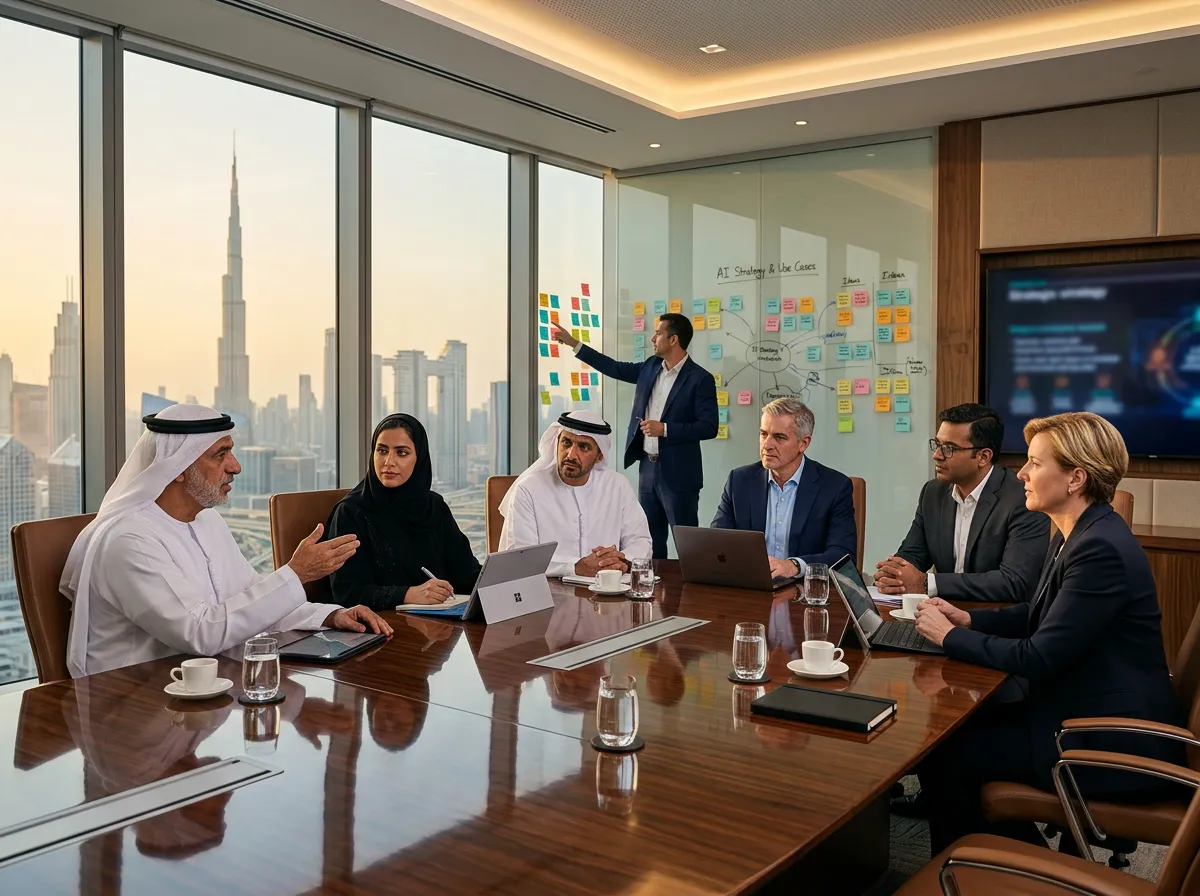
A completion record for each adviser
Each seller who finishes the day is issued a TrainingInUAE.com completion certificate showing the modules rehearsed. This is a record of in-house corporate learning, not a KHDA accredited qualification, nor a DFSA or professional body award, and we never present it otherwise.
- Issued to every participant who completes the hands on labs
- Shows the programme name, hours, tools covered and date
- Digital PDF, ready to add to LinkedIn and HR records
- Attendance and lab completion report for HR or L&D, on request

DIFC sales teams we work with
The centre hosts several distinct selling cultures. Knowing which one your team belongs to tells us which objections, buyers and cycle lengths to build into the role plays.
Private banking and wealth
Relationship managers winning new assets and deepening existing relationships, where suitability rules shape every recommendation they put in front of a client.
Insurance and reinsurance broking
Account executives handling placements and renewals, where relationships last for years and each clause in the terms matters.
B2B fintech
Founders and sales teams selling software to banks and insurers, facing security reviews, paid pilots and long procurement queues before any contract.
Asset and fund management
Distribution teams presenting funds to institutions and intermediaries who compare performance, fees and service levels across a long list of managers.
Law and advisory firms
Partners and senior associates turning warm introductions into signed mandates, without ever sounding as if they are delivering a pitch.
Regional headquarters teams
Business development staff covering the GCC from a Dubai base, often travelling to buyers in Riyadh, Doha or Kuwait.
Teams our trainers have worked with














Plus 400+ enterprise clients across 16+ countries.
Trainers who have sold financial services
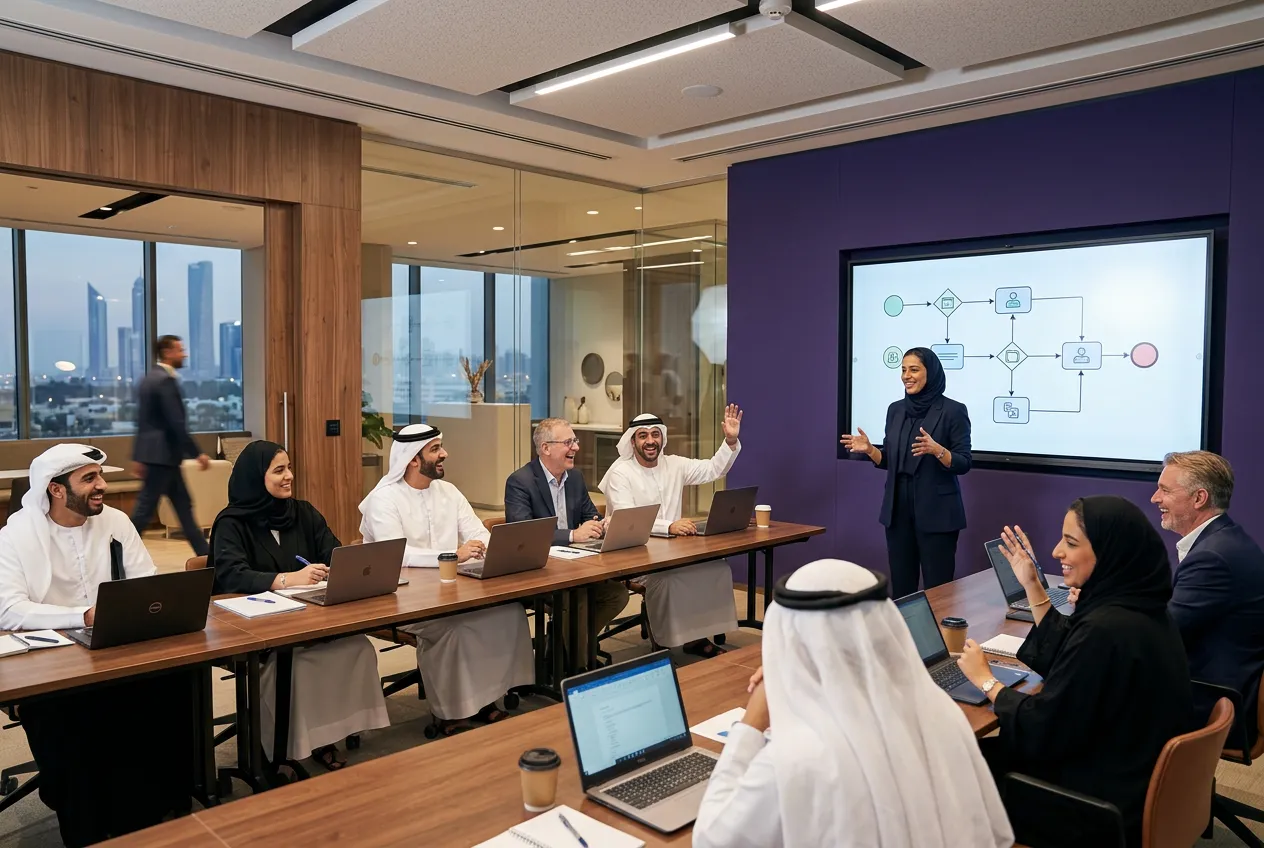
Every Sales Workshop in DIFC is led by a senior trainer who has carried a target, run a team or closed institutional deals. They understand long cycles and compliance limits, and never sell a guaranteed formula.
Leadership and management faculty
For managers, senior leaders and leadership offsites
- Senior people who have run teams and led change
- Drawn from a visiting faculty network across 9 IIMs
- Coaching, decision making and difficult conversations
- English, Arabic or bilingual delivery
Sales and customer trainers
For sales, account and service teams
- Practitioners who have closed deals and run sales teams
- Role plays built on your real deals and customers
- Discovery, objection handling and negotiation
- B2B, retail and hospitality experience
AI and digital trainers
For AI adoption and productivity programmes
- 17+ years in AI and corporate training
- Have trained 200,000+ professionals in 16+ countries
- Copilot, ChatGPT, Claude and Gemini on real work
- Part of a pool of around 300 trainers worldwide
Why selling in DIFC is a different game
Most deals in DIFC are slow and built on trust. A family office may take months to move assets, and an institutional client brings in procurement, legal and risk before anyone signs. Introductions count. Clients arrive from the Gulf, South Asia and Europe with very different expectations about hospitality, pace and directness.
Regulation sits inside the sales conversation too. Advisers at firms regulated by the DFSA must be careful with suitability and claims, and the DIFC Data Protection Law of 2020 governs how client data is handled. Fintechs from the DIFC Innovation Hub often sell to banks next door, facing heavy due diligence. That is why we avoid aggressive consumer tactics and shape every Sales Workshop in DIFC around these cautious, well informed buyers.

Workshop formats for DIFC sales teams
Half day sprint
One focus, such as objection handling, delivered in the morning so advisers are back with clients after lunch.
One day workshop
Our most requested option: discovery, objections and negotiation in one day, each practised through repeated role play on mandates in progress.
Two day programme
For teams that also need pipeline discipline and enterprise selling, with day two built around their biggest opportunities.
Monthly deal clinics
Short follow up sessions after the main workshop where sellers bring a stalled deal and rehearse the next meeting.
Live online sessions
Interactive virtual rounds for coverage teams based in other GCC offices, using breakout rooms for paired practice.
Sales Workshop in DIFC: FAQs
Will the workshop use our real deals and client situations?
Yes, that is the core of the design. Each participant brings one live opportunity, and we collect common objections and deal stories before the day. Client names, figures and sensitive details are disguised, but the shape of the deal stays real. Sellers therefore leave having rehearsed the exact conversation they need to have next week.
Can the role plays feature our own financial products?
They can, and they usually do. We ask for product sheets, fee structures and typical client profiles during scoping, then write scenarios around them. A broker practises a renewal on a realistic programme, and a wealth adviser practises a portfolio review. We stay within your compliance guidance on what may be said about products.
How do you handle rules on what advisers are allowed to promise?
We ask your compliance team for any guidance on claims, disclosures and suitability, and build it into the scenarios. Observers score whether advisers stay within those limits while still persuading. Many firms find this the most useful part, because sellers learn to be confident and compliant at the same time.
Is Arabic delivery possible for our coverage team?
Yes. Our bench includes trainers who work only in Arabic, only in English, and some who switch between the two. Client meetings in DIFC often move between languages, so a bilingual session can feel closest to real life. Workbooks and scenario briefs can be prepared in Arabic, English or both, depending on your sellers.
What is the largest group one trainer will take?
Hands on workshops take up to 20 participants per trainer. At that size every seller gets several turns in the role plays and personal feedback each time. For bigger teams we run the same day twice or bring in a second trainer, while a short opening talk for the whole sales floor can be any size.
Can you deliver the workshop in our DIFC office?
Yes, most DIFC clients host it in their own meeting rooms, which saves travel and keeps sellers close to their desks. We need a room where small groups can spread out for role plays. We can also run it at a venue nearby or online for colleagues in other GCC offices.
Is the certificate recognised by a regulator?
Each adviser who stays to the end is issued our own dated completion certificate, which lists what was practised. Think of it as proof of attendance and practice on a company programme. It is not a KHDA accredited award and does not count towards DFSA licensing or any professional body requirement, which we explain plainly in every proposal.
How do you measure whether the workshop improved sales results?
We pick one or two measures with your sales head first, such as meetings converted to proposals, pipeline velocity or average deal size. A baseline is recorded, we check in with managers at 30 and 60 days, and a short report follows at 90 days. No number is promised, but you see plainly what moved.
Bring your stalled mandates
Explore more in DIFC and nearby
More training in DIFC
Nearby locations
The UAE’s one stop shop for corporate training. Hands on workshops delivered across Dubai and all seven emirates. Licensed UAE company registered in Ajman, with a delivery team based in Dubai.
- AI Agents and Automation Training: Build Working Workflows
- ChatGPT Training for Everyday Business Work
- Claude AI Training for Document Heavy Teams
- Microsoft Copilot Training for Microsoft 365 Users
- Prompt Engineering Training Across Every Major AI Tool
- Business Writing Training
- Communication Skills Training
- Presentation Skills Training
- All programmes
© 2026 TrainingInUAE.com. All rights reserved.