Hire a Corporate Trainer in DIFC Your Partners Will Respect
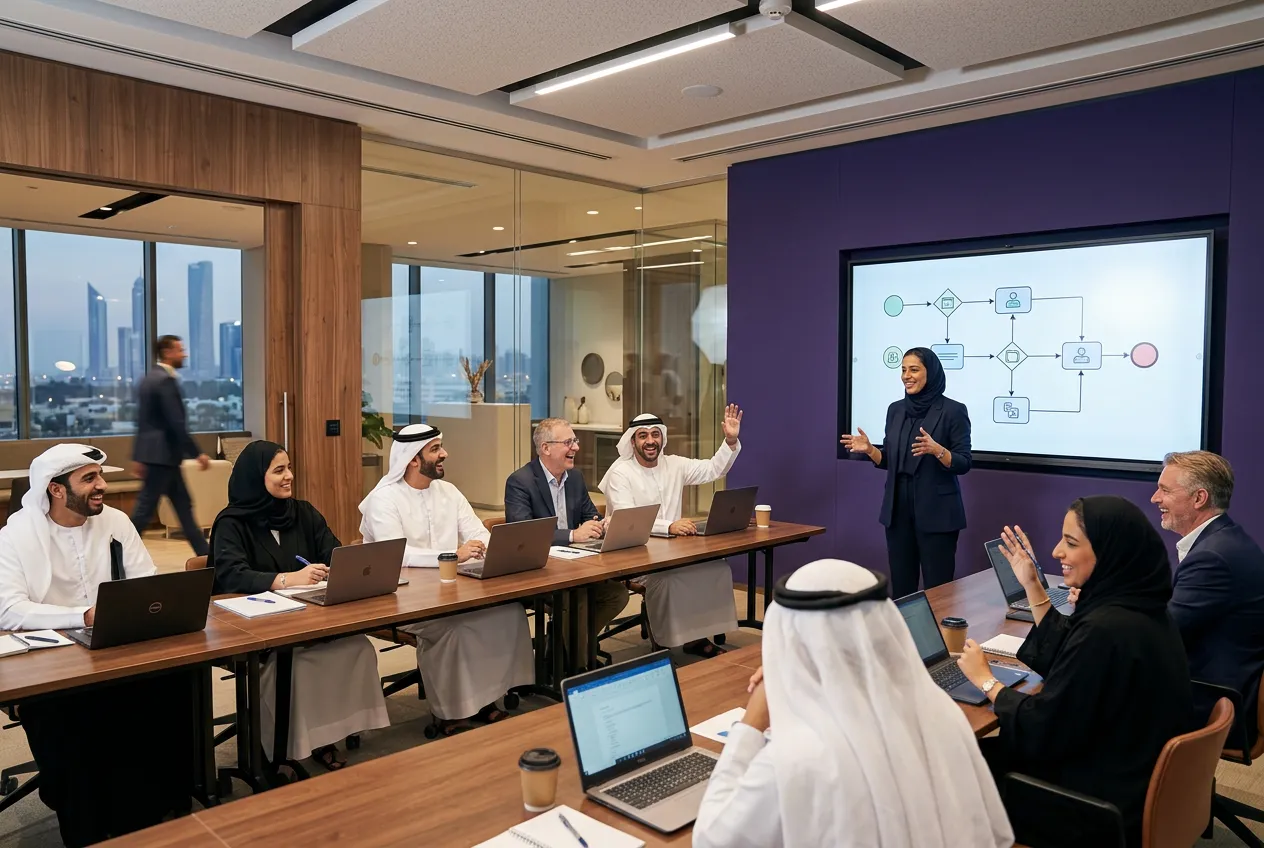
A Corporate Trainer in DIFC is judged in the first ten minutes by people who bill by the hour. We pair your audience with a senior facilitator, prepare them on how your firm works, and keep the session practical, with participants rehearsing real client conversations.
- See the trainer's profile before you commit
- Role plays built from your own scenarios
- Run in English, Arabic or a mix of the two
- Rated 4.9/5 by 200,000+ professionals
- Certificate for every participant
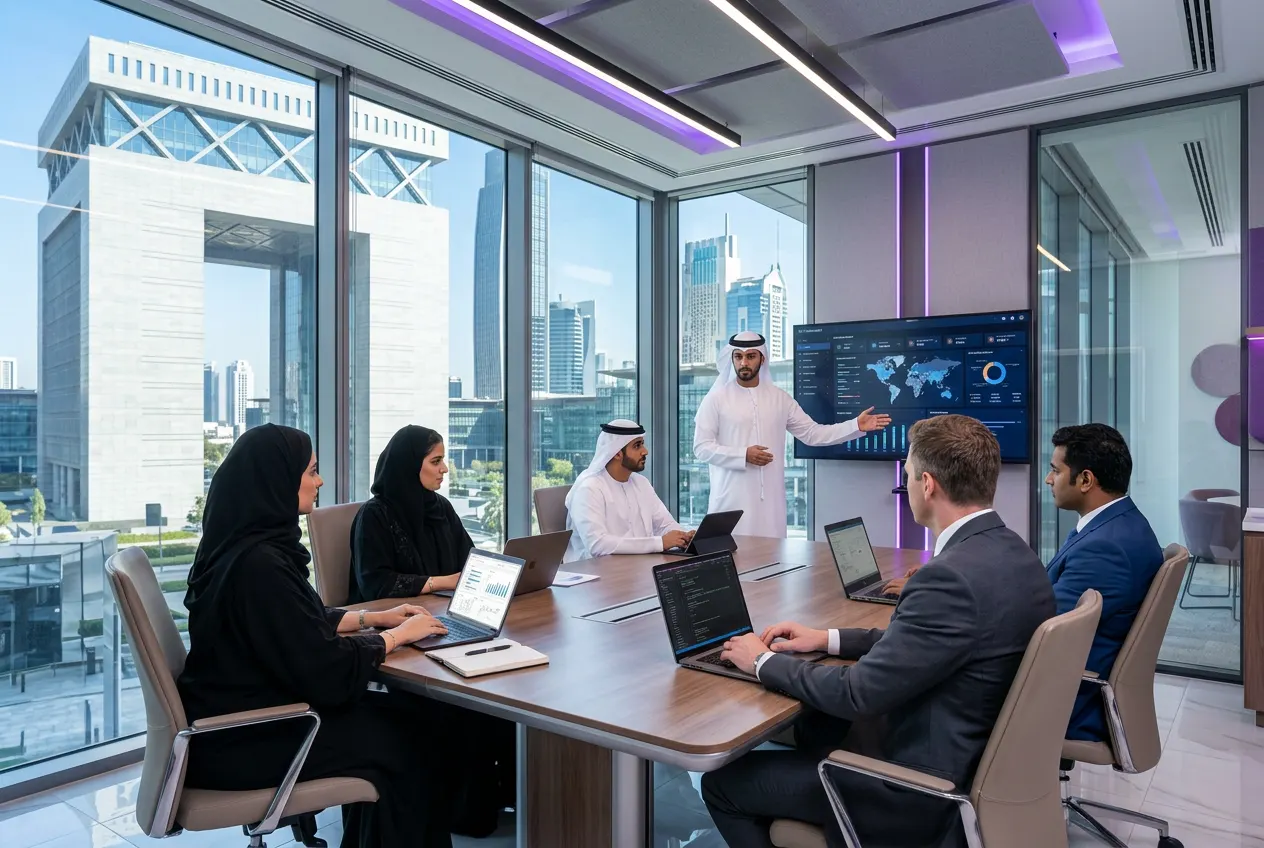
What sets our DIFC facilitators apart
Peers, not presenters
Each facilitator has managed people, advised clients or run a business line, so a sceptical senior associate hears someone who has faced the same pressure.
Matched before proposed
We look at seniority, practice area, nationality mix and the problem you want fixed, and only then put forward a name and profile for you to review.
Briefed on your firm
The trainer reads anonymised emails, speaks with a sponsor and learns your terminology, so examples in the room sound like your floor, not a textbook.
Two languages, one room
Facilitators can run the whole day in English or Arabic, or switch between them so every participant contributes in the language they think in.
Practice over slides
About 80% of a workshop is people doing the skill: drafting, rehearsing, negotiating and receiving direct feedback while the trainer coaches each table.
Fast, documented proposals
A written proposal with the suggested facilitator lands within 24 to 48 hours, and every participant receives a certificate of completion afterwards.

How booking a Corporate Trainer in DIFC works
Financial and legal audiences tolerate very little filler. They want the trainer to know why the session exists, who is in it and what a good outcome looks like for the firm. So each booking follows the same six steps, and the trainer never walks in cold.
Your brief
A thirty minute call covers the audience, the trigger for the training, past sessions that disappointed and the change the sponsor wants to see.
Trainer match and profile
We propose one facilitator, sometimes two, and send a short profile showing their sector background, languages and the kind of groups they usually lead.
Calls with your managers
The chosen trainer interviews a couple of your line managers to gather genuine situations, sensitive points and the words your people actually use.
The session itself
On site in your tower or a nearby room, the day runs as short inputs followed by long practice rounds built on those collected situations.
Feedback from the room
Participants rate the session and note what they will try first. The sponsor receives those results along with the trainer’s observations.
Follow-up
A short written debrief suggests next steps, and at 90 days we check progress against the measure agreed at the briefing.

Roughly a fifth of the time goes on short input and models. The rest is rehearsal: participants handle a tough client call, restructure a memo or give feedback, then hear exactly what landed and what did not.
- Laptops open from the first 15 minutes
- Your own documents, data and tasks
- A finished output from every lab
- Prompt library to keep using on Monday
Topics a Corporate Trainer in DIFC delivers most
Requests from the financial centre cluster around a handful of skills. Each topic below is run by a facilitator with matching experience, and each lists what participants actually rehearse rather than what they hear.
Topic 1. Leadership and people management
For team heads and newly promoted associates who must delegate, set standards and hold difficult conversations without losing billable time or good people.
🛠 Participants practise: A delegation conversation and a performance discussion with a colleague playing the report
Topic 2. Communication and presentation
Structuring advice so a busy client or committee grasps the answer first, then presenting it with confidence under questioning.
🛠 Participants practise: A three minute recommendation pitch, filmed on a phone and reviewed with peers
Topic 3. Sales and negotiation
Business development for relationship managers and advisers: opening conversations, uncovering needs and defending value when a client pushes on terms.
🛠 Participants practise: A fee or terms negotiation run in pairs, with an observer scoring concessions
Topic 4. Customer service
Client service standards for front office, onboarding and support teams who handle demanding, high value clients by phone, email and in person.
🛠 Participants practise: Rewriting a real complaint reply and handling an escalated call role play
Topic 5. Time management and productivity
Practical prioritisation for people juggling deal deadlines, regulatory requests and internal meetings across several time zones.
🛠 Participants practise: Rebuilding next week’s calendar around the three tasks that matter most
Topic 6. Emotional intelligence and conflict
Recognising pressure in yourself and others, and keeping disagreement productive between teams such as front office and compliance.
🛠 Participants practise: A structured conflict conversation between two functions, replayed with a better opening
Topic 7. Team building facilitation
Purposeful team sessions that address how a group works together, rather than games for their own sake, often after a merger or restructure.
🛠 Participants practise: Agreeing a short team charter with named owners for each commitment
Topic 8. Train the trainer
For firms with internal subject experts who teach colleagues, from technical briefings to induction sessions for new analysts.
🛠 Participants practise: Delivering a fifteen minute internal session and receiving structured coaching
Matched to the people in your room
A good topic with the wrong facilitator still fails. We spend more time on the match than on the outline, because the same communication brief means something different for tax partners than for an operations team.
Read the audience
We ask about seniority, first languages, client exposure and attitude to training, including anything that went badly in a previous session.
Pick the right background
The facilitator we propose has worked in or alongside your kind of firm, so their stories and examples carry weight with this group.
Set tone and language
We agree how formal the room should be, which language to run in and how direct feedback can be for this particular group.

Formats we run
In-house workshop
A half or full day in your own meeting room for one team, with practice built entirely around their client situations.
Leadership offsite
A facilitator who designs and runs part or all of a management retreat, keeping debate focused and ending with agreed actions.
Firm meeting or industry event
A short, interactive slot for a firm wide meeting or industry event, with audience exercises rather than a lecture.
Multi-session programme
A series over several weeks for a cohort, such as new managers, with practice tasks set between each session.
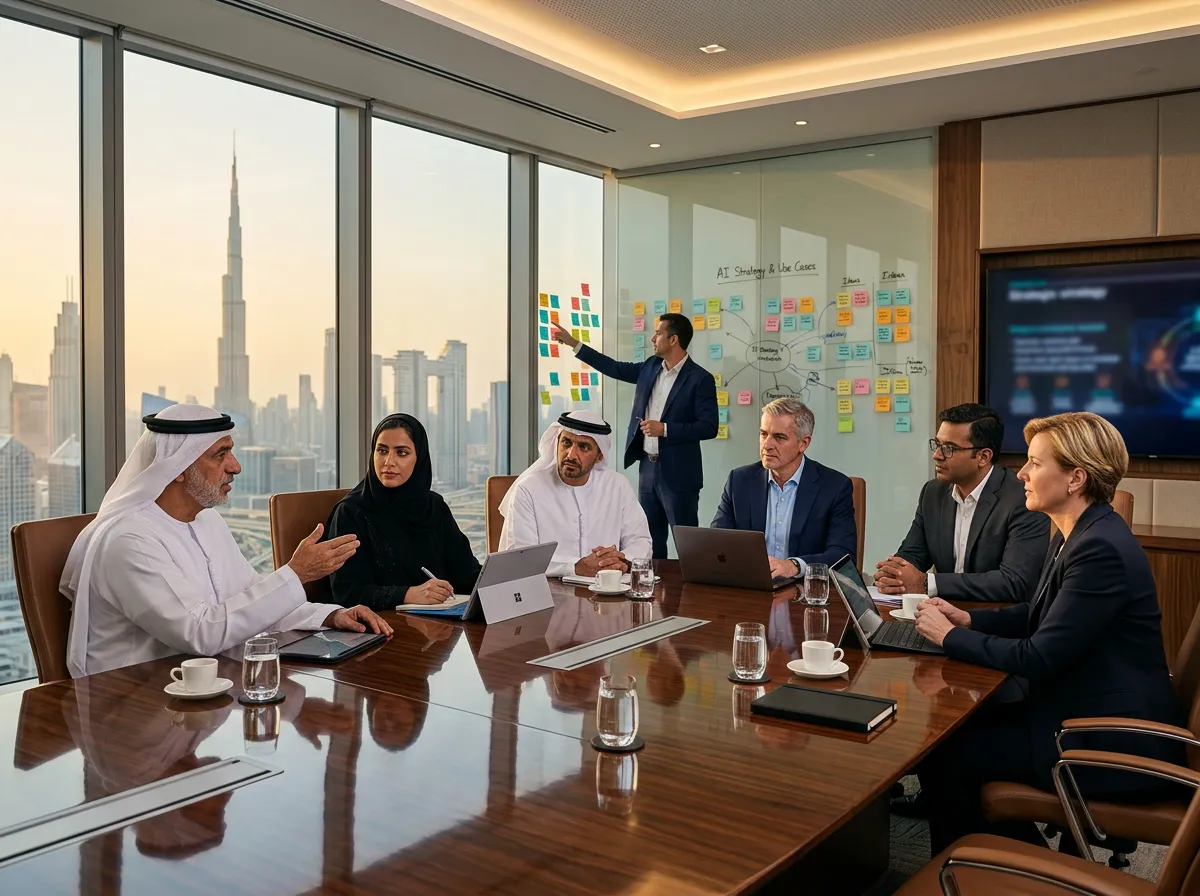
Certificates for everyone who completes
Each person who finishes a workshop or programme gets a TrainingInUAE.com certificate of completion that names the skills practised. Many DIFC professionals file it with their internal learning records. It records corporate training, not a government or professional body qualification.
- Issued to every participant who completes the hands on labs
- Shows the programme name, hours, tools covered and date
- Digital PDF, ready to add to LinkedIn and HR records
- Attendance and lab completion report for HR or L&D, on request

Groups our trainers work with in DIFC
Most bookings in the centre fall into a few audience types. Knowing which one you have tells us which facilitator profile to put forward.
Partners and senior advisers
Experienced professionals who expect a peer level facilitator with business credibility, direct challenge and very little standard material.
Graduate and analyst intakes
Early career cohorts learning to communicate upwards, own their work and handle their first client contact with confidence.
Relationship and coverage teams
Bankers and wealth advisers who need sharper client conversations, better questions and calmer handling of pressure on terms.
Operations and support staff
Client service, finance operations and administration teams who benefit from practical sessions on service, clarity and collaboration.
Compliance and control functions
Specialists who must challenge colleagues and explain rules persuasively without being seen as the department that says no.
Visiting regional leaders
Leadership groups flying in from across the GCC who need a facilitator able to manage a diverse, senior and opinionated room.
Teams our trainers have worked with














Plus 400+ enterprise clients across 16+ countries.
The facilitators we send to DIFC firms
Our trainers are senior practitioners who ran teams, closed deals or led change before facilitating. We put forward only people whose background fits your audience, and you can read their profile and talk to them before anything is confirmed.
Leadership and management faculty
For managers, senior leaders and leadership offsites
- Senior people who have run teams and led change
- Drawn from a visiting faculty network across 9 IIMs
- Coaching, decision making and difficult conversations
- English, Arabic or bilingual delivery
Sales and customer trainers
For sales, account and service teams
- Practitioners who have closed deals and run sales teams
- Role plays built on your real deals and customers
- Discovery, objection handling and negotiation
- B2B, retail and hospitality experience
AI and digital trainers
For AI adoption and productivity programmes
- 17+ years in AI and corporate training
- Have trained 200,000+ professionals in 16+ countries
- Copilot, ChatGPT, Claude and Gemini on real work
- Part of a pool of around 300 trainers worldwide
What DIFC audiences expect from a facilitator
DIFC houses banks, insurers, fund managers, family offices, law firms and fintech companies, many acting as regional headquarters for international groups. It runs on its own English common law framework with the DIFC Courts, which breeds a culture of precise language and careful documentation. Participants spot loose claims quickly, so our trainers rely on worked examples and honest feedback rather than motivational talk.
Most sessions take place in the firm’s own boardroom or in meeting space along Gate Avenue, the promenade that links the towers to Gate Village, so nobody needs to leave the district. Teams are multinational and often split across time zones, which favours tight half days and early starts. When firms hire a Corporate Trainer in DIFC, they usually want someone who respects their time and their intelligence.

Session lengths for DIFC diaries
Ninety minute session
One focused skill, such as structuring an email to a client, run over breakfast or late afternoon between meetings.
Half day workshop
Enough time for a model, two practice rounds and feedback, finishing before afternoon client calls start.
Full day workshop
The standard for skills like negotiation or feedback, where people need several attempts to change a habit.
Two day programme
For new managers or cohorts who need a broader toolkit, with day two built around their own live cases.
Series over several weeks
Short sessions spaced out so participants apply each skill at work and report back on what happened.
Corporate Trainer in DIFC: FAQs
How do you decide which trainer suits our firm?
We start from the audience, not the topic. Seniority, practice area, client exposure, language and the specific problem all shape the choice. We then propose a facilitator whose own career fits that group, for example someone with private banking experience for a coverage team. If the profile does not feel right, we suggest another before anything is booked.
Can we review the trainer's profile and speak to them before confirming?
Yes. Every proposal includes a short profile covering the facilitator’s background, sectors and languages. For most bookings we also arrange a call between your sponsor and the trainer. It lets you judge credibility and style, and it gives the trainer an early sense of your culture and goals.
Can the session run in Arabic or in both languages?
Yes. Our bench includes facilitators who work entirely in Arabic, others entirely in English, and some who move between the two. During scoping we ask about the first languages of participants, because the right choice affects how freely people speak in role plays. Materials can be prepared in either language or in both.
What is the largest group a single facilitator takes?
Hands on workshops are capped at 20 people per trainer, which leaves room for every person to rehearse and hear honest comments. Larger groups are split across repeat sessions or given a second facilitator. Talks and town hall slots can take any audience size, since the format relies less on individual coaching.
Can the session happen inside our DIFC tower?
Yes, on site delivery in your own tower is the usual arrangement. All the facilitator asks for is a screen and enough room for people to break into pairs. If your meeting rooms are booked, we can suggest venues within the centre or nearby. We also run online sessions for colleagues in other GCC offices.
What lead time does a DIFC booking need?
Expect a written proposal naming the suggested facilitator one or two working days after we first speak. The session date then depends on your calendar and the trainer’s availability. Two to three weeks of lead time allows for the manager calls and scenario preparation that make a session feel specific to your firm.
Our firm is strict about confidentiality. How do you handle client material?
Trainers work only with material you choose to share, and we ask for it anonymised. Client names, figures and deal details are removed or replaced before scenarios are built. We are happy to sign your confidentiality agreement, and nothing from your session is reused with another firm.
Can the workshop be recorded, and is there a certificate?
Recording for internal use is fine if agreed in advance. Many firms record the inputs and leave role plays unrecorded so people practise freely. Each attendee who finishes is issued a TrainingInUAE.com completion certificate, a record of corporate training rather than an accredited qualification.
Find the right facilitator for your firm
Explore more in DIFC and nearby
More training in DIFC
Nearby locations
Related programmes
- AI Agents and Automation Training in UAE: Build Working Workflows
- AI Training for Finance Teams in the UAE
- AI Training for HR Teams in the UAE
- AI Training for Sales Teams Who Want More Selling Time
- AI Training UAE: Hands On AI Training for Employees
- ChatGPT Training in UAE for Everyday Business Work
The UAE’s one stop shop for corporate training. Hands on workshops delivered across Dubai and all seven emirates. Licensed UAE company registered in Ajman, with a delivery team based in Dubai.
- AI Agents and Automation Training: Build Working Workflows
- ChatGPT Training for Everyday Business Work
- Claude AI Training for Document Heavy Teams
- Microsoft Copilot Training for Microsoft 365 Users
- Prompt Engineering Training Across Every Major AI Tool
- Business Writing Training
- Communication Skills Training
- Presentation Skills Training
- All programmes
© 2026 TrainingInUAE.com. All rights reserved.