Leadership Training in DAFZA for Leaders of Regional Teams
Leadership Training in DAFZA for managers who run teams spread across several countries. Your leaders rehearse the hard conversations they are putting off, work through live team problems and coach each other, with a senior facilitator correcting every attempt.
- Role plays built on your live issues
- Senior faculty who have led teams
- Impact reviewed at 90 days
- Rated 4.9/5 by 200,000+ professionals
- Certificate for every participant
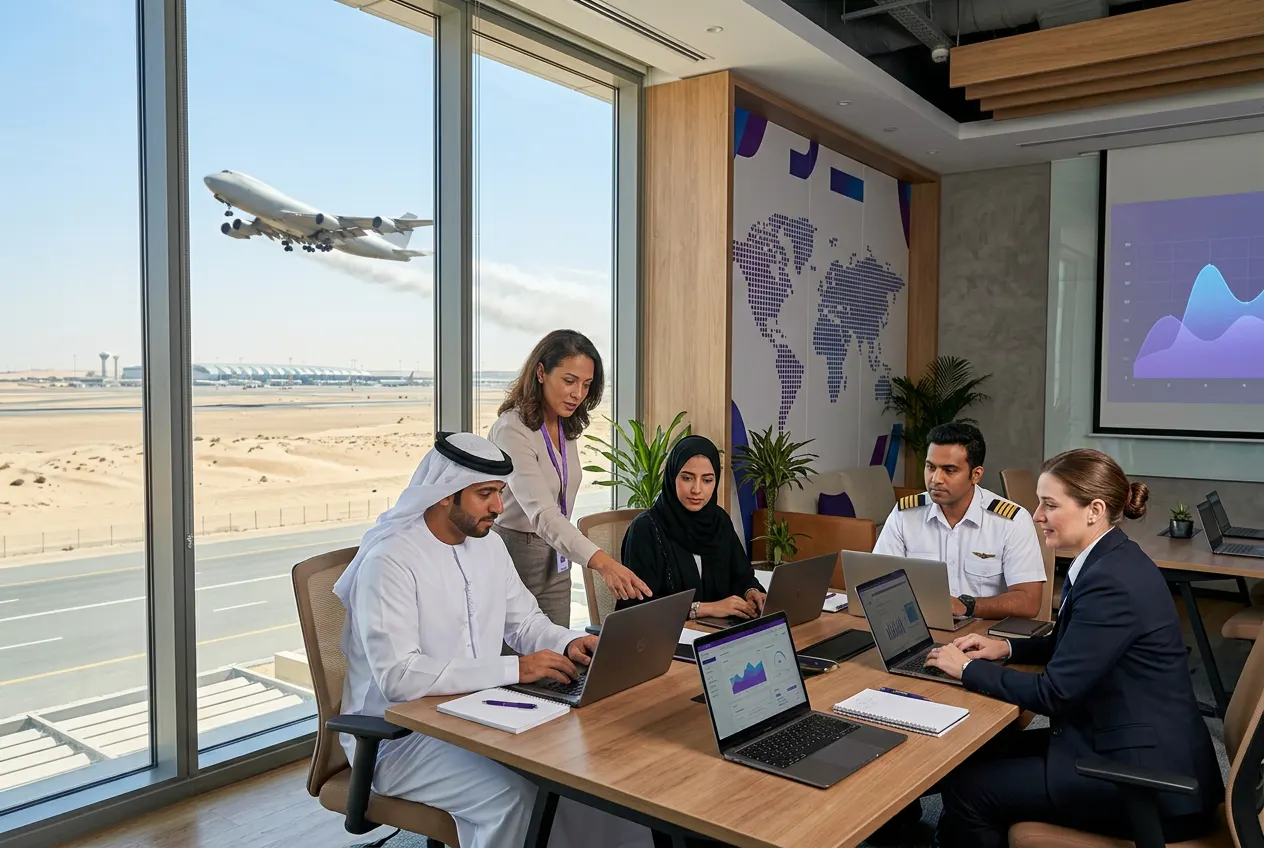
Why regional headquarters in the zone pick us for their managers
Practice on situations you recognise
Leaders spend about 80% of the session doing: rehearsing a tough conversation, working a live case from their own team and coaching a peer through a stuck decision.
Faculty who carried the weight
Our facilitators have run country teams, sat on regional boards and managed people they rarely saw in person. Managers trust advice from someone who has been in the same seat.
Built for leaders who travel
Modules fit the weeks your managers are actually in Dubai. Between modules, short online check ins keep momentum while people are visiting markets.
Arabic, English or a mix
We run the room in English, Arabic or both. Peer coaching triads can switch language freely, so nobody holds back because a word will not come.
Recognition on file
Leaders who see the programme through get a TrainingInUAE.com certificate of completion, useful in appraisal records and talent reviews at the regional office.
Results your sponsor can check
Before the first module we agree one measure with the sponsor, such as engagement scores or regretted attrition, then report progress against it at 90 days.

How Leadership Training in DAFZA turns practice into habit
A manager who has only heard about coaching still avoids the difficult one to one on Sunday morning. Confidence comes from doing it in a safe room first, hearing how it landed and trying again. That is why our sessions are built as rehearsal, not lecture.
Gather 360 input
A short 360 survey or line manager interview shows how each leader is seen by their team, peers and regional head before we design anything.
Diagnose the pattern
We look for the shared gaps across the group, such as delegation that stops at the manager or feedback that never reaches remote staff.
Design on live cases
Leaders send anonymised situations they are dealing with now, and these become the role plays and case work used in the room.
Rehearse in the room
Each leader practises the same conversation more than once, swapping roles with peers and adjusting after feedback from the facilitator.
Thirty day challenge
Every participant leaves with one leadership behaviour to apply at work for 30 days, agreed with their own manager and tracked weekly.
Review at 90 days
The sponsor sees how the agreed metric has moved since the baseline, alongside our recommendations for whoever joins the next cohort.

Across a full day, the facilitator frames each idea in a few minutes. The rest belongs to leaders: paired role plays, case clinics on real team issues and peer coaching rounds with structured feedback.
- Laptops open from the first 15 minutes
- Your own documents, data and tasks
- A finished output from every lab
- Prompt library to keep using on Monday
What leaders work on during our leadership programme
Eight modules cover what managers in a regional hub most often struggle with. Pick a few for a masterclass or run all eight as a series. Every module ends with something leaders actually do, not just discuss.
Module 1. Leading many nationalities well
How expectations of hierarchy, directness and disagreement differ across the cultures in a typical DAFZA team, and how to set norms that work for all of them.
🛠 Leaders practise: Setting team ground rules with colleagues playing three very different team members
Module 2. Coaching and honest feedback
Short coaching conversations that help people solve their own problems, plus feedback that is specific, timely and still respectful when the news is uncomfortable.
🛠 Leaders practise: Giving corrective feedback to a high performer who misses deadlines
Module 3. Delegating across borders
Handing over real ownership to country managers and specialists, agreeing check points and holding people to account when you only see them a few times a year.
🛠 Leaders practise: Delegating a market launch task with clear outcomes and check points
Module 4. Decisions when time is short
Making sound calls with partial information during supply disruptions, customs delays or sudden demand from head office, and explaining the decision clearly afterwards.
🛠 Leaders practise: A timed decision case on a delayed shipment and an unhappy key account
Module 5. Taking a team through change
Leading restructures, system rollouts or a regional office move, from explaining the reason to handling the quiet resistance that shows up weeks later.
🛠 Leaders practise: Announcing a reporting line change to a sceptical team, then taking questions
Module 6. Influence without authority
Winning support from global functions, distributors and other regional heads who do not report to you, using interests and evidence rather than seniority.
🛠 Leaders practise: Persuading a global finance partner to approve a regional exception
Module 7. Teams that perform at distance
Building trust, rhythm and shared standards in a team split between the zone and several markets, including how to run meetings people want to attend.
🛠 Leaders practise: Redesigning their own weekly team meeting and testing it with peers
Module 8. Using AI and data to lead
Reading dashboards critically, using tools such as Copilot or ChatGPT to prepare for difficult conversations and deciding when data should overrule instinct.
🛠 Leaders practise: Preparing a performance conversation from real team data with an AI assistant
Shaped around the leadership challenges in your business
No two regional offices face the same pressures. We start from what your leaders are wrestling with this quarter, then build the programme around it so the room feels like an ordinary week, only with time to think.
Sponsor conversation
We meet the HR lead and a senior sponsor to agree what good leadership looks like in your company and which behaviour must shift first.
Cases from your teams
Real situations from your leaders, stripped of names, become the material. A logistics firm practises on shipment escalations, a pharma office on launch pressure.
Pitched to level and language
New supervisors and regional directors need different depth. We adjust pace, examples and language so each group is stretched without feeling talked down to.
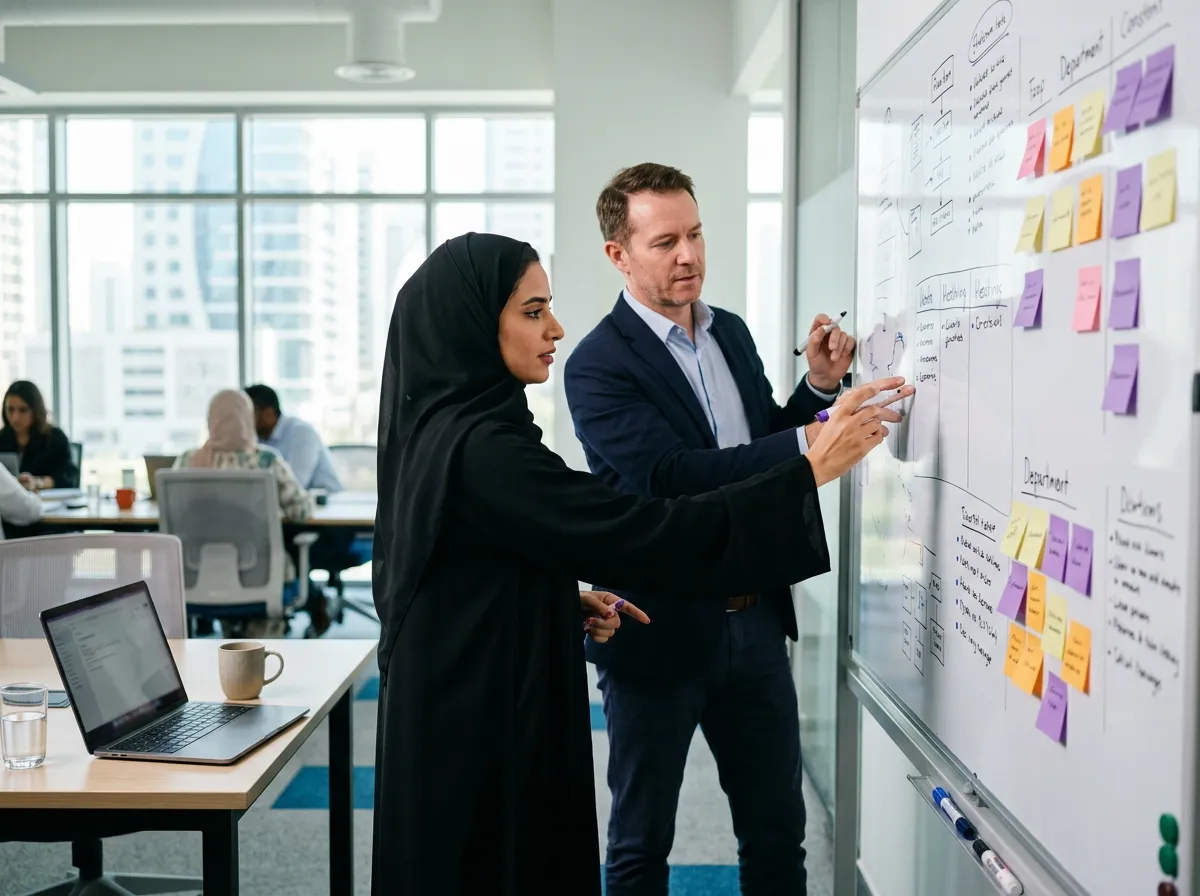
Programmes for every leadership level
First time managers
For newly promoted team leads learning to delegate, give feedback to former peers and run a useful one to one.
Middle managers
For managers caught between head office targets and local teams, focused on prioritising, influencing and developing their own people.
Senior leaders and executives
For country heads and regional directors working on strategy conversations, culture and leading through others at scale.
High potential talent
For people being prepared for their next role, with stretch assignments and a business problem they present to the leadership team.
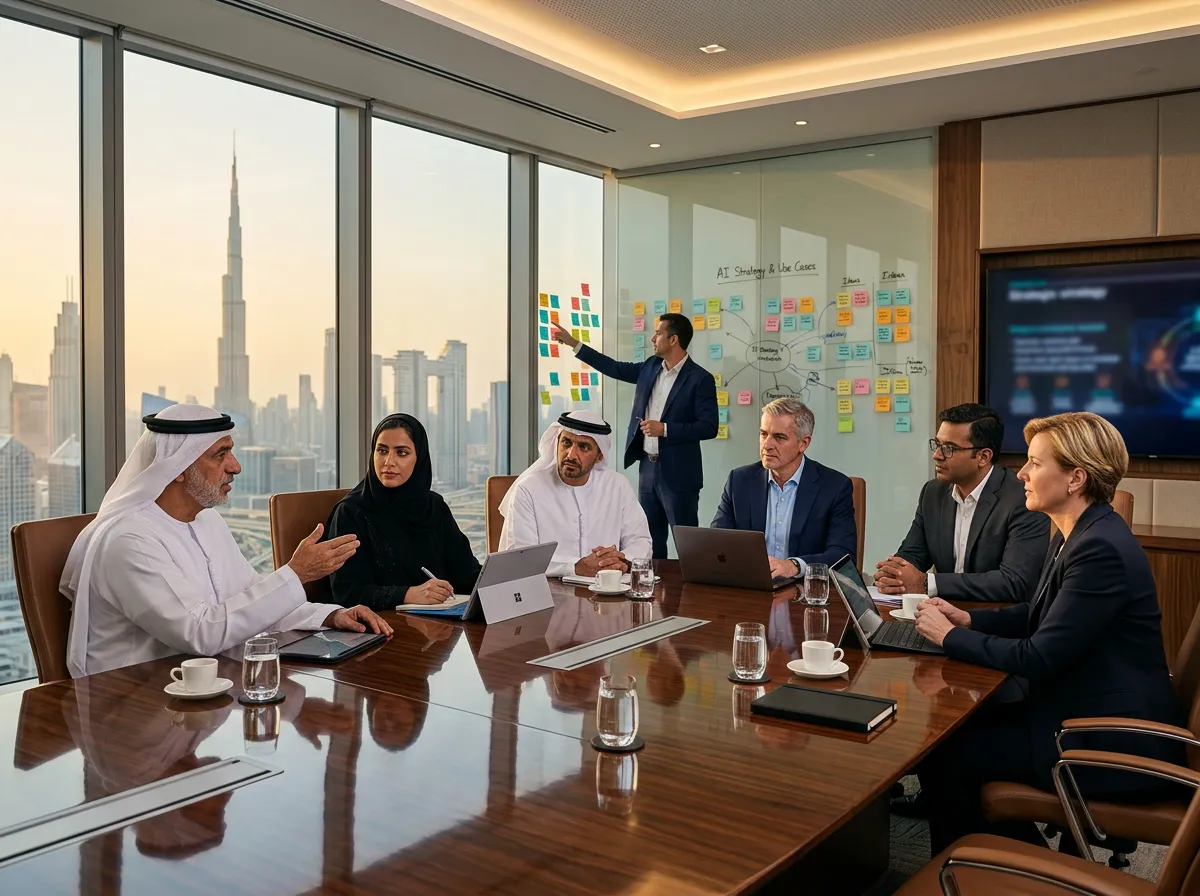
Certificates for DAFZA programme graduates
Finish the programme and you leave with a certificate of completion from TrainingInUAE.com, while HR gets a full attendance record for talent files. It confirms in-house leadership development took place, nothing more grand. No government body or university stands behind it.
- Issued to every participant who completes the hands on labs
- Shows the programme name, hours, tools covered and date
- Digital PDF, ready to add to LinkedIn and HR records
- Attendance and lab completion report for HR or L&D, on request

Leaders we work with in Dubai Airport Free Zone
Most leaders we meet here run regional functions for international groups. The cases change with the sector, but the core challenge is the same: leading people across markets with limited time together.
Aviation and aerospace
Managers of engineering, parts and support teams who balance strict safety culture with commercial pressure and customers who expect answers immediately.
Logistics and freight
Operations leaders running round the clock shifts, where calm decisions under time pressure and clear handovers decide the quality of the whole team.
Pharma and healthcare supply
Regional commercial and medical leaders coordinating launches across several markets, often managing specialists who know more about the product than they do.
Electronics and technology
Channel and country managers working to quarterly targets from a global parent, who need to keep teams motivated through constant change in priorities.
Luxury, cosmetics and fragrance
Brand and retail leaders managing creative and commercial staff, where influence with partners and retailers matters as much as direct authority.
Founder led trading groups
Owners and their first layer of managers moving from personal control to a structure where others make decisions and take responsibility.
Teams our trainers have worked with













Plus 400+ enterprise clients across 16+ countries.
Faculty who have led regional teams themselves
Each facilitator has spent years in senior management before teaching it, including restructures and tough board meetings. For groups in the zone we choose people who have lived with matrix reporting and dotted lines to a global head office.
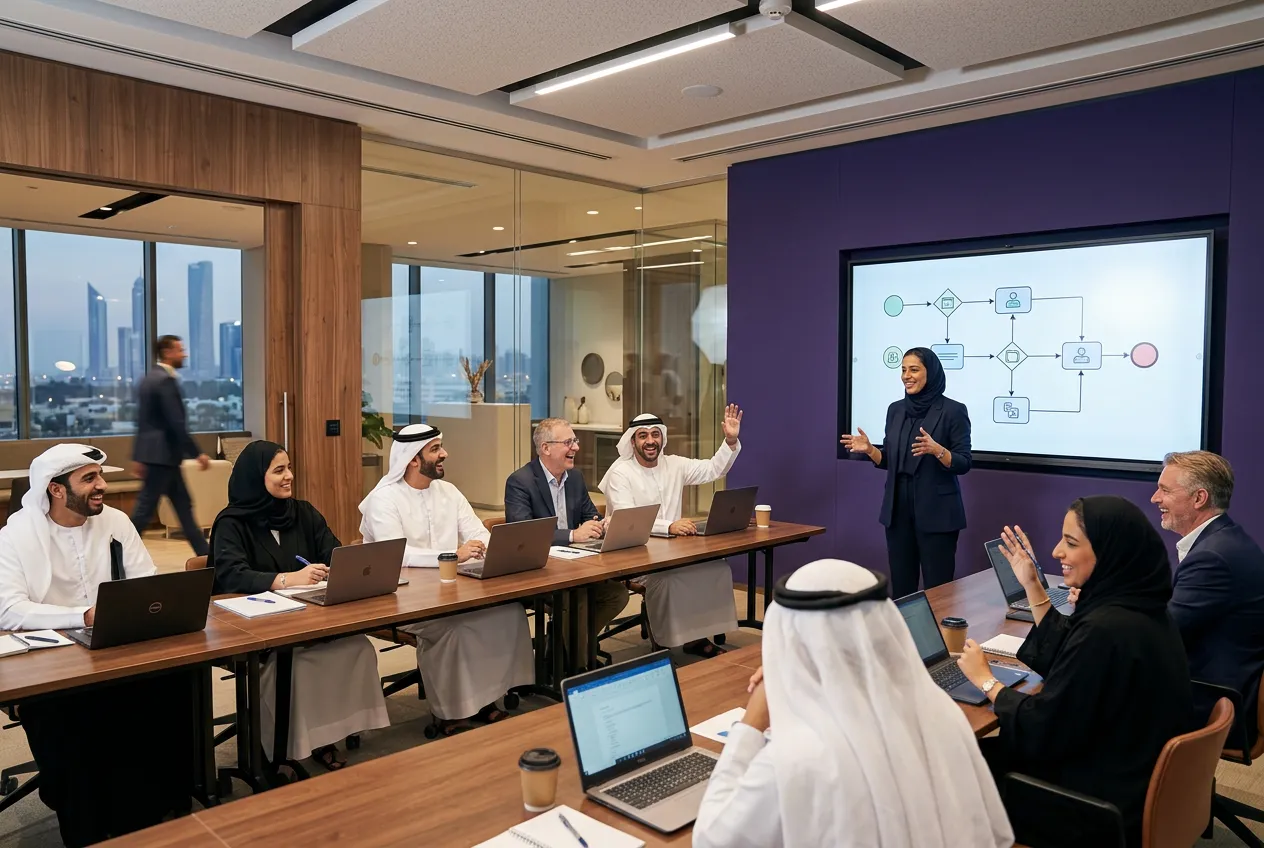
Leadership and management faculty
For managers, senior leaders and leadership offsites
- Senior people who have run teams and led change
- Drawn from a visiting faculty network across 9 IIMs
- Coaching, decision making and difficult conversations
- English, Arabic or bilingual delivery
Sales and customer trainers
For sales, account and service teams
- Practitioners who have closed deals and run sales teams
- Role plays built on your real deals and customers
- Discovery, objection handling and negotiation
- B2B, retail and hospitality experience
AI and digital trainers
For AI adoption and productivity programmes
- 17+ years in AI and corporate training
- Have trained 200,000+ professionals in 16+ countries
- Copilot, ChatGPT, Claude and Gemini on real work
- Part of a pool of around 300 trainers worldwide
Leading from a regional hub beside the airport
Dubai Airport Free Zone opened in 1996 next to Dubai International Airport and falls under the Dubai Integrated Economic Zones umbrella. A large number of international groups base their regional headquarters for the Middle East and Africa in the zone, so the typical leader manages people in several countries, travels often and spends much of the week leading through screens. Delegation, trust at distance and clear decisions travel with them.
For a short masterclass, the DAFZ Square business centre offers meeting and training rooms inside the zone, which keeps leaders close to their desks. For a full leadership offsite, groups often choose a hotel near the airport or by Dubai Creek, a short drive away, or head further out for a quieter retreat. When country managers fly in for a planning week, we can run a leadership block inside that week rather than asking them to travel again.

Leadership formats that fit a travelling management team
Half day masterclass
One leadership skill, such as coaching or delegation, practised in depth during a single morning or afternoon.
One day leadership workshop
Two linked modules with several rounds of role play, ideal for a cohort of managers from one function.
Two day leadership offsite
Away from the office, combining skill practice with team agreements and priorities for the coming quarter.
Leadership series
Four to eight modules spread across a quarter or two, each followed by a workplace challenge and peer coaching.
Live online modules
Interactive virtual sessions for leaders based in other markets, using breakout rooms for practice and feedback.
Leadership Training in DAFZA: questions HR leaders ask
What formats does leadership training in DAFZA come in, and how long does it run?
The shortest option is a half day masterclass on one skill. Many groups choose a one day workshop or a two day offsite. For lasting change, a series of four to eight modules over three to six months works best, because leaders apply each skill at work for 30 days before the next module. We help you pick based on the gap and your travel calendar.
Can you include 360 degree feedback for our managers?
Yes, and for regional teams it is often the most useful part. A brief online questionnaire goes to each manager’s boss, colleagues and team members across markets, or we plug into the tool you already use. Each leader sees their own report in private. HR sees only group themes. Leaders then rehearse the exact behaviours their people flagged.
Is the programme available in Arabic or as a bilingual session?
Yes. Our faculty can run the whole programme in Arabic, in English or moving between both languages. In the zone, a common setup is English for the main room while coaching triads and case work run in whichever language each group prefers. Handouts come in Arabic, English or both, whichever your cohort prefers.
How many leaders can join one cohort?
One trainer works with a maximum of 20 leaders in a practical session, which gives everyone several turns at practice and personal feedback. For larger management groups we add a second facilitator or run parallel cohorts. A smaller group of eight to twelve often works best for senior executives, because conversations go deeper.
Which venues around Dubai Airport Free Zone suit a leadership offsite?
For a single day, meeting rooms at the DAFZ Square business centre or your own office keep things simple. For an offsite, hotels near the airport and along Dubai Creek are a short drive away, and some teams choose a desert or coastal venue elsewhere in the UAE to get real distance from email. We bring all materials and adapt the plan to the venue you choose.
Do leaders receive a certificate at the end?
Yes. Leaders who attend every module are issued a certificate of completion from TrainingInUAE.com, with attendance lists sent to HR. Most HR teams add it to the leader’s appraisal file. No government body accredits it, and we tell leaders that on day one.
Can sessions be recorded for leaders who are travelling?
Yes, if recording is agreed in advance, and only for internal use within your company. Most clients record the facilitator’s short inputs and pause during role plays and peer coaching, because leaders speak far more openly about real team problems when nothing is being captured.
What proof will head office see three months later?
Before anything is designed, the sponsor picks the evidence that matters, perhaps engagement scores in the regional office, regretted resignations or a quick pulse from team members. After the workshop each leader works on a 30 day challenge. Ninety days on, we set the new figures beside the old ones and the sponsor gets a two page summary.
Plan your next leadership cohort
Explore more in DAFZA and nearby
More training in DAFZA
Nearby locations
The UAE’s one stop shop for corporate training. Hands on workshops delivered across Dubai and all seven emirates. Licensed UAE company registered in Ajman, with a delivery team based in Dubai.
- AI Agents and Automation Training: Build Working Workflows
- ChatGPT Training for Everyday Business Work
- Claude AI Training for Document Heavy Teams
- Microsoft Copilot Training for Microsoft 365 Users
- Prompt Engineering Training Across Every Major AI Tool
- Business Writing Training
- Communication Skills Training
- Presentation Skills Training
- All programmes
© 2026 TrainingInUAE.com. All rights reserved.