Home / Programmes / Workplace Wellbeing Training UAE for Healthier, Steadier Teams
Workplace Wellbeing Training UAE for Healthier, Steadier Teams
Workplace Wellbeing Training UAE organisations use to make healthy habits part of the working week rather than a poster in the pantry. Teams work hands on with their real schedules, shifts and meeting load to design changes that stick.
- Practical habits, never medical advice
- Manager and champion tracks included
- Designed around your shifts and rotas
- Rated 4.9/5 by 200,000+ professionals
- Certificate for every participant

Why a practical wellbeing programme works better
Rooted in the working day
We look at meeting overload, commutes, screen hours and shift handovers, then redesign them with the team. Wellbeing improves when the work itself changes, not only the perks.
Honest about boundaries
Trainers teach everyday wellbeing skills and healthy team practice. They never diagnose, prescribe or counsel, and they signpost staff to qualified professionals or your support services.
Managers carry it forward
Line managers shape most of what staff experience. A dedicated track gives them simple routines for check ins, workload fairness and noticing when a colleague is not themselves.
Champions who keep it alive
Optional sessions prepare volunteer wellbeing champions to run small team initiatives, collect feedback and keep momentum going long after the workshop ends.
Completion recorded
Each participant who finishes the programme is awarded a TrainingInUAE.com completion certificate for the HR learning record.
Progress checked at 90 days
We agree an indicator before we start, perhaps a pulse survey score or participation in team routines, and report on it three months later.
Workplace Wellbeing Training UAE teams practise, not just hear
A talk on sleep and hydration fades by lunchtime. What lasts is a team that has redesigned its own Tuesday, agreed a no meeting window and rehearsed how to ask a colleague if they are alright. Our sessions are built for that kind of change.
Understand how you work
We speak with HR and a few managers about working patterns, existing benefits and any pulse survey themes, always at group level.
Audit a real week
Participants map a typical week of meetings, breaks, movement and screen time to see where energy drains away.
Short, practical input
The trainer shares one evidence informed idea at a time, framed for work, with no clinical claims or jargon.
Design team changes
Groups agree two or three small changes to how they work, such as protected focus time or better shift handovers.
Rehearse the hard bits
People practise raising a workload concern or checking in on a colleague, with peer feedback on tone and wording.
Measure and refresh
Three months on, we look again at the chosen indicator and propose a refresher or champion session where habits have slipped.

Activity takes up nearly 80% of every session. Participants audit their own routines, plan changes in small groups and rehearse conversations, while the trainer keeps inputs brief and practical.
- Laptops open from the first 15 minutes
- Your own documents, data and tasks
- A finished output from every lab
- Prompt library to keep using on Monday
What the workplace wellbeing course covers
Eight modules move from personal energy to team habits and finally to how leaders and champions sustain wellbeing across the organisation. The core fits into a single day, while manager and champion modules may be booked as their own sessions.
Module 1. What wellbeing at work really means
Physical, mental, social and financial wellbeing as they show up at work, why perks alone rarely help and how job design affects how people feel.
🛠 Participants practise: Rate your own wellbeing across four areas and pick one to improve
Module 2. Energy across the working day
Planning demanding tasks around natural energy peaks, taking real breaks and building movement into desk, site and shift based roles.
🛠 Participants practise: Redesign one real workday with breaks and focus blocks built in
Module 3. Digital habits and switching off
Notifications, after hours messages and back to back video calls. Practical team agreements that protect focus and evenings without hurting service.
🛠 Participants practise: Draft a team agreement on messaging hours and meeting free time
Module 4. Working well in the heat and on shifts
Everyday habits for hydration, rest and routine for outdoor, field and rotating shift teams, linked to your existing health and safety rules.
🛠 Participants practise: Plan a healthier routine around your own shift or site pattern
Module 5. Connection and belonging
Why loneliness matters at work, especially for people living far from family, and simple ways teams can include new joiners and remote colleagues.
🛠 Participants practise: Design one low cost team ritual that builds connection
Module 6. Psychological safety in teams
Creating a climate where people can admit mistakes, ask for help and raise concerns, and spotting the behaviours that quietly close it down.
🛠 Participants practise: Rewrite three common meeting responses to make speaking up safer
Module 7. Supportive conversations and signposting
Spotting that a colleague seems different, starting a kind conversation and guiding them towards an employee assistance programme, HR or a qualified professional.
🛠 Participants practise: Rehearse a check in conversation and the words to signpost support
Module 8. Leading and sustaining wellbeing
For managers and champions: fair workload planning, regular team check ins, using pulse feedback well and keeping wellbeing initiatives running all year.
🛠 Participants practise: Build a 90 day wellbeing action plan for your own team
Fitted to how your people actually work
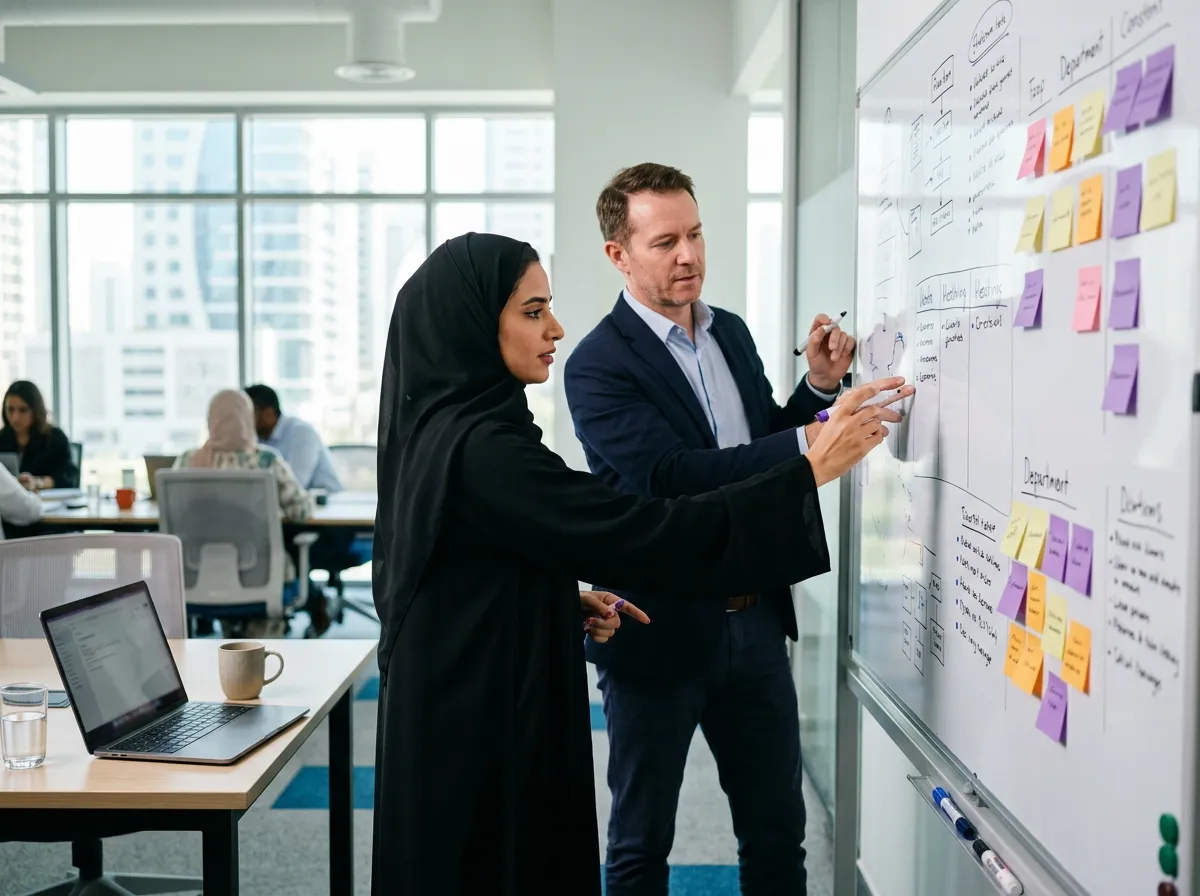
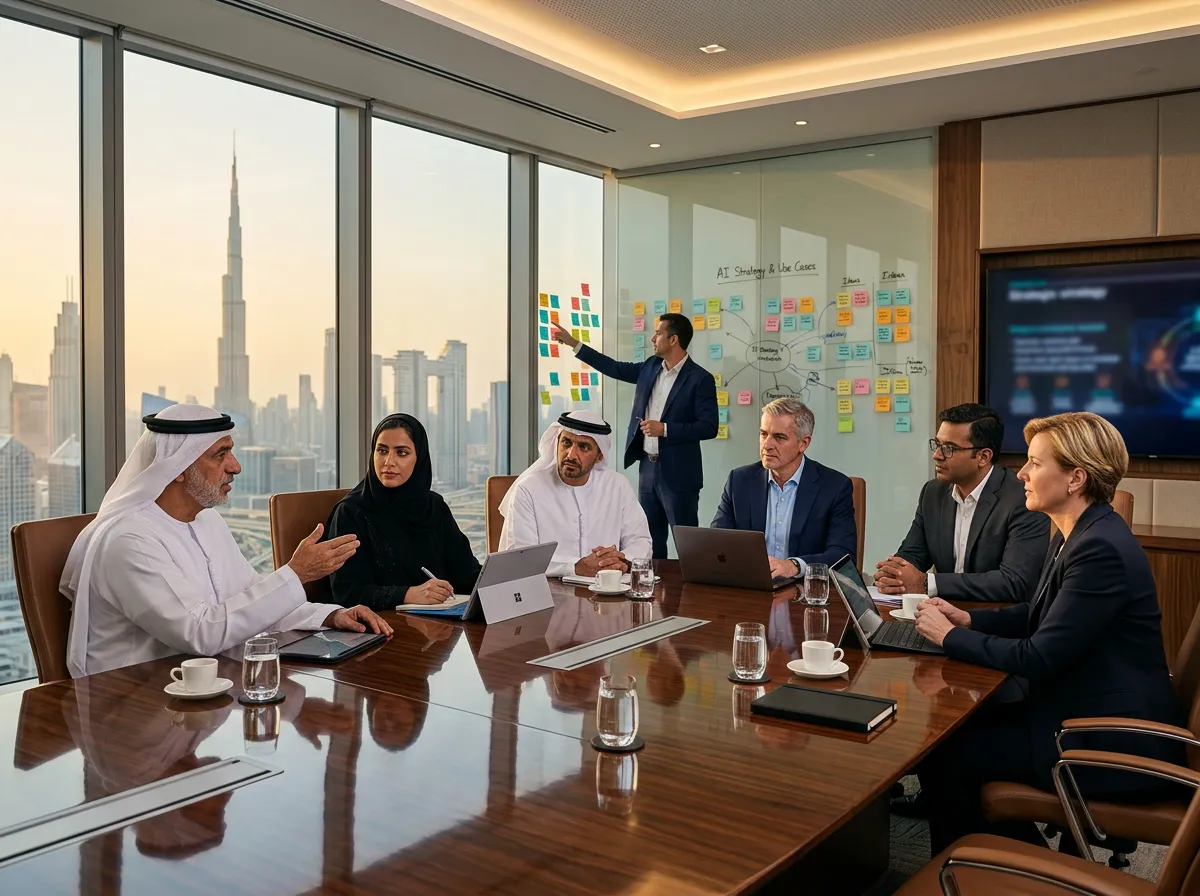
An office tower in a financial centre, a hotel back of house and a logistics yard need very different wellbeing conversations. We study your working patterns first, then shape examples, timing and depth to match them.
Map your working patterns
Shifts, peak seasons, remote work, outdoor roles and existing benefits are reviewed with HR so the programme builds on what already exists.
Use your own routines
Exercises are built around your real rotas, meeting culture and support services, so every idea can be applied the next working day.
Suit audience and language
Separate sessions for staff, managers and champions, delivered in Arabic, English or a mix, and scheduled to avoid your busiest hours.
Built for every level
Senior leaders
Setting the tone on workload and availability, modelling healthy behaviour and making wellbeing part of how performance is discussed.
Line managers
Team check ins, fair allocation of work, noticing early changes in colleagues and signposting support with confidence.
All staff
Energy, digital habits, connection and simple routines that make a full working week more sustainable.
Wellbeing champions
Running small team initiatives, gathering feedback and keeping wellbeing visible between formal programmes.
A completion record for each attendee
Anyone who finishes the programme is given a TrainingInUAE.com completion certificate naming the wellbeing skills practised. It is an internal professional development record, not a medical, counselling or accredited qualification of any kind.
- Issued to every participant who completes the hands on labs
- Shows the programme name, hours, tools covered and date
- Digital PDF, ready to add to LinkedIn and HR records
- Attendance and lab completion report for HR or L&D, on request

Sectors that invest in wellbeing at work
Every employer benefits from healthier, steadier teams, but some face long hours, shift work or demanding customers every day. These are the organisations that most often bring us in.
Hospitality and tourism
Hotel, restaurant and attraction teams working split shifts, weekends and peak seasons in guest facing roles.
Construction and facilities
Site supervisors, engineers and facilities crews handling heat, early starts and demanding project schedules.
Healthcare providers
Administrative and support teams in clinics and hospitals whose days revolve around rotas and patient demand.
Banking and insurance
Office based teams facing screen heavy days, tight deadlines and expectations of availability after hours.
Logistics and aviation
Ground, warehouse and operations staff on rotating rosters, night work and time critical handovers.
Public sector entities
Departments building wellbeing into people strategies and service centre teams handling high daily volumes.
Teams our trainers have worked with












Plus 400+ enterprise clients across 16+ countries.
Facilitators who understand real workloads
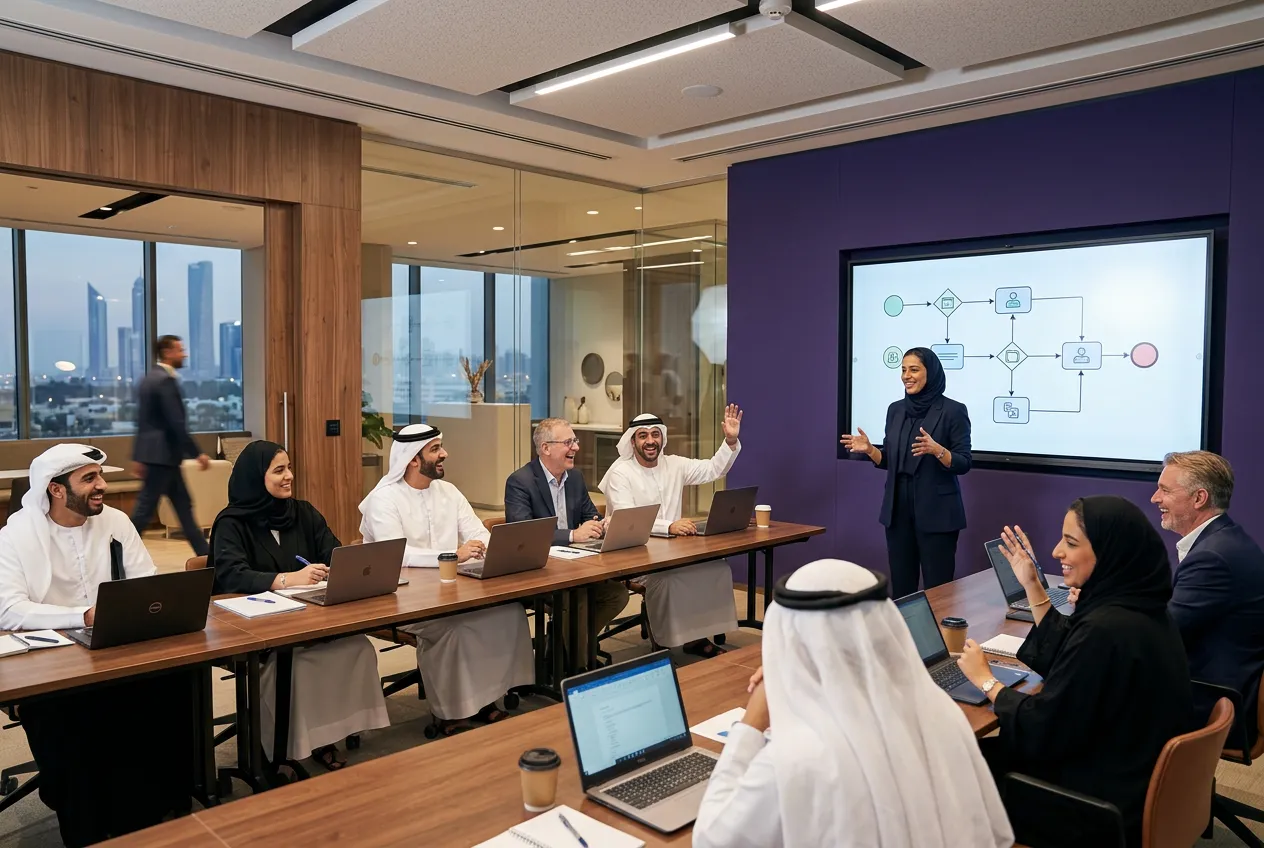
Our trainers are senior people managers and HR practitioners who have run teams through long shifts, restructures and peak seasons. They teach practical wellbeing habits and know exactly where workplace training stops and professional care begins.
Leadership and management faculty
For managers, senior leaders and leadership offsites
- Senior people who have run teams and led change
- Drawn from a visiting faculty network across 9 IIMs
- Coaching, decision making and difficult conversations
- English, Arabic or bilingual delivery
Sales and customer trainers
For sales, account and service teams
- Practitioners who have closed deals and run sales teams
- Role plays built on your real deals and customers
- Discovery, objection handling and negotiation
- B2B, retail and hospitality experience
AI and digital trainers
For AI adoption and productivity programmes
- 17+ years in AI and corporate training
- Have trained 200,000+ professionals in 16+ countries
- Copilot, ChatGPT, Claude and Gemini on real work
- Part of a pool of around 300 trainers worldwide
The UAE context for workplace wellbeing
Wellbeing has sat on the national agenda since 2019, when the federal government adopted the National Strategy for Wellbeing 2031. Employers also have concrete duties: basic health insurance became mandatory for private sector employees in all seven emirates from 1 January 2025, and MOHRE, the federal labour ministry, enforces a summer midday break for outdoor work in direct sun, which in 2025 ran from 12.30pm to 3pm between 15 June and 15 September.
Rules cover the minimum. Day to day wellbeing still depends on how work is organised and how managers lead, especially in a workforce where many people live far from family. Workplace Wellbeing Training UAE programmes from us focus on those everyday habits and leave clinical matters to qualified professionals. Sessions run at your premises in any of the seven emirates, or live online for colleagues elsewhere in the GCC.
Formats that fit around operations
Half day team session
Energy, digital habits and one team agreement in three to four hours, easy to fit around shifts.
One day workshop
Every core module, plus time to rebuild actual routines and rehearse supportive conversations.
Manager workshop
A focused session for people leaders on check ins, workload fairness and signposting support.
Champions programme
Two short sessions preparing volunteers to run team initiatives and gather feedback through the year.
Quarterly online series
Short live virtual sessions, each on one theme, for dispersed or multi emirate teams.
Workplace Wellbeing Training UAE: FAQs
Is wellbeing training the same as mental health treatment?
No. This is workplace skills training on healthy routines, team habits and supportive leadership. Diagnosis, treatment and counselling sit outside what our trainers do. Where someone needs more than everyday support, we point them to qualified professionals, an employee assistance programme or your HR team, and we can add your support contacts to the materials.
How is this different from your stress management workshop?
Stress management focuses on personal pressure: handling heavy workloads, resets and recovery. Workplace Wellbeing Training UAE is broader and more organisational, covering energy, digital habits, connection, psychological safety and how managers and champions sustain good practice. Many clients run stress management for individuals and the wellbeing programme for whole teams and leaders.
How long should a wellbeing programme run?
A half day suits a team that wants a practical start and one shared agreement. A full day covers the whole core outline. Organisations aiming for lasting change usually add a manager workshop and a short champions programme, then a quarterly online series to keep habits visible across the year.
Will staff be asked about their personal health?
No. Nobody is asked to share medical or private information. Exercises use work topics such as schedules, meetings, breaks and team routines, and people decide how much they share in pairs. The trainer agrees confidentiality ground rules at the start so everyone can take part comfortably.
Can you train our wellbeing champions?
Yes. The champions programme prepares volunteers to run small team initiatives, gather honest feedback, promote existing support services and keep wellbeing on the agenda. Champions are taught to listen and signpost, never to act as counsellors, which keeps the role safe for them and for colleagues.
Can the wellbeing sessions run in Arabic?
Yes. We can deliver fully in Arabic, fully in English or switch between the two. People tend to talk about how they feel more easily in their mother tongue, which is why mixed teams often prefer the bilingual option. Handouts, team agreements and action plans can be prepared in both languages.
Do you deliver on site for shift and site teams?
Yes. Our trainers travel to offices, hotels, sites and depots in every emirate, and we break sessions into early and late slots to suit rotas. Each trainer works with no more than 20 people in a hands on session, with repeat runs or more trainers for larger workforces.
What drives the cost of a wellbeing programme?
Headcount, session count, whether we come on site or meet online, the language chosen and whether you add manager or champion tracks all affect scope. The depth of customisation to your shifts and support services also matters. Share a brief and expect our written proposal inside 24 to 48 hours.
Make wellbeing part of how work gets done
Keep exploring
Related programmes
- Stress Management Training in Dubai
- Workplace Culture Training in UAE for Diverse Teams
- Emotional Intelligence Training in UAE
- Time Management and Productivity Training in UAE
- Soft Skills Training in Dubai and Across the UAE
- Conflict Resolution Training in Dubai for Managers and Teams
- Critical Thinking Training Dubai
The UAE’s one stop shop for corporate training. Hands on workshops delivered across Dubai and all seven emirates. Licensed UAE company registered in Ajman, with a delivery team based in Dubai.
- AI Agents and Automation Training: Build Working Workflows
- ChatGPT Training for Everyday Business Work
- Claude AI Training for Document Heavy Teams
- Microsoft Copilot Training for Microsoft 365 Users
- Prompt Engineering Training Across Every Major AI Tool
- Business Writing Training
- Communication Skills Training
- Presentation Skills Training
- All programmes
© 2026 TrainingInUAE.com. All rights reserved.