Home / Programmes / Problem Solving Training in Dubai and Decision Making Skills
Problem Solving Training in Dubai and Decision Making Skills
Problem Solving Training in Dubai and across the UAE for teams that keep fighting the same fires. Participants learn structured methods for root causes and decisions, then apply them hands on to a real problem from their own work.
- Work on a live problem from your team
- Root cause and decision tools you keep
- Recommendation ready for management
- Rated 4.9/5 by 200,000+ professionals
- Certificate for every participant

Why teams solve problems better after this course
A shared method
When everyone uses the same steps to define, analyse and decide, meetings stop circling. Teams argue about evidence instead of opinions and reach a decision sooner.
Real problems on the table
Each group brings a genuine issue, such as repeat defects, late deliveries or slow approvals, and works it through from problem statement to recommendation.
Tools, not theory
Five whys, fishbone diagrams, simple data checks and decision matrices are taught in minutes and practised for hours on your own material.
Senior facilitators
Trainers have run operations, projects and improvement work in the region. They push groups to challenge assumptions and test whether a cause is really proven.
Certificate for completion
Every participant who finishes the course receives a TrainingInUAE.com certificate of completion recording the methods practised.
Measured at 90 days
We agree a metric linked to the problems chosen, for example rework, cycle time or repeat complaints, and report progress three months later.

How Problem Solving Training in Dubai runs as a working session
Problem solving is a skill learned by doing it on something that matters. Watching a trainer analyse a textbook case teaches very little. So groups pick a real issue from their own operation and use each tool on it as soon as they learn it.
Choose the problems
Before the session we agree with managers which recurring issues are worth solving, and form groups around them.
Gather the facts
Groups bring whatever data exists, such as complaint logs, defect counts or process timings, with sensitive details removed.
Learn a tool
A short demonstration of one method, for example a fishbone diagram, using an example from a typical Gulf operation.
Apply it straight away
Each group uses the tool on its own problem, while the trainer moves between tables and challenges the reasoning.
Present a recommendation
Groups finish by presenting cause, options and a recommended action to peers or a manager, then refine it after questions.
Track the fix
Owners agree next steps and dates, and at 90 days we review what was implemented and whether the problem has reduced.

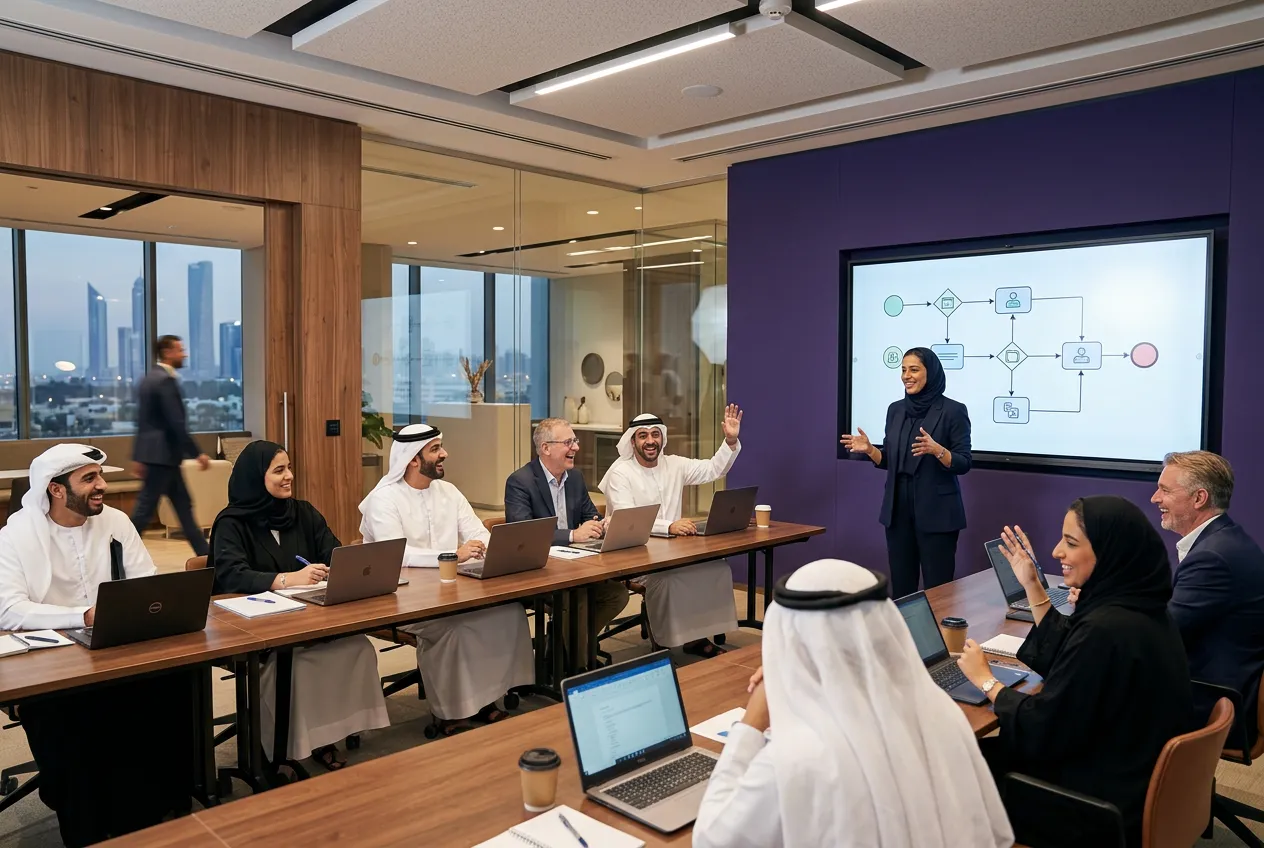
Around 80% of the time is group work on live problems. The trainer explains a tool briefly, then coaches each table as they apply it, questioning weak evidence and quick conclusions.
- Laptops open from the first 15 minutes
- Your own documents, data and tasks
- A finished output from every lab
- Prompt library to keep using on Monday
What the problem solving and decision making course covers
The outline follows a structured path from a vague complaint to a tested decision. A one day workshop covers the core steps; two days gives groups time to finish a full analysis and present it to management.
Module 1. Defining the real problem
Turning a vague complaint into a clear, measurable problem statement. Separating the problem from symptoms, blame and the solution someone already prefers.
🛠 Participants practise: Write and sharpen a problem statement for your team’s live issue
Module 2. Gathering facts and data
Deciding what evidence you need, collecting it quickly and spotting gaps. Simple ways to look at data without specialist software or statistics training.
🛠 Participants practise: Build a quick fact sheet on your problem from existing data
Module 3. Finding root causes
Using five whys and fishbone diagrams to move past the first obvious answer, then checking whether each suspected cause is supported by evidence.
🛠 Participants practise: Run a fishbone and five whys analysis on your live problem
Module 4. Thinking traps and bias
How confirmation bias, groupthink and jumping to conclusions mislead teams, and simple habits to challenge assumptions without slowing everything down.
🛠 Participants practise: Test your group’s assumptions using a structured challenge round
Module 5. Generating options
Producing several genuine options before settling on one, including quick ideation methods that bring out quieter team members.
🛠 Participants practise: Generate and shortlist at least five options for your problem
Module 6. Making the decision
Weighing options with decision matrices, cost and benefit thinking and risk checks. Knowing when a quick call is fine and when more analysis is needed.
🛠 Participants practise: Score your options in a decision matrix and agree a choice
Module 7. Deciding with others
Who should decide, who should be consulted and how to reach a decision a group will support, using simple decision rights tools.
🛠 Participants practise: Map decision rights for a real recurring decision in your team
Module 8. Implementing and checking
Turning a decision into actions, owners and dates, piloting where possible and checking results. Closes with each group presenting its recommendation.
🛠 Participants practise: Present your recommendation and action plan to the room
Built around the problems your teams actually have
A warehouse with picking errors, a bank with slow onboarding and a hospital with long waiting times all need the same method, applied differently. We select tools and examples to match your operation.
Agree the targets
A short call with HR and operations leaders to pick the problems worth solving and the metric we will report against.
Prepare the material
We collect anonymised data, process maps and complaint examples so groups can start analysing from the first hour.
Pitch it right
Depth, pace and language are adjusted for the audience, from frontline supervisors to senior managers, in English, Arabic or both.

Built for every level
Senior leaders
Strategic decisions under uncertainty, decision rights and building a culture where problems are raised early.
Managers
Leading structured problem solving in their team, making sound calls and getting buy in for decisions.
Supervisors and team leads
Practical root cause tools for daily operational issues, quality problems and recurring customer complaints.
Specialists and analysts
Turning data into clear recommendations, challenging assumptions and presenting options to decision makers.
A certificate for every participant
Each participant who completes the course receives a certificate of completion from TrainingInUAE.com, naming the problem solving and decision making methods practised. It is a corporate training record, not a government accredited or Lean Six Sigma certification.
- Issued to every participant who completes the hands on labs
- Shows the programme name, hours, tools covered and date
- Digital PDF, ready to add to LinkedIn and HR records
- Attendance and lab completion report for HR or L&D, on request

Sectors where structured problem solving pays off
Recurring problems cost money in every industry, but they are most visible where processes run at high volume. These are sectors where we often run this course.
Logistics and supply chain
Warehouse and transport teams tackling picking errors, late deliveries and handover failures between shifts and partners.
Manufacturing and industry
Production and maintenance teams reducing defects, downtime and rework with root cause methods on the shop floor.
Banking and financial services
Operations teams shortening onboarding, reducing errors in processing and resolving recurring client complaints.
Healthcare
Clinical and administrative teams improving patient flow, waiting times and handovers using structured analysis.
Government services
Departments simplifying procedures, cutting approval times and improving customer journeys with evidence based decisions.
Facilities and property
Facility management and community teams resolving repeat maintenance issues and tenant complaints at their source.
Teams our trainers have worked with














Plus 400+ enterprise clients across 16+ countries.
Facilitators who have fixed real operations
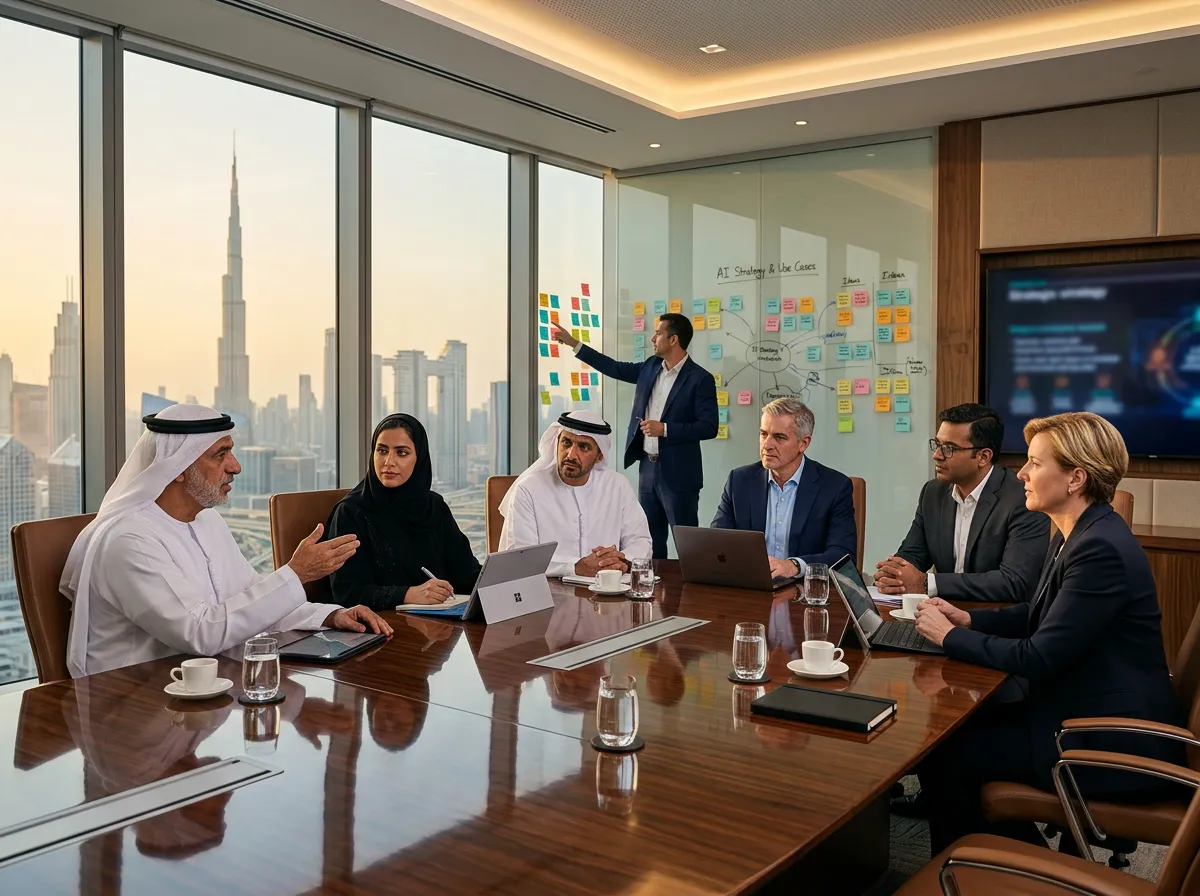
Our trainers are senior practitioners from operations, projects and management roles in the region. They coach groups through real analysis and ask the hard questions a good manager would.
Leadership and management faculty
For managers, senior leaders and leadership offsites
- Senior people who have run teams and led change
- Drawn from a visiting faculty network across 9 IIMs
- Coaching, decision making and difficult conversations
- English, Arabic or bilingual delivery
Sales and customer trainers
For sales, account and service teams
- Practitioners who have closed deals and run sales teams
- Role plays built on your real deals and customers
- Discovery, objection handling and negotiation
- B2B, retail and hospitality experience
AI and digital trainers
For AI adoption and productivity programmes
- 17+ years in AI and corporate training
- Have trained 200,000+ professionals in 16+ countries
- Copilot, ChatGPT, Claude and Gemini on real work
- Part of a pool of around 300 trainers worldwide
Why problem solving skills matter in the UAE
The UAE has made innovation and better problem solving a public priority. The Mohammed Bin Rashid Centre for Government Innovation was launched in 2014 to help government entities improve services and procedures, and 2015 was declared the UAE Year of Innovation. Government and private teams alike are expected to find causes, test ideas and improve services rather than repeat old fixes.
Growth plans such as Dubai’s D33 Economic Agenda mean organisations are scaling quickly, and processes that worked for a small team break at volume. Problem Solving Training in Dubai gives managers and staff a common method to fix issues at the root and decide with confidence. We deliver on site in Dubai and in all seven emirates, and online for GCC teams.
Ways to run the course
Half day masterclass
The core method in a few hours, ideal for leaders who want a shared language for problems and decisions.
One day workshop
The full path from problem statement to decision, applied to one live issue per group.
Two day programme
More time for data, deeper root cause work and a recommendation presented to management at the end.
Improvement series
Sessions spread over several weeks, with groups gathering evidence and testing fixes on the job in between.
Live online sessions
Interactive virtual workshops using shared whiteboards for teams in different emirates or offices.
Problem Solving Training in Dubai: FAQs
What methods does the problem solving course teach?
Participants learn problem statements, simple data gathering, five whys, fishbone diagrams, option generation, decision matrices, decision rights and basic action planning. These are widely used, practical tools that need no special software. We choose the mix for your audience and spend most of the time applying them to real issues.
How long is the training?
Most teams choose one day, which covers the full path from defining a problem to a decision. Two days gives groups time to complete a deeper analysis and present a recommendation to management. Leaders sometimes prefer a half day masterclass, and improvement series run over several weeks.
Do we need to bring real problems?
We strongly recommend it. Groups learn far more working on a genuine issue, such as rework or slow approvals, than on a textbook case. We help you choose problems before the session and can remove sensitive details. If you prefer, we can also prepare realistic cases from your sector.
Is this a Lean Six Sigma course?
No. It borrows some practical tools that are also used in Lean and quality improvement, such as fishbone diagrams, but it is not a belt certification and does not prepare people for an exam. It is a hands on corporate course on everyday problem solving and decision making.
Is it suitable for non managers?
Yes. Supervisors, specialists and frontline team leads often benefit most, because they see recurring problems first. We adjust the depth and examples for each audience. Managers can attend a separate session that adds decision rights and leading structured problem solving in their teams.
Can the course be delivered in Arabic?
Yes. We deliver in English, in Arabic or bilingually, and templates such as the problem statement sheet and decision matrix can be provided in both languages. Tell us the language mix of your groups when you send the brief.
Can you run it at our site?
Yes. We deliver at your office, plant, warehouse or a venue of your choice in any of the seven emirates, and online for teams elsewhere in the GCC. On site often works best, because groups can walk the process or check data during the session. Hands on groups are kept to 20 people per trainer.
How do you measure the impact?
We link the measure to the problems chosen, such as rework, cycle time, error rates or repeat complaints. Before the course we note the baseline, groups leave with owners and dates for their actions, and at 90 days we report which fixes were implemented and what changed.
Stop fighting the same fires
Keep exploring
Related programmes
- Soft Skills Training in Dubai and Across the UAE
- Practical Project Management Training in Dubai for Teams
- Change Management Training in UAE
- Leadership Development Programme in UAE
- First Time Manager Training in UAE
- Agile Training for Teams UAE
- Contract Management Training UAE for Commercial Teams
- Procurement Training UAE for Buyers and Sourcing Teams
The UAE’s one stop shop for corporate training. Hands on workshops delivered across Dubai and all seven emirates. Licensed UAE company registered in Ajman, with a delivery team based in Dubai.
- AI Agents and Automation Training: Build Working Workflows
- ChatGPT Training for Everyday Business Work
- Claude AI Training for Document Heavy Teams
- Microsoft Copilot Training for Microsoft 365 Users
- Prompt Engineering Training Across Every Major AI Tool
- Business Writing Training
- Communication Skills Training
- Presentation Skills Training
- All programmes
© 2026 TrainingInUAE.com. All rights reserved.