Leadership Training in Mussafah for Plant and Site Managers
Leadership Training in Mussafah for production heads, site managers and supervisors who lead large crews under deadline and safety pressure. Leaders practise real conversations from the floor, from a missed target to a near miss, and take one new habit back to the next shift.
- Role plays drawn from your own sites
- Plain language, English or Arabic
- Behaviour change reviewed at 90 days
- Rated 4.9/5 by 200,000+ professionals
- Certificate for every participant

Why industrial employers in Mussafah choose our leadership faculty
Built around the shop floor
Around 80% of the day is practice. Supervisors rehearse briefing a crew after an incident, challenging a subcontractor or handling a worker who keeps skipping procedure.
Faculty who have run operations
Our facilitators have managed plants, yards and logistics teams. They talk about shift handovers, client inspections and overtime, not abstract leadership models.
Plain words, two languages
Sessions run in clear English, Arabic or both, with simple materials and plenty of visual examples for leaders who think best on their feet.
Fits around production
We schedule early morning sessions, split groups across shifts and keep modules short, so production keeps moving while leaders learn.
A certificate supervisors value
On finishing, each leader gets a TrainingInUAE.com certificate of completion, often the first leadership document a promoted technician has received.
Measured on the floor
We pick a measure with site management before starting, such as absenteeism, safety observations or rework, and review it 90 days later.

How our Leadership Training in Mussafah works in practice
Most site leaders learned their trade by doing it, not by reading about it. Leadership is no different. A supervisor becomes better at difficult conversations by holding them, getting honest feedback and trying again, so our sessions look more like a training yard than a classroom.
Input from managers
A simple 360 questionnaire or short interviews with site managers show how each leader is seen by the crew and by their own boss.
Spot the patterns
Common gaps appear quickly, such as shouting instead of coaching, avoiding underperformers or not escalating safety concerns early enough.
Use your real cases
Leaders share current problems from the yard, plant or warehouse, without names, which we rework into short cases and role plays.
Practise and repeat
Each leader runs the conversation, hears what worked from peers and the facilitator, then does it again with one improvement.
A 30 day site challenge
Back on site, every leader applies one behaviour for 30 days, agreed with their manager and checked briefly at the weekly meeting.
Review after 90 days
We look at the chosen measure against the starting point, collect quick feedback from crews and report back to site management.

Facilitators set up each skill in a few minutes with a real example from industry. The rest of the time leaders work in pairs and small groups on situations collected from their own sites.
- Laptops open from the first 15 minutes
- Your own documents, data and tasks
- A finished output from every lab
- Prompt library to keep using on Monday
What site leaders work on in our leadership programme
Eight modules reflect the daily reality of leading in heavy industry, food production and logistics. Choose a few for a short masterclass or run them all as a series. Every module ends with leaders practising, not just listening.
Module 1. Crews from many countries
Leading crews from across South Asia, Africa, the Arab world and the Philippines, with different languages, habits and expectations of a supervisor.
🛠 Leaders practise: A morning toolbox talk to a crew with mixed language levels
Module 2. Coaching instead of instructing
Moving from giving orders to asking questions, correcting unsafe or sloppy work respectfully and recognising good effort in a way people notice.
🛠 Leaders practise: Correcting a skilled welder who keeps skipping a safety step
Module 3. Trusting charge hands with more
Passing responsibility to foremen and charge hands, setting clear standards and following up without taking the job back at the first problem.
🛠 Leaders practise: Handing a shift handover process to a foreman with clear checks
Module 4. Fast calls on a busy site
Making sound decisions when a machine fails, a delivery is late or a client inspector arrives early, then explaining the decision to the crew.
🛠 Leaders practise: A timed case on a breakdown that threatens a client deadline
Module 5. Bringing people through change
Introducing new systems, digital reporting, Emiratisation plans or a restructure, and dealing with the resistance that follows on the floor.
🛠 Leaders practise: Explaining a new digital job card system to sceptical supervisors
Module 6. Holding firm with clients
Influencing demanding clients, main contractors and head office, including saying no to unsafe shortcuts while keeping the relationship intact.
🛠 Leaders practise: Pushing back on a client who wants a job done without a permit
Module 7. Shifts that work as one team
Building trust between day and night shifts, setting clear team standards and stopping blame from spreading after a quality problem.
🛠 Leaders practise: Running a joint meeting between two shifts after a rework incident
Module 8. Reading site data, using AI
Making sense of production, safety and attendance figures, and using simple AI tools to draft reports and prepare for difficult conversations.
🛠 Leaders practise: Turning a weekly production sheet into three actions for the crew
Matched to the leadership problems on your sites
A steel plant, a food factory and a logistics yard each have different pressures. We begin with what your managers say is hardest, then build cases from your own operation so every role play resembles a real day at work.
Brief with site management
We speak with the operations director, plant manager or HR head to agree which leadership behaviours most affect safety, output and staff turnover.
Cases from your operation
Anonymised incidents, client complaints and crew problems from your sites become role plays, so nothing feels borrowed from an office textbook.
Right level, right language
New supervisors and plant managers get different depth. Delivery runs in English, Arabic or both, using plain words and practical examples.

Programmes for every leadership level
First time managers
For technicians, operators and storekeepers newly promoted to supervisor or foreman, often leading former teammates.
Middle managers
For section heads, production managers and warehouse managers balancing output, safety and client demands every day.
Senior leaders and executives
For plant managers, general managers and directors shaping safety culture and leading growth across several sites.
High potential talent
For engineers and Emirati graduates being prepared for leadership, with site improvement projects presented to management.
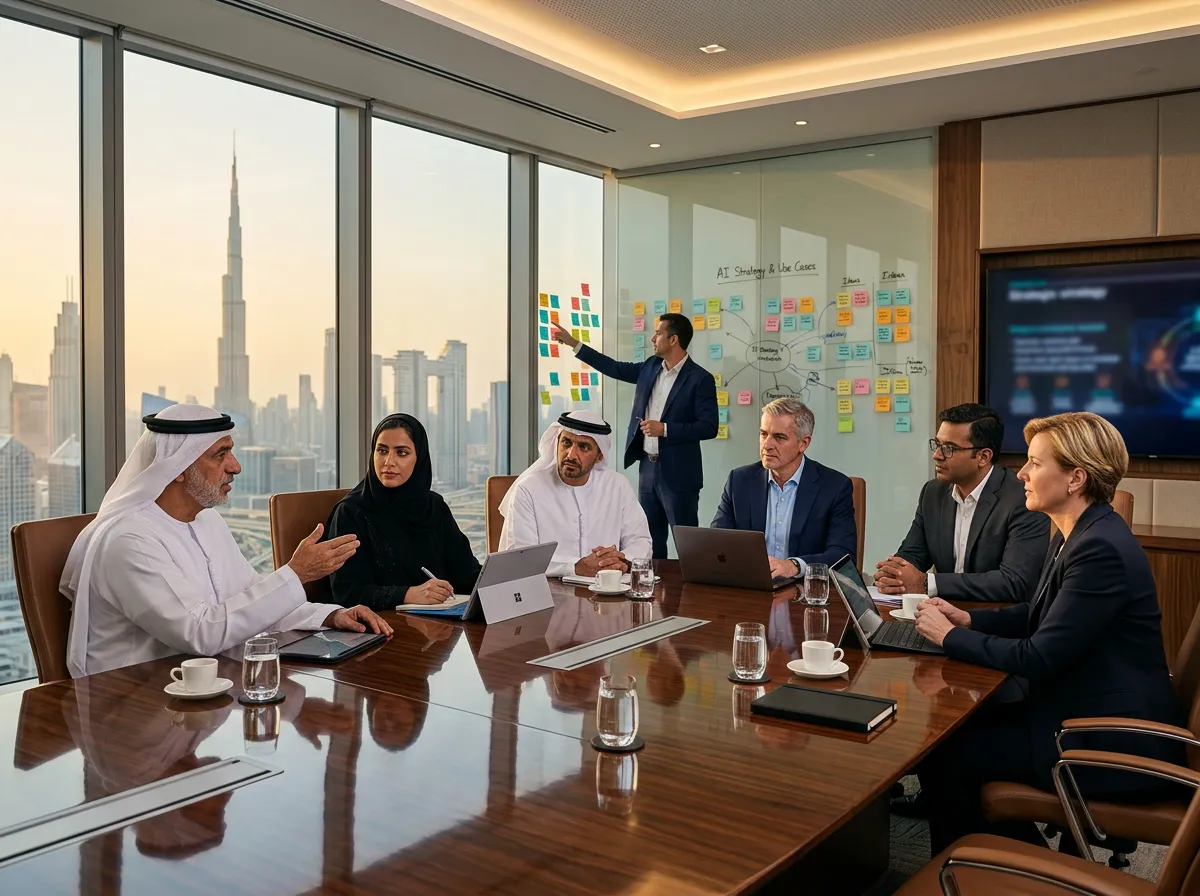
Certificates for supervisors and managers
Leaders who complete the programme each receive a certificate of completion from TrainingInUAE.com, with an attendance list going to HR. Treat it as evidence of in-house development on the employee file. It is not a safety certification or a government accredited qualification.
- Issued to every participant who completes the hands on labs
- Shows the programme name, hours, tools covered and date
- Digital PDF, ready to add to LinkedIn and HR records
- Attendance and lab completion report for HR or L&D, on request

Mussafah industries whose leaders we develop
Most leaders we meet in Mussafah came up through technical or operational roles. We build every case around the work they actually manage, from fabrication bays to cold stores.
Steel and metals
Production and shift leaders running heavy, continuous operations where safety discipline and clear handovers decide whether a shift goes well.
Oil and gas fabrication
Yard and project managers leading large crews and subcontractors against client inspections, tight schedules and strict quality standards.
Food processing
Factory supervisors managing hygiene, output targets and seasonal peaks with teams that often include many new joiners.
Logistics and warehousing
Warehouse and transport leaders handling round the clock operations, driver teams and customers who expect fast, accurate delivery.
Building materials
Plant and sales leaders in cement, blocks and steel supply, balancing production, delivery commitments and demanding contractor clients.
Automotive and equipment
Workshop and service managers leading technicians, where customer communication and consistent quality protect repeat business.
Teams our trainers have worked with















Plus 400+ enterprise clients across 16+ countries.
Faculty who have led operations themselves
Before teaching leadership, our faculty spent years running plants, yards and supply chains. Supervisors listen to someone who has dealt with breakdowns, audits and difficult crews first hand.
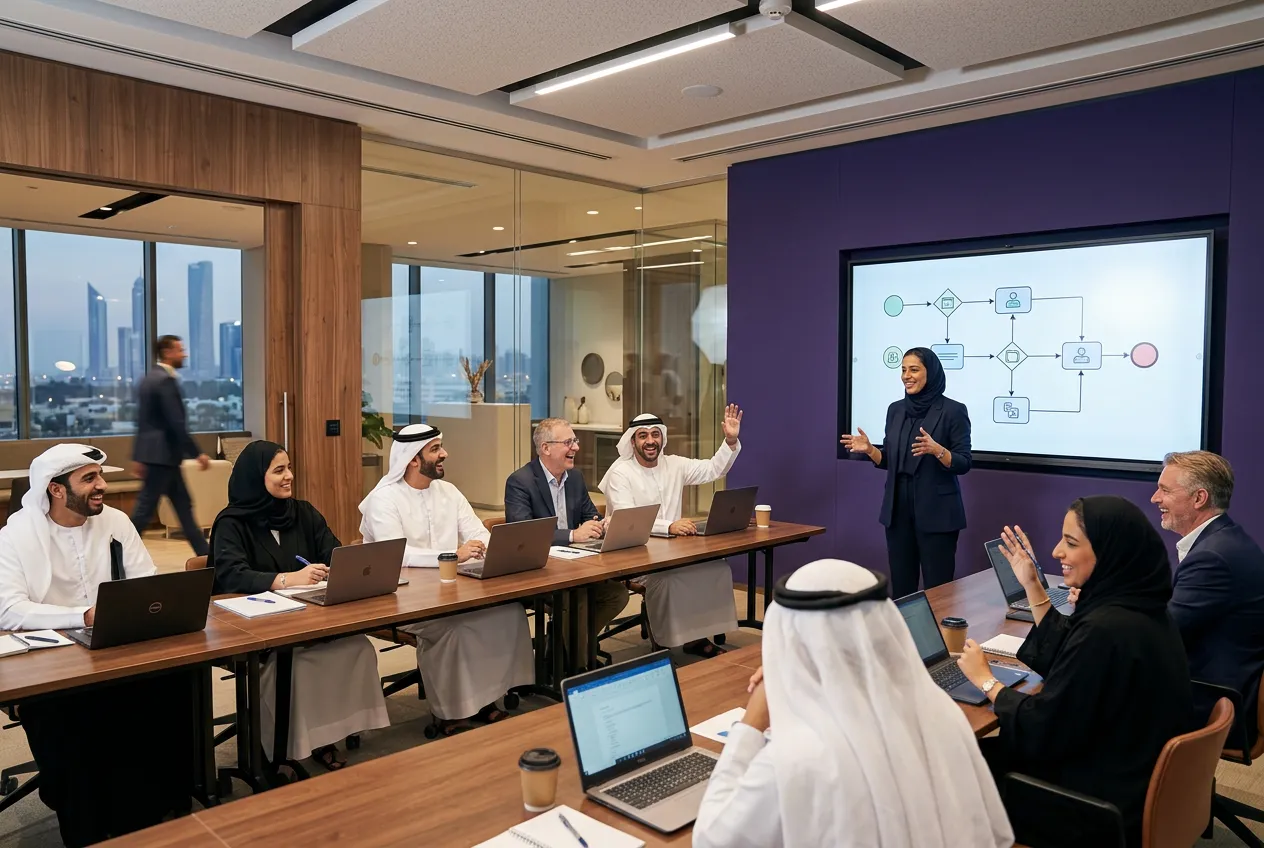
Leadership and management faculty
For managers, senior leaders and leadership offsites
- Senior people who have run teams and led change
- Drawn from a visiting faculty network across 9 IIMs
- Coaching, decision making and difficult conversations
- English, Arabic or bilingual delivery
Sales and customer trainers
For sales, account and service teams
- Practitioners who have closed deals and run sales teams
- Role plays built on your real deals and customers
- Discovery, objection handling and negotiation
- B2B, retail and hospitality experience
AI and digital trainers
For AI adoption and productivity programmes
- 17+ years in AI and corporate training
- Have trained 200,000+ professionals in 16+ countries
- Copilot, ChatGPT, Claude and Gemini on real work
- Part of a pool of around 300 trainers worldwide
Leading in Abu Dhabi's industrial heartland
Much of Abu Dhabi’s heavy industry is concentrated in Mussafah, and next door sit the ICAD industrial cities that KEZAD Group now runs. Along the Mussafah Channel and the streets behind it you find steel mills, oil and gas fabrication, food factories and logistics operators. A single manager may lead hundreds of people across shifts, nationalities and contract types while also facing client audits, Emiratisation targets and new digital reporting. Leaders here need to decide quickly, speak clearly and coach rather than simply instruct.
We normally deliver on your premises, in whatever training room or meeting space the site has, starting early to suit shift patterns. When leaders need distance from the floor, a business hotel within the district offers small meeting rooms, and larger offsites move to hotels in Abu Dhabi city or on Yas Island, a short drive away.

Leadership formats that fit around shift work
Half day masterclass
One leadership skill practised in depth, scheduled before or after a shift so production is not disrupted.
One day workshop
Two linked skills with plenty of role play, often repeated so every shift's supervisors can attend.
Management offsite
One or two days away from site for senior managers to build skills and agree safety and people priorities.
Supervisor series
Short modules every few weeks over several months, with site challenges between sessions to build habits.
Online refreshers
Live virtual follow ups for leaders at sister sites elsewhere in the UAE, using breakouts for practice.
Leadership Training in Mussafah: questions from site and HR managers
Can the training happen at our plant or yard in Mussafah?
Yes. Most sessions run in a training room or office on your site, which saves travel time and lets leaders return to the floor quickly if needed. We plan around shift changes and can start early. If you prefer distance from operations, a business hotel inside the district or a venue in Abu Dhabi city works well.
How long does a supervisor leadership programme take?
A half day masterclass covers one skill well. A one day workshop covers two. Real change in supervisor behaviour usually needs a series of short modules across a few months, because leaders try each skill on site for 30 days before the next session. Offsites of one or two days suit senior management teams.
Do you offer 360 feedback for site supervisors?
Yes, in a simple form. We can use a short questionnaire for each leader’s manager, peers and crew members, or run brief interviews where reading and writing levels vary. Results stay private to each leader, and management sees only overall themes. The findings shape the role plays, so practice targets real issues.
Can supervisors attend if their English is limited?
Yes. We deliver in Arabic, in plain English or bilingually, and we keep materials simple and visual. Facilitators check understanding often and use examples from the floor rather than office jargon. For crews with other first languages, practice in pairs lets people help each other while the facilitator coaches.
How many leaders can join one workshop?
We cap hands on groups at 20 leaders per trainer, giving everyone several rounds of practice and personal feedback. For larger supervisor groups, we add a trainer or repeat the workshop across shifts, which also keeps enough experienced people on the floor at any time.
Will supervisors receive a certificate?
Yes. Supervisors who finish all sessions take home a TrainingInUAE.com certificate of completion, and the HR office gets an attendance sheet for site files. It shows they attended in-house leadership development. It is not a safety card, a trade test or a government accredited qualification, and we explain that clearly at the start.
Can sessions be recorded for leaders on another shift?
Yes, when agreed in advance and for internal use only. We usually record the short teaching parts and pause during role plays, because supervisors speak more openly about real crew problems when nothing is being filmed. The recording can then support a later briefing for the other shift.
How do you measure the impact on our sites?
We agree a measure with site management before the programme, such as absenteeism, staff turnover, safety observations or rework. Each leader runs a 30 day challenge on site. After 90 days we compare the figures with the starting point, gather quick crew feedback and give management a short, plain report.
Strengthen the leaders who run your sites
Explore more in Mussafah and nearby
More training in Mussafah
Nearby locations
The UAE’s one stop shop for corporate training. Hands on workshops delivered across Dubai and all seven emirates. Licensed UAE company registered in Ajman, with a delivery team based in Dubai.
- AI Agents and Automation Training: Build Working Workflows
- ChatGPT Training for Everyday Business Work
- Claude AI Training for Document Heavy Teams
- Microsoft Copilot Training for Microsoft 365 Users
- Prompt Engineering Training Across Every Major AI Tool
- Business Writing Training
- Communication Skills Training
- Presentation Skills Training
- All programmes
© 2026 TrainingInUAE.com. All rights reserved.