Corporate Trainer in Mussafah for Supervisors and Site Teams
A good Corporate Trainer in Mussafah can win over a crew straight off a night shift. We send senior facilitators who have run operations or sold industrial products, and they keep your people practising real situations from the yard, the plant and the counter.
- Facilitators with plant and yard experience
- Sessions timed around shifts and permits
- Plain Arabic, English or both
- Rated 4.9/5 by 200,000+ professionals
- Certificate for every participant

Why Mussafah employers choose our facilitators
Respected on the floor
Supervisors listen to someone who has handled a late delivery, a failed inspection or a crew refusing a new routine. That is the kind of operational history our facilitators bring.
Language people actually use
No management jargon. Facilitators speak plainly in English, Arabic or both, and adjust their pace when most of the room learned English as adults.
Situations from your site
Before the session, the facilitator collects incidents from your supervisors, such as a shift handover gone wrong, and turns them into the scenarios people rehearse.
Practice for most of the time
Around 80% of each block is participants standing up and doing it: briefing a crew, calming a contractor or raising a safety concern with a senior colleague.
Same facilitator each cohort
When several groups need the same topic, the same person usually returns. They already know your site, your managers and the issues earlier cohorts raised.
Certificates and quick proposals
Workshop participants receive a completion certificate, which crews often value. Your proposal and suggested facilitator profile arrive within 24 to 48 hours.

How hiring a Corporate Trainer in Mussafah works
Site teams have little patience for classroom theory. A supervisor learns to run a better toolbox talk by running one, hearing what landed and trying again in front of peers. That is the pattern we build into every booking, from first call to follow-up.
Quick call with HR
You explain who needs support, which behaviour must change and when shifts, shutdowns or busy delivery periods make attendance difficult.
Facilitator and profile
You get a named profile type whose working life mirrors your audience, letting you judge operational or commercial credibility first.
Supervisor interviews
The facilitator phones a production manager or counter supervisor to collect real examples and agree what good looks like on your site.
Deliver on site
Held in your training room, site office or a nearby business centre, with short demonstrations and long practice rounds in small groups.
Gather reactions
Participants give quick feedback, verbal where literacy varies, and the facilitator tells the sponsor honestly which supervisors need more support.
Weeks later, a check
A short coaching visit or call follows a few weeks on, and we report the agreed site measure, such as complaints or rework, at 90 days.

In a typical four hour session, explanation takes about forty five minutes. The rest is short rehearsals in pairs or small groups, built from situations your own supervisors have described.
- Laptops open from the first 15 minutes
- Your own documents, data and tasks
- A finished output from every lab
- Prompt library to keep using on Monday
Topics a corporate trainer in Mussafah is booked for
Factories, yards, workshops and trading firms in the district ask for these eight subjects most. Each is rebuilt with your site’s examples, and every topic includes something participants practise out loud before they return to work.
Topic 1. Supervising crews and shifts
For foremen and supervisors promoted from the tools, covering clear daily briefings, setting standards, addressing lateness or poor work early and earning respect from former peers.
🛠 Participants practise: A start of shift briefing that sets two clear priorities for the crew
Topic 2. Briefings and reports that land
Speaking clearly to a crew, presenting a short update to management and explaining a problem to a client engineer without rambling or losing their attention.
🛠 Participants practise: A two minute incident update delivered to a mock management meeting
Topic 3. Selling and tendering
For sales, estimation and account teams selling industrial products and services, covering questioning buyers, defending price with value and negotiating with procurement under tender pressure.
🛠 Participants practise: Defending a quotation against a buyer who cites a cheaper competitor
Topic 4. Counter and dispatch service
For sales counters, service centres and dispatch desks facing contractors who are short of time, focused on tone, quick ownership of problems and honest updates about delays.
🛠 Participants practise: Handling a contractor shouting about a late material delivery
Topic 5. Planning the working day
Practical prioritisation for supervisors and coordinators pulled in many directions at once, including planning the shift, handling urgent requests from several bosses and keeping promises realistic.
🛠 Participants practise: Turning a chaotic list of urgent jobs into a clear shift plan
Topic 6. Keeping calm and resolving clashes
Recognising stress and anger in yourself and the crew, handling arguments between nationalities or departments and stopping small disputes from becoming resignations or safety risks.
🛠 Participants practise: Settling an argument between two workers over overtime allocation
Topic 7. Team days that change habits
Facilitated sessions for departments that have grown quickly, merged or lost trust, where activities end in practical agreements on handovers, communication and who decides what.
🛠 Participants practise: A handover agreement between production and maintenance teams
Topic 8. Developing site trainers
For experienced technicians and HSE staff who train newcomers, covering how to demonstrate a task step by step, check understanding across languages and give feedback that sticks.
🛠 Participants practise: Teaching a short practical task to peers who then try it
Choosing a facilitator who suits your site
In Mussafah the room decides within ten minutes whether a trainer is worth hearing. We match on operational background, language and energy so your supervisors give the facilitator a fair chance from the start.
Know who is coming
We ask about roles, nationalities, reading levels and earlier training, so we know whether to use printed handouts, pictures or mostly spoken practice.
Match the experience
Plant and yard supervisors get a facilitator who has managed operations. Sales and estimation teams get someone who has sold industrial products in the Gulf.
Respect the shift pattern
We offer early starts, sessions straight after a shift and repeats for rotating crews, and we complete any site induction before the session date.

Formats we run
In-house workshop
A practical session at your site or office for one group, built on that team's real problems.
Leadership offsite
A facilitator leads a management team day on priorities, accountability and leading crews through growth or change.
Safety day or town hall
A lively slot during a safety day or all staff gathering, where everyone in the workforce joins brief practical exercises.
Supervisor programme
Newly promoted supervisors meet for several sessions over about three months, who complete practice tasks on site in between.
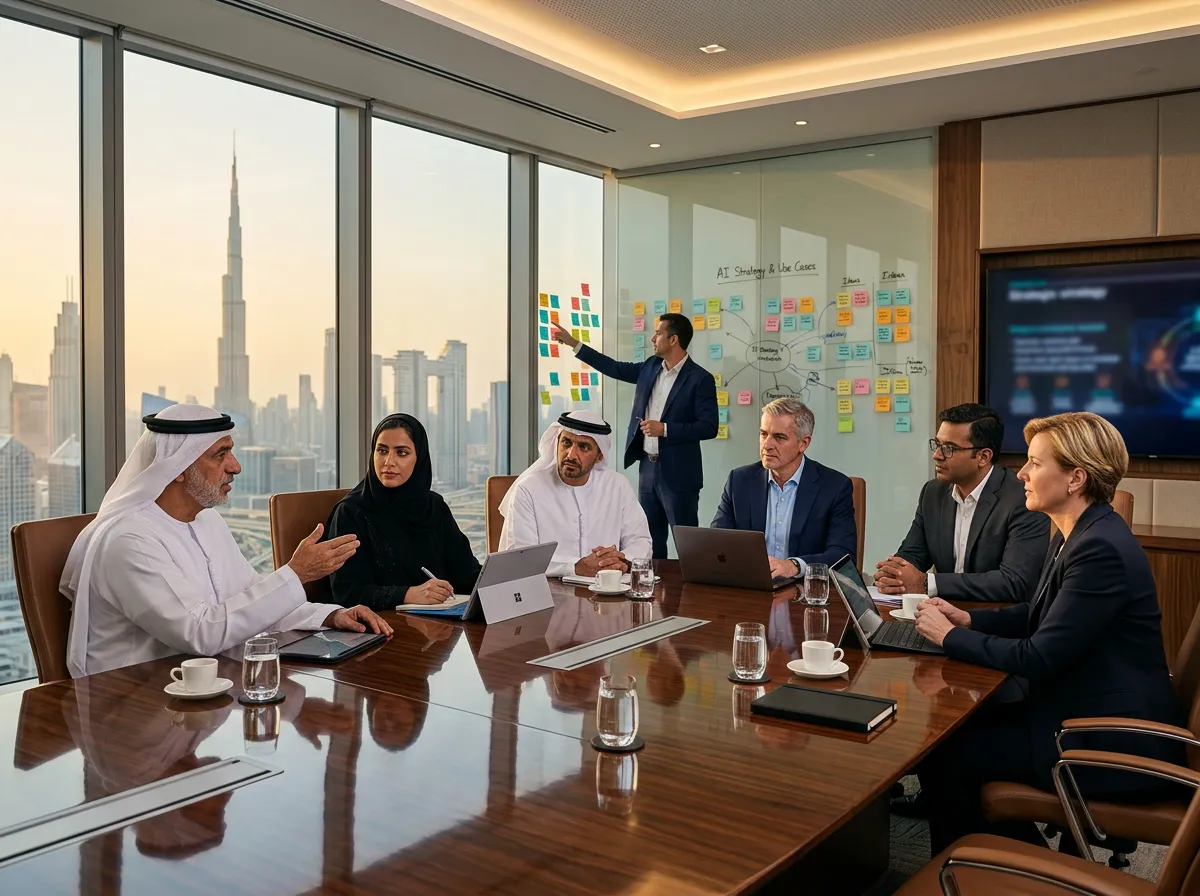
Certificates crews can keep
Each crew member or supervisor finishing the workshop is handed a TrainingInUAE.com certificate of completion, which many workers appreciate for their personal records. It confirms in-house corporate training, not a trade licence, safety card or accredited qualification.
- Issued to every participant who completes the hands on labs
- Shows the programme name, hours, tools covered and date
- Digital PDF, ready to add to LinkedIn and HR records
- Attendance and lab completion report for HR or L&D, on request

Mussafah businesses we send facilitators to
Requests come from manufacturers, contractors, workshops and traders across the district. The facilitator adapts every example to the materials, customers and safety culture of the business in front of them.
Steel and metal works
Supervisors and coordinators in plants where shift discipline, clear handovers and calm leadership directly affect output and safety.
Fabrication and engineering yards
Foremen managing multinational crews on deadline driven projects, who need firm, fair communication and reliable daily briefings at the start of each shift.
Oilfield service firms
Workshop and operations teams supporting energy clients, where professional client communication matters just as much as the quality of technical work.
Food manufacturers
Production and quality supervisors balancing strict hygiene standards, line speed targets and a workforce that speaks many different languages.
Building materials traders
Counter, sales and delivery teams serving contractors under constant time pressure, where service quality decides whether those customers come back.
Automotive workshops
Service advisers and technicians explaining repairs and their costs to private customers and fleet managers clearly, honestly and without confrontation.
Teams our trainers have worked with














Plus 400+ enterprise clients across 16+ countries.
Facilitators who have worked where your people work
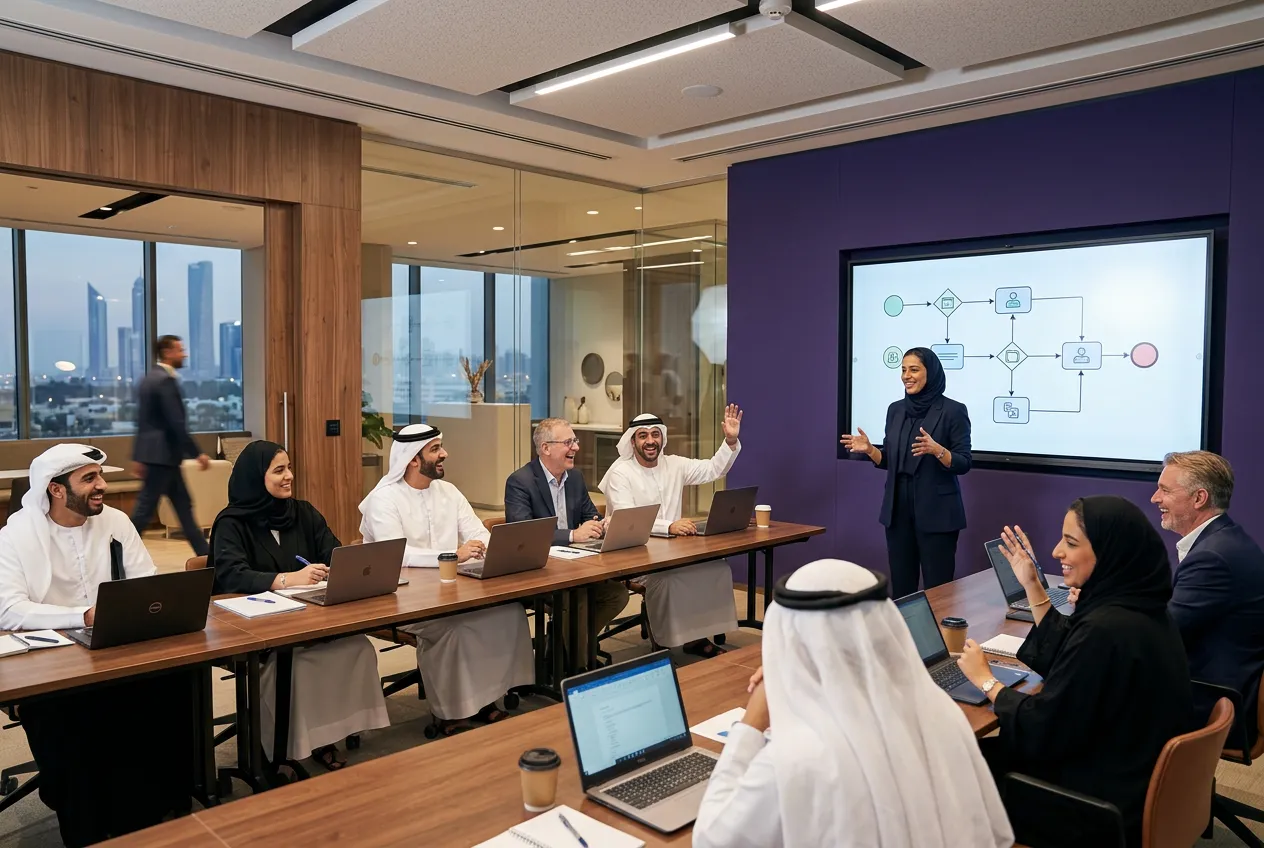
The people we send to Mussafah have run production lines, managed yards, led service centres or sold into industrial markets. They arrive in safety boots when the site requires it, and they keep every exercise grounded in the job.
Leadership and management faculty
For managers, senior leaders and leadership offsites
- Senior people who have run teams and led change
- Drawn from a visiting faculty network across 9 IIMs
- Coaching, decision making and difficult conversations
- English, Arabic or bilingual delivery
Sales and customer trainers
For sales, account and service teams
- Practitioners who have closed deals and run sales teams
- Role plays built on your real deals and customers
- Discovery, objection handling and negotiation
- B2B, retail and hospitality experience
AI and digital trainers
For AI adoption and productivity programmes
- 17+ years in AI and corporate training
- Have trained 200,000+ professionals in 16+ countries
- Copilot, ChatGPT, Claude and Gemini on real work
- Part of a pool of around 300 trainers worldwide
Running training sessions in Mussafah
Mussafah is the main industrial area of Abu Dhabi, and next to it lie the ICAD industrial cities, which KEZAD Group runs today. Plants, fabrication yards, food processors, automotive businesses and warehouses line the district and the Mussafah Channel. Many companies here also run sister sites in other parts of the emirate, so one programme often covers supervisors from several locations.
Sessions usually take place in a site training room or office meeting space, and sometimes in a hotel or business centre within the district when a client prefers people away from the floor. Facilitators plan for early starts, attendees arriving in work clothes and occasional noise from operations. Where a site induction or safety briefing is required, we complete it before the first session.

Session lengths that fit shift work
Ninety minute toolbox block
One skill, such as giving a clear instruction, repeated for each shift so nobody misses out.
Half day
A single topic for supervisors or counter staff, with plenty of rehearsal using your site's situations.
Full day
For managers or estimators released together for a day to cover two connected skills in depth.
Two days
Suits a new supervisor intake or a management team that needs depth, practice and agreed commitments.
Rolling cohorts
The same session repeated for successive groups across months, usually with the same facilitator returning.
Corporate Trainer in Mussafah: questions from HR and site managers
How do you match a facilitator to supervisors and crews?
We start with the people, not the topic. We ask about roles, nationalities, languages and what went wrong with earlier training. Then we choose a facilitator who has done similar work, for example someone who ran a fabrication yard for a group of foremen. Credibility on the floor matters more than polished slides.
Will we see the facilitator's background before agreeing?
Yes. Every proposal includes a written profile showing where the facilitator has worked, which topics they deliver and the audiences they know best. HR managers often have a short call with them as well. Unhappy with the match? We line up an alternative before booking any date.
Can the session work for crews whose English is limited?
Yes. Delivery is possible in Arabic, in simple English, or switching between them. For crews with many first languages, we rely on demonstrations, pictures and spoken practice rather than reading, and we often ask a bilingual supervisor to help small groups during exercises. Everyone should be able to take part.
How many people can one trainer handle in a workshop?
Practical workshops take a maximum of 20 participants per trainer. On busy sites we often prefer smaller groups of 10 to 12, so each person rehearses several times. Large workforces are covered with repeat sessions across shifts or an extra trainer. Safety day talks and town halls have no fixed limit.
Will a facilitator turn up at our Mussafah site before an early shift?
Yes. Facilitators regularly start at six or seven in the morning to catch a shift before work begins, or run a block straight after a night shift ends. Venues include your own training room, the site office or a business centre close by. We complete any site induction and follow your safety rules on the day.
How long does it take to arrange a facilitator?
Two to three weeks is ideal, giving time to speak with your line managers and build scenarios from real site incidents. For a standard topic like customer service at a counter, we can sometimes move quicker. Either way, you receive a written proposal within 24 to 48 hours of your first call.
Can we record the training for workers on another shift?
Yes, if it is agreed before the session. Recordings stay for internal use within your company. Many Mussafah clients film the short demonstrations so later shifts can watch them, but keep the role plays unrecorded so workers feel free to make mistakes while they practise.
Do workers get a certificate after the training?
Yes. Every participant who completes the workshop receives a TrainingInUAE.com certificate of completion, and HR receives an attendance list. It proves attendance at practical in-house training. It cannot replace a safety card or trade test, and workers are told so at the start.
Get a facilitator for your site
Explore more in Mussafah and nearby
More training in Mussafah
Nearby locations
Related programmes
- AI Agents and Automation Training in UAE: Build Working Workflows
- AI Training for Finance Teams in the UAE
- AI Training for HR Teams in the UAE
- AI Training for Sales Teams Who Want More Selling Time
- AI Training UAE: Hands On AI Training for Employees
- ChatGPT Training in UAE for Everyday Business Work
The UAE’s one stop shop for corporate training. Hands on workshops delivered across Dubai and all seven emirates. Licensed UAE company registered in Ajman, with a delivery team based in Dubai.
- AI Agents and Automation Training: Build Working Workflows
- ChatGPT Training for Everyday Business Work
- Claude AI Training for Document Heavy Teams
- Microsoft Copilot Training for Microsoft 365 Users
- Prompt Engineering Training Across Every Major AI Tool
- Business Writing Training
- Communication Skills Training
- Presentation Skills Training
- All programmes
© 2026 TrainingInUAE.com. All rights reserved.