Corporate Trainer in Hamriyah Free Zone for Site and Office Teams
Hire a Corporate Trainer in Hamriyah Free Zone who is as comfortable with a fabrication foreman as with an export manager. Sessions are practical, run at your site and built on your actual job briefings, buyer calls and toolbox talks.
- Trainers with industrial site experience
- Sessions timed around your shifts
- Arabic speaking trainers when crews need them
- Rated 4.9/5 by 200,000+ professionals
- Certificate for every participant

What Hamriyah employers get from our facilitators
At ease on a site
Our facilitators have worked around yards, plants and workshops. They respect safety rules, speak the language of the floor and do not talk down to experienced crews.
One trainer, every level
Where needed, we pick someone who can run a morning with foremen and an afternoon with directors, keeping the message consistent across the company.
Prepared for your plant
The facilitator learns your products, safety culture and common problems first, through a manager call and a few anonymised reports you share.
Real bilingual ability
When a crew needs Arabic, we assign someone who can teach in it properly, not a trainer who translates a few words from English slides.
Show, then practise
Sessions rely on demonstration and rehearsal rather than reading, which suits crews with mixed literacy. Roughly 80% of the time is spent doing.
Owner friendly follow up
Owners receive a plain summary after the session and a short review at 90 days against one practical measure agreed before the booking.

Steps to book a Corporate Trainer in Hamriyah Free Zone
Industrial staff judge a trainer within minutes. If the examples come from a bank or a marketing agency, attention drops. Our booking steps make sure the facilitator walks onto your site already knowing your work, your crews and the problem you want solved.
Explain the problem
Tell us which teams, roles and shifts are involved and what you want fixed, for example rework caused by poor instructions or tension between sites.
See who we suggest
We propose a facilitator with relevant industrial or commercial experience and share a short profile, with a call available before you confirm.
Talk to supervisors first
The trainer speaks with a supervisor or two to understand site realities and gathers anonymised examples for practice exercises.
Run it on your site
The session uses your meeting room or a cleared space near production, with short inputs followed by repeated practice in small groups.
Hear the participants
Attendees give quick feedback and commit to one change. The owner or HR receives a plain written summary of what the trainer observed.
Review after a quarter
Ninety days on, we look at the measure chosen at the start, perhaps rework, incident reports or missed deadlines, and recommend whether further sessions are worthwhile.

On a typical day, a foreman practises giving a clear job briefing to a mixed crew, gets coached, tries again, then practises stopping an unsafe shortcut without starting an argument.
- Laptops open from the first 15 minutes
- Your own documents, data and tasks
- A finished output from every lab
- Prompt library to keep using on Monday
What a Corporate Trainer in Hamriyah Free Zone covers
Steel, petrochemical, maritime and building materials companies in the zone mostly book the topics below. Each comes with a lab where people work through a situation lifted from their own yard, plant or office.
Topic 1. Supervising crews with confidence
For foremen and charge hands promoted from the floor. Giving instructions that are followed, building respect across nationalities and correcting behaviour without shouting.
🛠 Participants practise: Brief a mixed crew on a new job sequence and check understanding
Topic 2. Reporting and presenting upward
Helping engineers and supervisors explain problems, delays and proposals to owners and directors in short, clear updates that lead to a decision.
🛠 Participants practise: Present a delay and its solution to a mock director in three minutes
Topic 3. Export sales and negotiation
For commercial teams selling steel, pipes, timber or building materials to buyers in Africa, Asia and the GCC. Holding price, managing terms and protecting relationships.
🛠 Participants practise: Negotiate a price increase with a long standing overseas buyer
Topic 4. Customer care for industrial buyers
Coordinators and account staff learn to manage complaints about quality, delivery or documentation while keeping the account and the margin.
🛠 Participants practise: Respond to a buyer’s formal complaint about a quality issue
Topic 5. Planning and time control
For planners, engineers and managers juggling production, maintenance and shipping deadlines. Prioritising, delegating and running shorter, sharper meetings.
🛠 Participants practise: Plan next week’s priorities and cut one low value task
Topic 6. Conflict and emotional control
Handling heated moments on site, disputes between production and maintenance and frustrated subcontractors, with simple tools people remember under stress.
🛠 Participants practise: Defuse a role played argument between two supervisors on shift
Topic 7. Team days for site and office
Facilitated sessions that bring yard and office staff together to fix one shared problem, such as late paperwork holding up dispatch.
🛠 Participants practise: Agree one new handover routine between office and yard
Topic 8. Train the trainer for technical staff
Preparing experienced technicians and safety officers to teach procedures and induct new workers clearly, using demonstration rather than long manuals.
🛠 Participants practise: Teach a short safety procedure and receive coached feedback
Matched to your crews and your site
A single company here may employ engineers from several countries, supervisors promoted from the floor, Emirati managers and an export sales team. We choose a facilitator who can reach all of them and adapt the material to each group.
Profile the audience
We look at roles, languages, reading comfort and shift patterns, then shortlist trainers who have worked with similar industrial groups before.
Build from site examples
Scenarios come from your own anonymised reports, job cards and buyer emails, so supervisors see their actual working day in each exercise.
Adapt delivery and timing
We use plain English, Arabic or both, more demonstration for crews and more debate for managers, and schedule early or late for night shift staff.
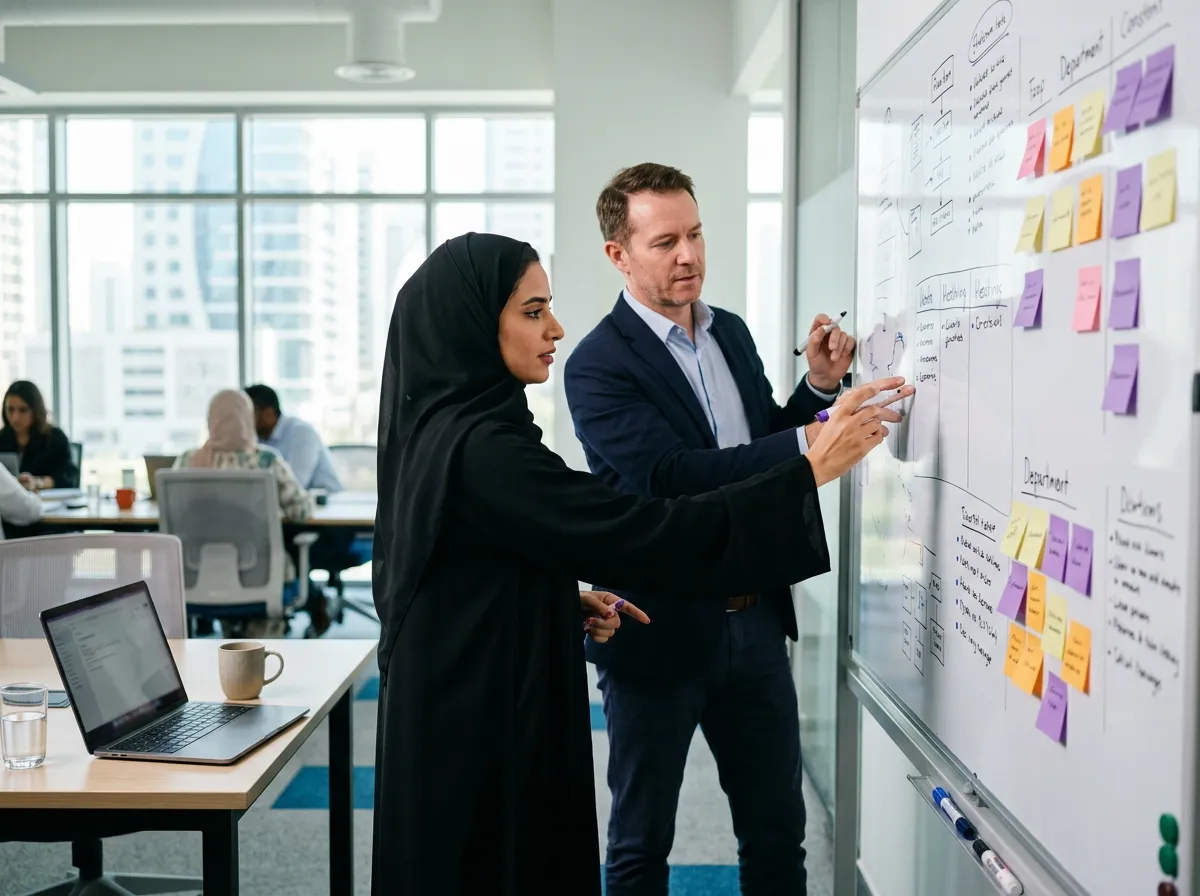
Formats we run
In-house workshop
A session at your premises for one team or level, scheduled around shift change so production keeps running.
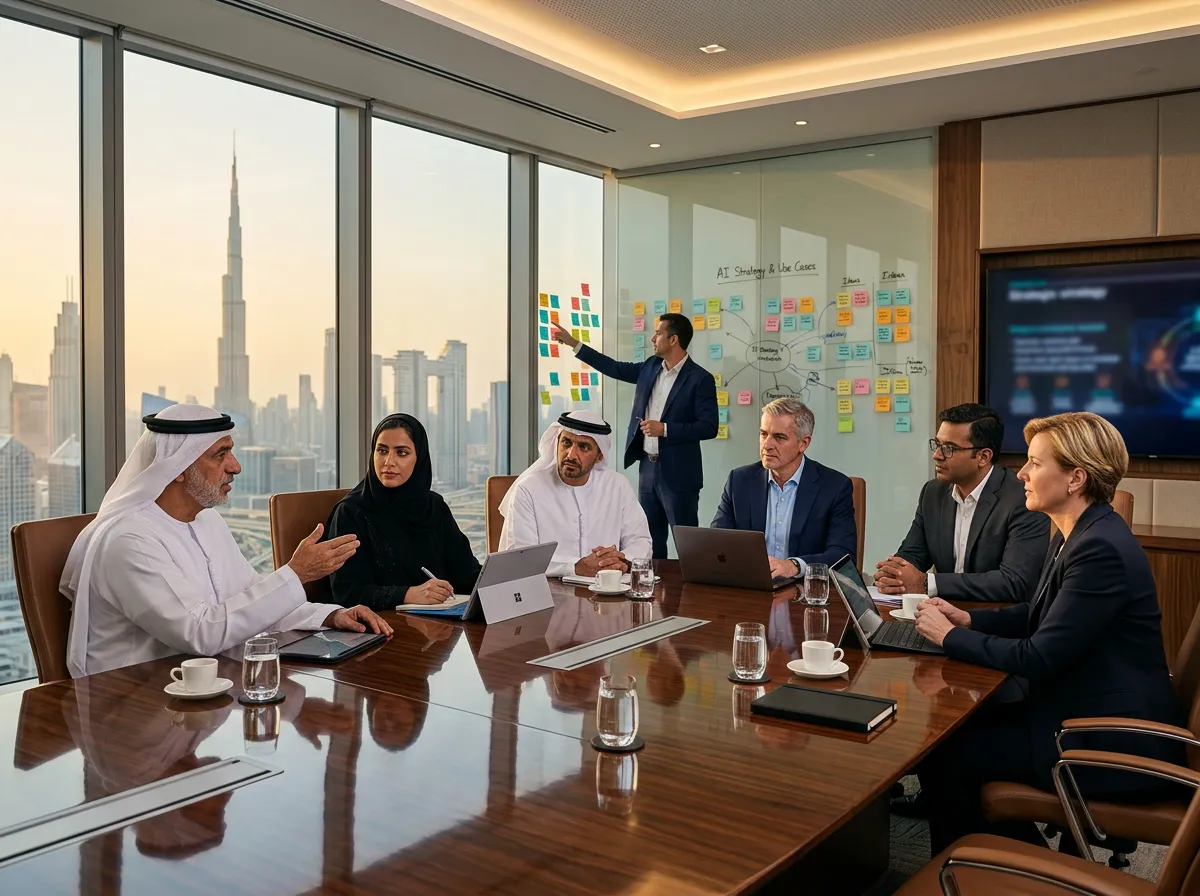
Leadership offsite
Owners and senior managers leave the yard for a day at a Sharjah or Ajman hotel to work on one critical people issue.
Site gathering or town hall
An interactive session for a company wide meeting or safety day, with short exercises that work in a large group.
Multi-session programme
Supervisors meet every few weeks over two or three months and test each new skill at work in between.
Certificates for crews and managers
Crews and managers who finish the training each get a TrainingInUAE.com certificate of completion dated and titled for HR files. We present it purely as in-house training evidence, not as an accredited, vendor or government qualification.
- Issued to every participant who completes the hands on labs
- Shows the programme name, hours, tools covered and date
- Digital PDF, ready to add to LinkedIn and HR records
- Attendance and lab completion report for HR or L&D, on request

Who hires trainers in Hamriyah Free Zone
Bookings tend to come from owners, plant managers and HR leads at industrial firms. They want a facilitator who can earn respect quickly from experienced crews and still challenge managers in the office.
Steel and fabrication yards
Supervisor and communication sessions for foremen leading welders, fitters and riggers on tight production schedules.
Petrochemical and energy suppliers
Leadership and conflict training for technical teams where safety, precision and calm escalation matter every shift.
Marine and ship repair firms
Teamwork and customer handling sessions for crews and account managers serving vessel owners under strict deadlines.
Timber and construction supply
Sales negotiation and service training for teams supplying contractors and distributors across the region.
Food manufacturers
Shift supervisors in food production learn to keep crews motivated while meeting hygiene standards and supermarket orders.
Dispatch and storage operators
People skills and handover communication for dispatch teams moving goods through the zone's port and road links.
Teams our trainers have worked with














Plus 400+ enterprise clients across 16+ countries.
Facilitators who earn respect on industrial sites
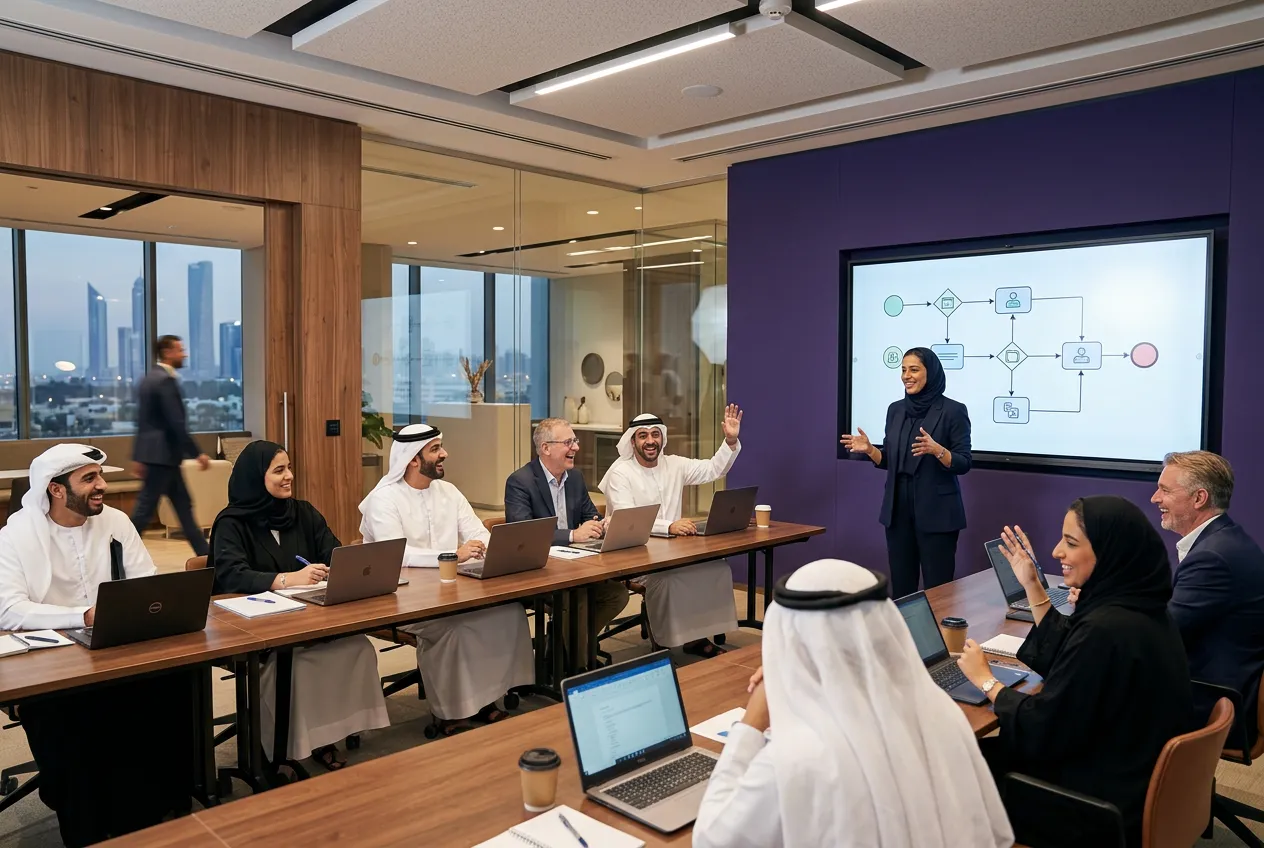
We send senior practitioners: former operations managers, commercial directors and HR heads from industry. They keep language plain, check understanding without embarrassing anyone and you see each profile before booking.
Leadership and management faculty
For managers, senior leaders and leadership offsites
- Senior people who have run teams and led change
- Drawn from a visiting faculty network across 9 IIMs
- Coaching, decision making and difficult conversations
- English, Arabic or bilingual delivery
Sales and customer trainers
For sales, account and service teams
- Practitioners who have closed deals and run sales teams
- Role plays built on your real deals and customers
- Discovery, objection handling and negotiation
- B2B, retail and hospitality experience
AI and digital trainers
For AI adoption and productivity programmes
- 17+ years in AI and corporate training
- Have trained 200,000+ professionals in 16+ countries
- Copilot, ChatGPT, Claude and Gemini on real work
- Part of a pool of around 300 trainers worldwide
Who a trainer meets in Hamriyah Free Zone
Hamriyah Free Zone opened in 1995 on Sharjah’s northern coast, with its own deep water port feeding steel, oil and gas, petrochemical, maritime, timber and food businesses. A single firm may employ many nationalities, from engineers and Emirati managers to supervisors who rose through the ranks and export staff dealing with buyers in Africa and Asia.
That is why a Corporate Trainer in Hamriyah Free Zone has to use plain language and practical examples from industry rather than office life. We usually train at your facility, in a meeting room or a quiet corner near production, and hold management offsites at a Sharjah or Ajman hotel. Trainers can arrive early or stay late so night crews are covered within the Monday to Friday week.

Lengths that keep the site running
Toolbox length session
Forty five to sixty minutes on one practical skill, delivered at shift start for crews who cannot leave the floor for long.
Half day on site
A short input and plenty of practice on one topic, timed between shift changes so production continues.
A whole day off the floor
Two connected skills, such as briefing a crew and handling conflict, practised on scenarios drawn from your site.
Two day management offsite
Owners and managers step away from the site for two days, tackle one organisational problem and leave with actions.
Supervisor series
A run of sessions spread across a quarter, each opening with a review of the task supervisors tried at work.
Corporate Trainer in Hamriyah Free Zone: FAQs
What decides which trainer you send to our site?
The audience decides. We ask about roles, languages, experience and what keeps going wrong, then match a facilitator with a similar background. A foreman group is typically paired with a former operations manager from industry, while an export team gets a trainer with commercial experience. You review the proposed profile before any commitment.
Can our managers meet the trainer before we commit?
Yes. A facilitator profile comes with every proposal, and your plant manager or owner can speak with them by phone or video. Some clients also invite the trainer to walk the site before the session. If you would prefer a different style, we put forward another option.
Do your trainers teach in Arabic for site crews?
Yes. Our pool includes facilitators who run whole sessions in Arabic as well as bilingual trainers. Crews of many nationalities tend to respond best to simple English, Arabic where it helps and plenty of demonstration. Handouts use short text and pictures, so participants with limited reading comfort can still follow every step.
How many people can one trainer take in a session?
Practical workshops stop at 20 people for each trainer, so every participant gets proper turns at the exercises. For a bigger crew we either schedule repeats or add a facilitator. Short talks for a safety day or company gathering can include as many people as your venue holds.
Is the training delivered inside our Hamriyah facility?
Yes. Most of our Hamriyah work happens on the client’s premises, using a meeting room, canteen or cleared space near production. We confirm gate access, safety induction and personal protective equipment needs in advance. If you would rather take managers off site, a hotel in Sharjah or Ajman works well.
How early should we get in touch?
A lead time of two weeks gives the trainer room to speak with your supervisors, see a few anonymised reports and prepare realistic exercises. Shorter timelines are often possible for familiar topics such as supervisory skills. Planning can begin straight away, because the proposal and facilitator profile follow one to two days after we speak.
Can we film the training for crews on night shift?
Yes, internal recording works if we settle it in the briefing. The trainer will mark which parts suit video, usually the teaching segments and demonstrations. Practice rounds are normally not filmed so crews feel free to try. For night shifts, a repeat live session often works better than a recording alone.
Will our workers receive a certificate?
Yes. On finishing, every worker is handed a TrainingInUAE.com certificate of completion that HR can keep on file, showing the subject and date. No government body or awarding organisation accredits it, as it simply proves attendance at in-house training.
Have a crew or team to develop?
Explore more in Hamriyah Free Zone and nearby
More training in Hamriyah Free Zone
Nearby locations
Related programmes
- AI Agents and Automation Training in UAE: Build Working Workflows
- AI Training for Finance Teams in the UAE
- AI Training for HR Teams in the UAE
- AI Training for Sales Teams Who Want More Selling Time
- AI Training UAE: Hands On AI Training for Employees
- ChatGPT Training in UAE for Everyday Business Work
The UAE’s one stop shop for corporate training. Hands on workshops delivered across Dubai and all seven emirates. Licensed UAE company registered in Ajman, with a delivery team based in Dubai.
- AI Agents and Automation Training: Build Working Workflows
- ChatGPT Training for Everyday Business Work
- Claude AI Training for Document Heavy Teams
- Microsoft Copilot Training for Microsoft 365 Users
- Prompt Engineering Training Across Every Major AI Tool
- Business Writing Training
- Communication Skills Training
- Presentation Skills Training
- All programmes
© 2026 TrainingInUAE.com. All rights reserved.