Home / Programmes / Performance Management Training UAE for Line Managers
Performance Management Training UAE for Line Managers
Performance Management Training UAE for managers who dread appraisal season or let problems drift for months. They practise hands on with goals, feedback and review conversations drawn from their own teams.
- Write goals for your actual team
- Rehearse the review you are avoiding
- Run in English, Arabic or both
- Rated 4.9/5 by 200,000+ professionals
- Certificate for every participant
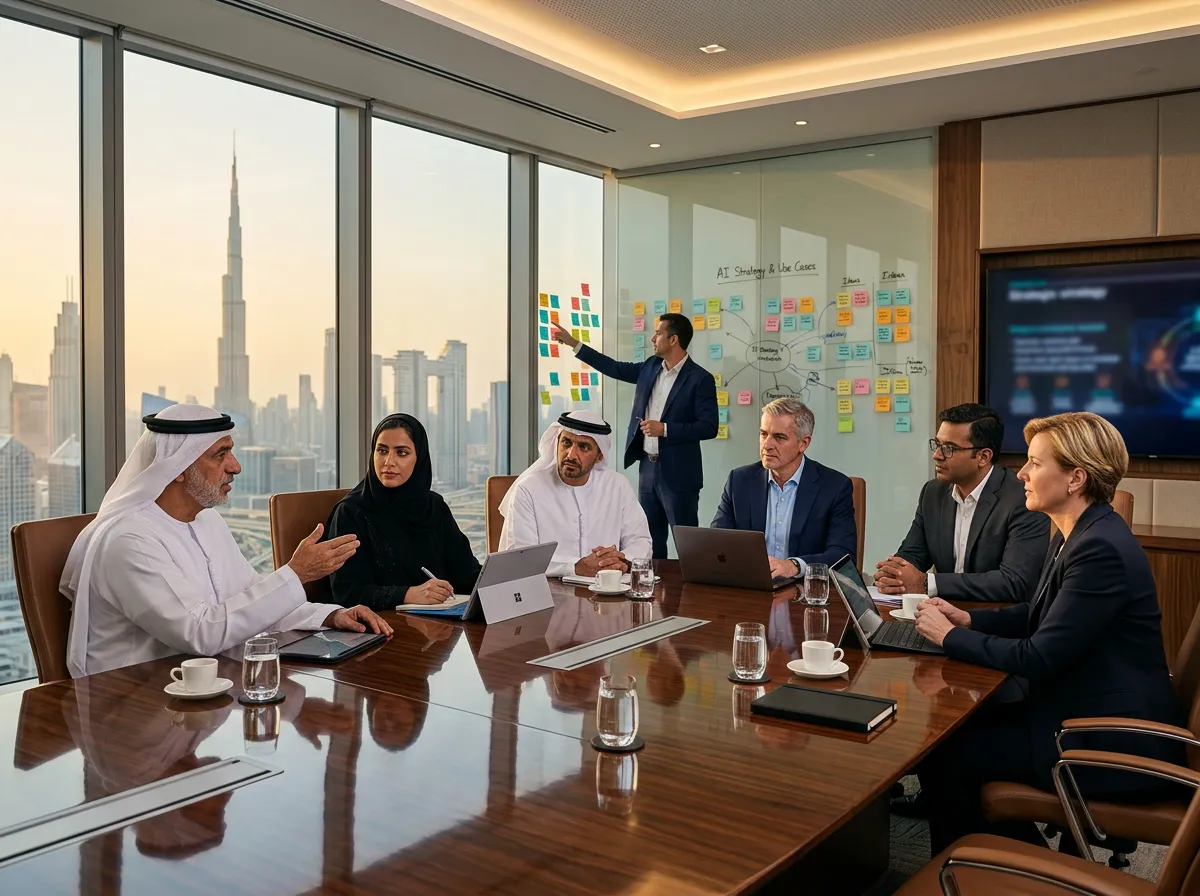
Why HR teams ask us in before appraisal season
Forms do not manage people
Most organisations already have a system and a template. What is missing is managers who can set a clear goal and say a hard thing kindly.
Rehearsal, not slides
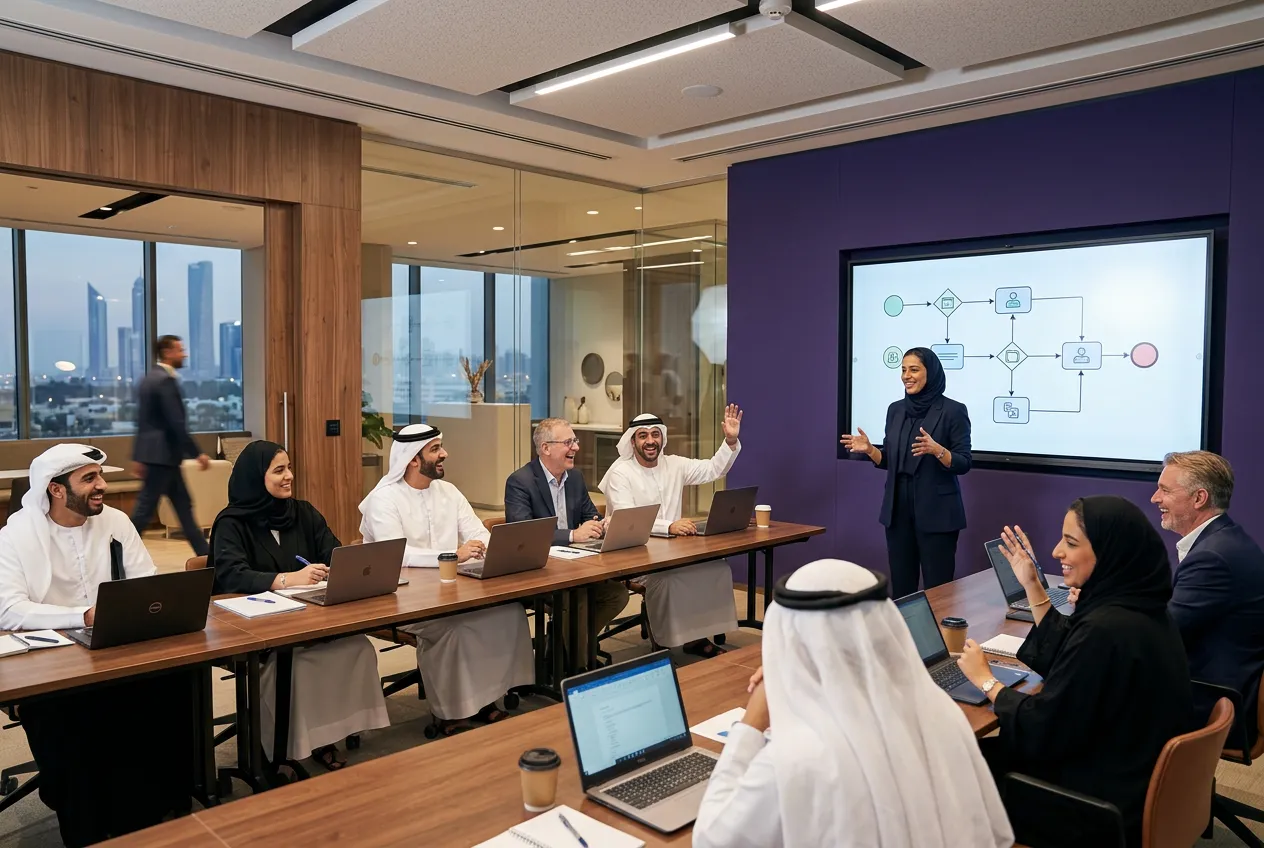
Managers spend the day running feedback and review conversations with peers playing the employee, then try again with the trainer's notes.
Built on your process
We use your rating scale, competency framework and appraisal calendar, so nothing taught clashes with what HR asks managers to do.
Facilitators who managed teams
Facilitators have managed large teams, run calibration meetings and handled underperformance themselves. Their advice comes from doing it, not reading about it.
A certificate for each manager
Managers who complete the course receive a TrainingInUAE.com certificate for their development file and leadership pathway records.
Progress reviewed at 90 days
We pick one measure with HR, such as on time reviews, goal quality or employee feedback scores, and look at the change three months on.

Performance Management Training UAE that managers actually use
Managers rarely fail at performance management because they do not understand the theory. They fail because the conversation feels awkward, so they delay it or soften it until the message disappears. The cure is practice on the conversations they actually need to have.
Review your system
HR walks us through the current process, forms, rating scale and where managers struggle most, from goal setting to final ratings.
Bring your team
Each manager arrives with a few real goals to improve and one performance conversation they have been putting off.
Short demonstration
The trainer models one technique, such as specific feedback on behaviour, using a scene typical of a Gulf workplace.
Practise in pairs
Managers rehearse with a colleague playing the employee, including the defensive or emotional reactions they fear most.
Coach and repeat
Observers and the trainer point to the exact words that worked or failed. The manager reruns the moment until it sounds right.
Hold it for real
Within two weeks each manager holds the real conversation, and HR tracks the agreed measure through to day 90.

Practice fills about 80% of the time. The trainer explains one tool briefly, then managers apply it to their own team: drafting goals, giving feedback and running reviews in coached pairs.
- Laptops open from the first 15 minutes
- Your own documents, data and tasks
- A finished output from every lab
- Prompt library to keep using on Monday
What the performance management course covers
The outline follows a full performance year, from setting expectations to the year end review and what comes after. One day covers the core cycle; the two day version adds underperformance, calibration and remote teams.
Module 1. The manager's role in performance
Why performance is managed every week, not once a year, and how expectations, feedback and support fit together. We compare what good looks like with common habits.
🛠 Participants practise: Rate your own current habits against a simple performance cycle
Module 2. Setting goals that guide work
Writing goals that are clear, measurable and linked to team and company priorities. Covers SMART goals, OKRs and KPIs and when each suits a role.
🛠 Participants practise: Rewrite three vague goals from your team into clear, measurable ones
Module 3. Regular check ins
Short one to one conversations that track progress, remove obstacles and catch problems early. A simple structure managers can run in fifteen minutes.
🛠 Participants practise: Run a fifteen minute check in on a real team member’s goal
Module 4. Feedback that changes behaviour
Specific, timely feedback on behaviour and impact, both positive and corrective, delivered in a way that respects culture and seniority.
🛠 Participants practise: Give one piece of corrective feedback three times with coaching
Module 5. Fair and consistent ratings
Using evidence instead of memory, avoiding recency and halo bias, and preparing for calibration discussions with other managers.
🛠 Participants practise: Rate two anonymised cases and defend the ratings in a calibration
Module 6. The annual review conversation
Preparing, opening, discussing the rating, handling disagreement and closing with a development plan the employee owns.
🛠 Participants practise: Run a complete review with a peer playing a disappointed employee
Module 7. Handling underperformance
Diagnosing the cause, setting a clear improvement plan, documenting fairly and involving HR at the right moment. Practical skills, not legal advice.
🛠 Participants practise: Draft an improvement plan for an anonymised underperformance case
Module 8. Development and recognition
Turning reviews into growth: stretch assignments, coaching, recognition and career conversations, including how to keep strong performers engaged.
🛠 Participants practise: Plan a development conversation for one high performer you manage
Matched to your performance system
A bank with forced distribution and a start up with quarterly OKRs need different conversations. We learn how your system works, where managers struggle with it, and then build every exercise around your tools.
Process walkthrough
HR shares the appraisal forms, rating scale, timeline and recent completion data, and tells us where quality slips.
Cases from your teams
Practice scenarios come from anonymised moments inside your organisation, from missed targets to strong performers wanting promotion.
Depth by management level
Supervisors, middle managers and senior leaders each get the focus their role calls for, whether in English or Arabic, or switching between both.

Built for every level
Senior leaders
Linking strategy to goals, leading calibration and modelling the feedback culture they expect from managers.
Middle managers
Running the full cycle well, from goal setting and check ins to fair ratings and review conversations.
New supervisors
Giving feedback to former peers, setting first goals and handling a review for the first time.
HR business partners
Coaching managers through the process, supporting underperformance cases and improving the system itself.
Completion certificates for managers
At the end, TrainingInUAE.com issues each manager a completion certificate listing the performance management skills covered. Keep it with leadership development records. Treat it as an in-house learning record, since no accrediting body awards it.
- Issued to every participant who completes the hands on labs
- Shows the programme name, hours, tools covered and date
- Digital PDF, ready to add to LinkedIn and HR records
- Attendance and lab completion report for HR or L&D, on request

Where we run performance programmes
Any organisation with managers needs this, but some sectors bring us in more often because of large teams, targets or formal review systems.
Banks and finance houses
Structured rating systems, calibration meetings and target driven roles where fairness and evidence matter a great deal.
Federal and local government entities
Entities moving to goal based performance systems and asking managers to hold more honest review conversations.
Retail and hospitality
Large frontline teams led by supervisors who need quick, regular feedback habits during busy shifts.
Tech firms and scale ups
Fast growing teams using OKRs and frequent check ins, often led by managers promoted for technical skill.
Construction and engineering
Project based teams where managers assess people across sites, contracts and changing reporting lines.
Healthcare
Clinical and administrative leaders balancing professional standards, patient outcomes and staff development.
Teams our trainers have worked with













Plus 400+ enterprise clients across 16+ countries.
Trainers who have run appraisal seasons themselves
Our facilitators are senior managers and HR leaders who have set goals, run calibration and held hard reviews in Gulf organisations. They coach with candour and examples from their own teams.
Leadership and management faculty
For managers, senior leaders and leadership offsites
- Senior people who have run teams and led change
- Drawn from a visiting faculty network across 9 IIMs
- Coaching, decision making and difficult conversations
- English, Arabic or bilingual delivery
Sales and customer trainers
For sales, account and service teams
- Practitioners who have closed deals and run sales teams
- Role plays built on your real deals and customers
- Discovery, objection handling and negotiation
- B2B, retail and hospitality experience
AI and digital trainers
For AI adoption and productivity programmes
- 17+ years in AI and corporate training
- Have trained 200,000+ professionals in 16+ countries
- Copilot, ChatGPT, Claude and Gemini on real work
- Part of a pool of around 300 trainers worldwide
Why performance management matters in the UAE
UAE employers are moving towards clearer, goal based performance systems. In the federal government, the Injazati system introduced from January 2026 builds employee evaluation around OKRs, KPIs and competencies, linking individual targets to national priorities. Many semi government and private organisations are making similar changes, and managers are expected to run the conversations that make those systems work.
Teams here are also highly multinational, so people bring very different expectations about direct feedback and hierarchy. A rating that feels fair to one employee can feel personal to another. Performance Management Training UAE helps managers stay clear, consistent and respectful across those differences. Our trainers work at your offices in every emirate and run live online sessions for regional teams.
Programme formats
Pre appraisal clinic
A half day just before reviews start, focused on ratings, evidence and the review conversation.
One day manager workshop
The full cycle from goals to review, built around rehearsing the conversations managers really face.
Two day programme
Adds underperformance, calibration practice and managing performance in remote or hybrid teams.
Year round series
Short sessions timed to each stage of your cycle: goal setting, mid year check, year end review.
Virtual live sessions
Interactive online workshops with breakout rehearsals for managers across several sites or countries.
Performance Management Training UAE: FAQs
Who is performance management training for?
Mainly line managers and supervisors, because they set goals and hold the reviews. Senior leaders join for the calibration and culture parts, and HR business partners often attend to support managers afterwards. New supervisors benefit greatly, since giving feedback to former peers is one of the hardest early tasks.
Can you train managers on our own appraisal system?
Yes, and it gives far better results. We review your forms, rating scale and timeline first, then teach the skills inside that process. Managers practise filling in real sections and running conversations the way your system expects, so they are not confused by a generic model that differs from what HR asks.
When is the best time to run the training?
Many clients book a short clinic two to four weeks before year end reviews, when ratings and conversations are on everyone’s mind. Goal setting sessions work best at the start of the cycle. A year round series covering each stage gives the strongest habits, because managers apply each skill immediately.
Does the course cover OKRs and KPIs?
It does. The goal setting module explains SMART goals, OKRs and KPIs, what each is for and how to choose between them for different roles. Managers then rewrite real goals from their own teams. If your organisation already uses one approach, we focus the practice on that.
How do you handle underperformance and the legal side?
We teach the practical steps: diagnosing the cause, agreeing an improvement plan, documenting fairly and involving HR early. We do not give legal advice on contracts, warnings or termination. Those questions should go to your HR policy owner or legal adviser, and we align the exercises with your existing policies.
Can the workshop be bilingual?
Yes. Sessions can be Arabic, English or a blend. Feedback conversations are personal, and many managers prefer to rehearse them in whichever language they speak with their own team. Templates and practice cases can be prepared in both languages.
How many managers can join one workshop?
Up to 20 managers per trainer, so everyone rehearses several conversations and gets direct feedback. Bigger management populations are split into cohorts or given extra trainers. Smaller senior groups of six to ten work well for calibration practice.
How will we know it improved performance management?
We agree a measure with HR before training, such as the share of reviews completed on time, the quality of written goals or employee survey items on feedback. HR tracks it as usual, and we review the results together at 90 days along with manager feedback on what they used.
Make the next review season easier
Keep exploring
Related programmes
- Coaching Skills Training for Managers in the UAE
- First Time Manager Training in UAE
- Supervisory Skills Training UAE for Team Leads and Shift Supervisors
- Leadership Development Programme in UAE
- AI Training for HR Teams in the UAE
- AI for Leaders Programme in UAE for Senior Teams
- Change Management Training in UAE
- Emotional Intelligence Training in UAE
- Train the Trainer Programme in UAE for Internal Experts
The UAE’s one stop shop for corporate training. Hands on workshops delivered across Dubai and all seven emirates. Licensed UAE company registered in Ajman, with a delivery team based in Dubai.
- AI Agents and Automation Training: Build Working Workflows
- ChatGPT Training for Everyday Business Work
- Claude AI Training for Document Heavy Teams
- Microsoft Copilot Training for Microsoft 365 Users
- Prompt Engineering Training Across Every Major AI Tool
- Business Writing Training
- Communication Skills Training
- Presentation Skills Training
- All programmes
© 2026 TrainingInUAE.com. All rights reserved.