Home / Programmes / Cross Cultural Communication Training UAE for Multinational Teams
Cross Cultural Communication Training UAE for Multinational Teams
Cross Cultural Communication Training UAE employers use to help colleagues from many countries understand each other, avoid needless friction and build trust with Emirati and Arab partners. Participants rehearse hands on with real meetings, emails and client situations.
- Respectful, practical and free of stereotypes
- Emirati and Arab business etiquette explained
- Rehearsal on your own team situations
- Rated 4.9/5 by 200,000+ professionals
- Certificate for every participant
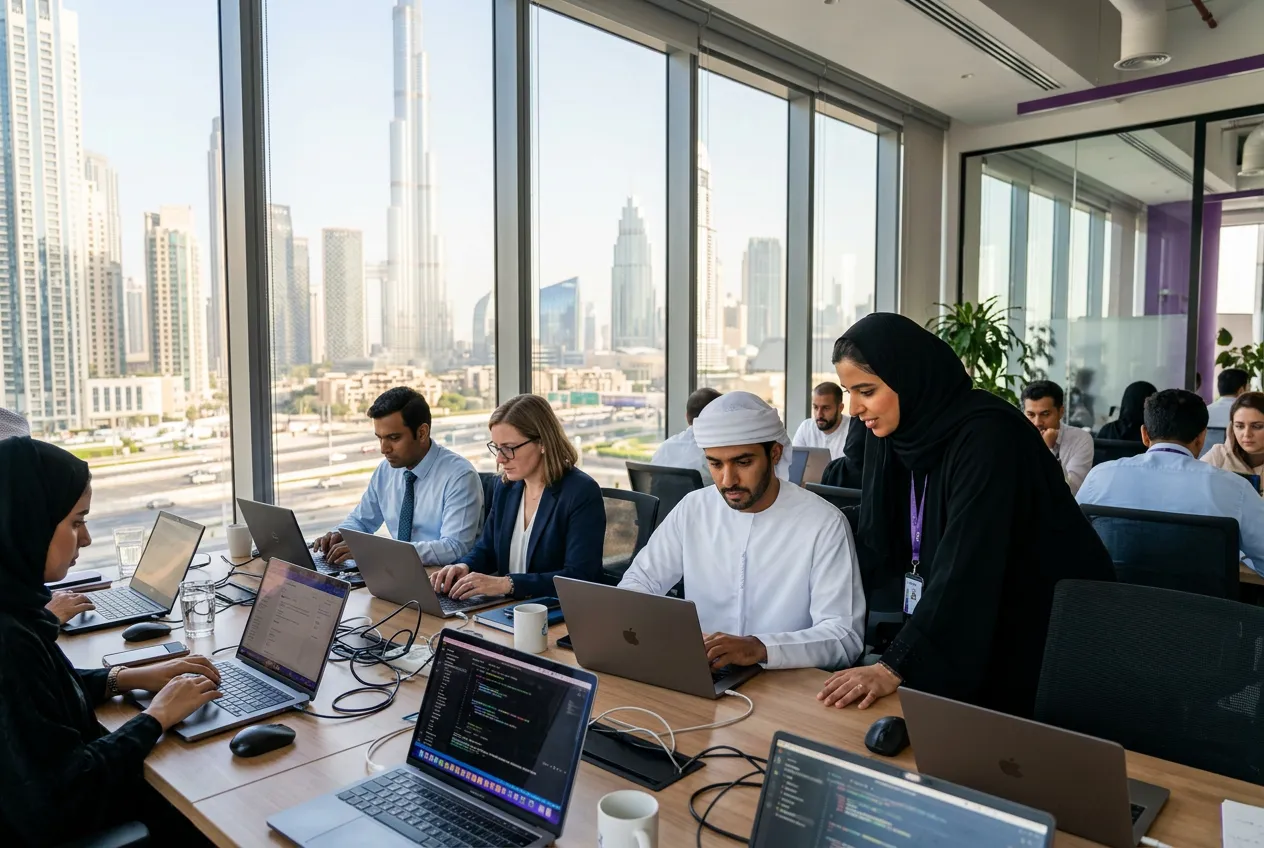
Why organisations here invest in cultural skills
People, not national labels
We discuss communication styles and habits, then remind everyone that individuals differ. Participants learn to ask and observe, rather than assume based on a passport.
Local etiquette done properly
Greetings, hospitality, titles, relationship building and Ramadan courtesies are explained with care and context, so newcomers show respect without anxiety about getting it wrong.
Rehearsal over explanation
Most of the day is spent practising: a first meeting with a government client, giving feedback across hierarchy, rewriting an email that landed badly.
Facilitators who have lived it
Our trainers have led teams spanning dozens of nationalities in the Gulf. They bring honest stories of misunderstandings and how they were repaired.
Certificate for attendees
Each person who finishes the session receives a TrainingInUAE.com completion certificate, ready for their personal development file.
A 90 day look at results
We choose an indicator with you, for example team survey items on inclusion or client feedback, and review it 90 days after the programme.

Cross Cultural Communication Training UAE that is rehearsed, not lectured
Knowing that some colleagues prefer indirect feedback is easy. Delivering a difficult message to one of them, in a way that keeps the relationship, takes practice. That is why the workshop gives most of its time to rehearsing situations people actually face.
Hear the friction points
We ask HR and team leads where misunderstandings tend to happen, such as feedback, deadlines, meetings or client relationships.
Bring a real situation
Participants arrive with one interaction that felt awkward or went wrong, which becomes material for the day.
A short frame
The trainer introduces one idea, for instance high and low context communication, with examples from Gulf workplaces.
Replay from both chairs
Pairs replay the situation, then switch sides so each person feels how the message lands from the other chair.
Agree team norms
Groups draft a few practical team agreements on meetings, feedback and response times that everyone can live with.
Revisit after 90 days
We look at the agreed indicator again and offer a short follow up for teams where friction is still showing.

Practice fills roughly four fifths of the session, through paired role plays, email rewrites, meeting simulations and group reflection. The trainer adds short frameworks between rounds and coaches tone, wording and timing.
- Laptops open from the first 15 minutes
- Your own documents, data and tasks
- A finished output from every lab
- Prompt library to keep using on Monday
What the cross cultural communication course covers
Eight modules start with self awareness, move through UAE and Arab business etiquette and finish with feedback, conflict and virtual teamwork. One day covers the core, and a second day adds deeper practice on client and leadership situations.
Module 1. Culture and your own lens
How upbringing, language and work history shape what feels polite, rude, efficient or slow to each of us, and why self awareness comes before understanding others.
🛠 Participants practise: Map your own communication habits and where they might be misread
Module 2. Styles without stereotypes
Useful dimensions such as direct and indirect speech, attitudes to time and hierarchy, used as conversation starters rather than boxes for nationalities.
🛠 Participants practise: Compare preferences in the room and discuss what surprised you
Module 3. Emirati and Arab business etiquette
Greetings and titles, the role of hospitality and coffee, relationship before transaction, gender courtesies and respectful conduct during Ramadan and national occasions.
🛠 Participants practise: Rehearse a first meeting and courtesy visit with an Emirati partner
Module 4. Language, accents and clarity
Speaking and writing so second language English speakers follow easily, avoiding idioms and sarcasm, checking understanding and using a few Arabic courtesies with care.
🛠 Participants practise: Rewrite a real email so a multinational audience reads it clearly
Module 5. Meetings across cultures
Why some colleagues stay quiet in big groups, how to invite every voice, handle interruptions and confirm decisions so nothing is lost in polite agreement.
🛠 Participants practise: Run a short simulated meeting and practise drawing out quiet members
Module 6. Feedback and disagreement
Giving and receiving feedback across hierarchy and styles, saving face, and raising concerns with a senior colleague or client without causing offence.
🛠 Participants practise: Deliver a difficult message to a peer with a different style
Module 7. Building trust with clients and partners
Relationship building, patience in negotiation, reading what a yes really means and following up appropriately with government and private sector clients.
🛠 Participants practise: Plan the relationship steps for one real client or partner
Module 8. Leading diverse and virtual teams
For managers: setting shared norms, fair inclusion, handling conflict that has a cultural angle and keeping hybrid teams across time zones connected.
🛠 Participants practise: Draft a team charter covering meetings, feedback and response times
Built around the mix in your organisation
A hospital, a family business and a regional tech hub each have a different blend of nationalities, languages and client relationships. We learn your mix first and choose scenarios that reflect it, without singling anyone out.
Understand your mix
We look at team composition, client base and known friction points with HR, focusing on situations rather than on any group.
Scenarios from your work
Role plays and emails are built from anonymised real situations, so the practice mirrors meetings and messages your people handle.
Level and language
Separate depth for new joiners, managers and client facing staff, taught in whichever of Arabic and English suits the room.

Built for every level
Leaders
Setting inclusive norms, communicating decisions across a diverse organisation and building trust with Emirati stakeholders and partners.
Managers
Running mixed teams, giving fair feedback across styles, resolving culturally tinged conflict and including remote colleagues.
Client facing staff
Etiquette with local and regional clients, reading signals in meetings and following up in the right tone.
New arrivals and new joiners
A practical first guide to UAE workplace etiquette, Ramadan courtesies and working smoothly with many nationalities.
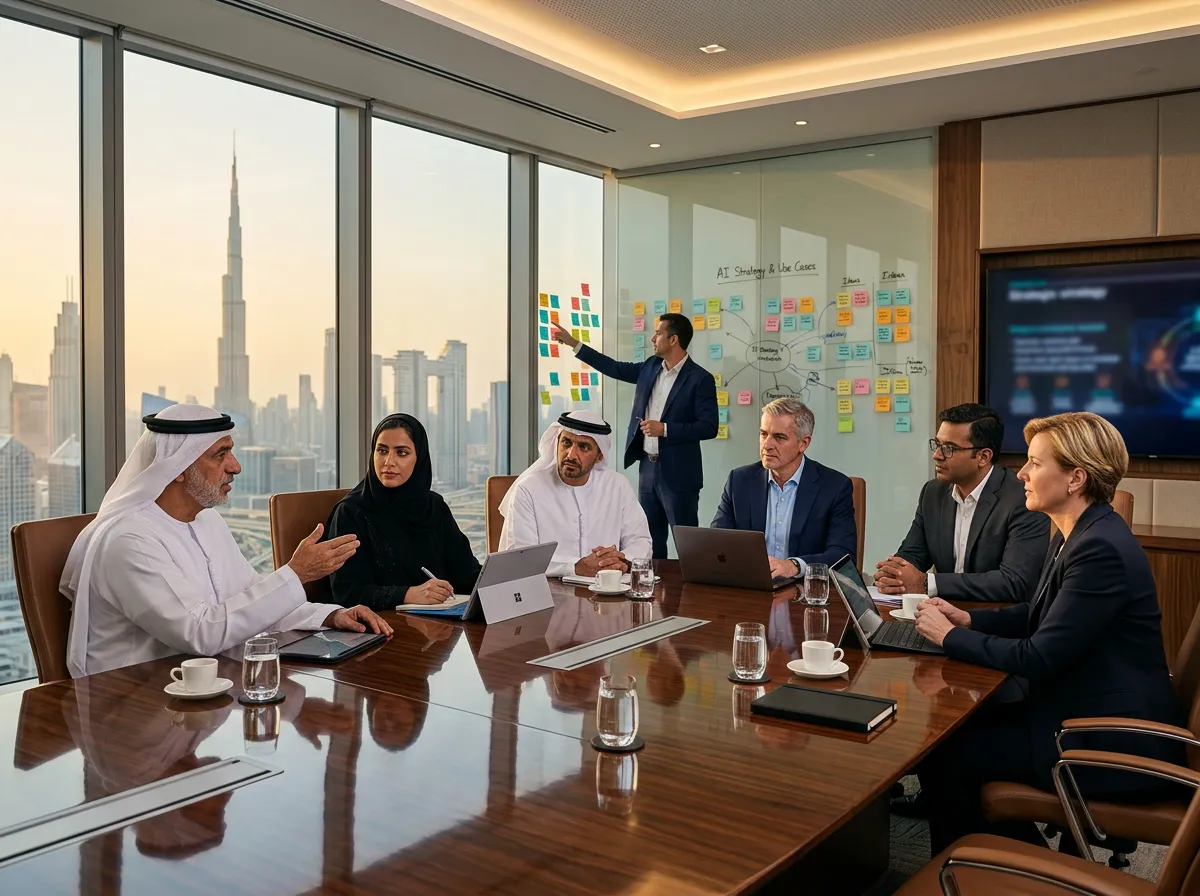
Recognition for completing the workshop
Completing the programme earns every attendee a TrainingInUAE.com certificate listing the communication skills practised. It serves as an internal training record for HR files and is not an accredited language or academic qualification.
- Issued to every participant who completes the hands on labs
- Shows the programme name, hours, tools covered and date
- Digital PDF, ready to add to LinkedIn and HR records
- Attendance and lab completion report for HR or L&D, on request

Sectors where cultural skill makes a difference
Every UAE employer works across nationalities, but in some sectors cultural misunderstandings show up quickly in client feedback, safety or team performance. These are the teams we work with most.
Hospitality and tourism
Guest facing and back of house teams serving visitors from around the world while working alongside colleagues from many countries.
Healthcare
Clinical and patient services staff communicating with patients and families from many backgrounds, often through a second language.
Federal and local government
Teams serving a diverse public and expatriate staff working closely with Emirati colleagues and leadership.
Construction and engineering
Multinational site and project teams where clear instructions and respect across crews matter for quality and safety.
Banking and professional services
Relationship managers and advisers building long term trust with local, regional and international clients.
Regional headquarters
Multinational offices whose teams coordinate across the GCC, Asia, Europe and beyond on daily video calls.
Teams our trainers have worked with













Plus 400+ enterprise clients across 16+ countries.
Facilitators with Gulf team experience
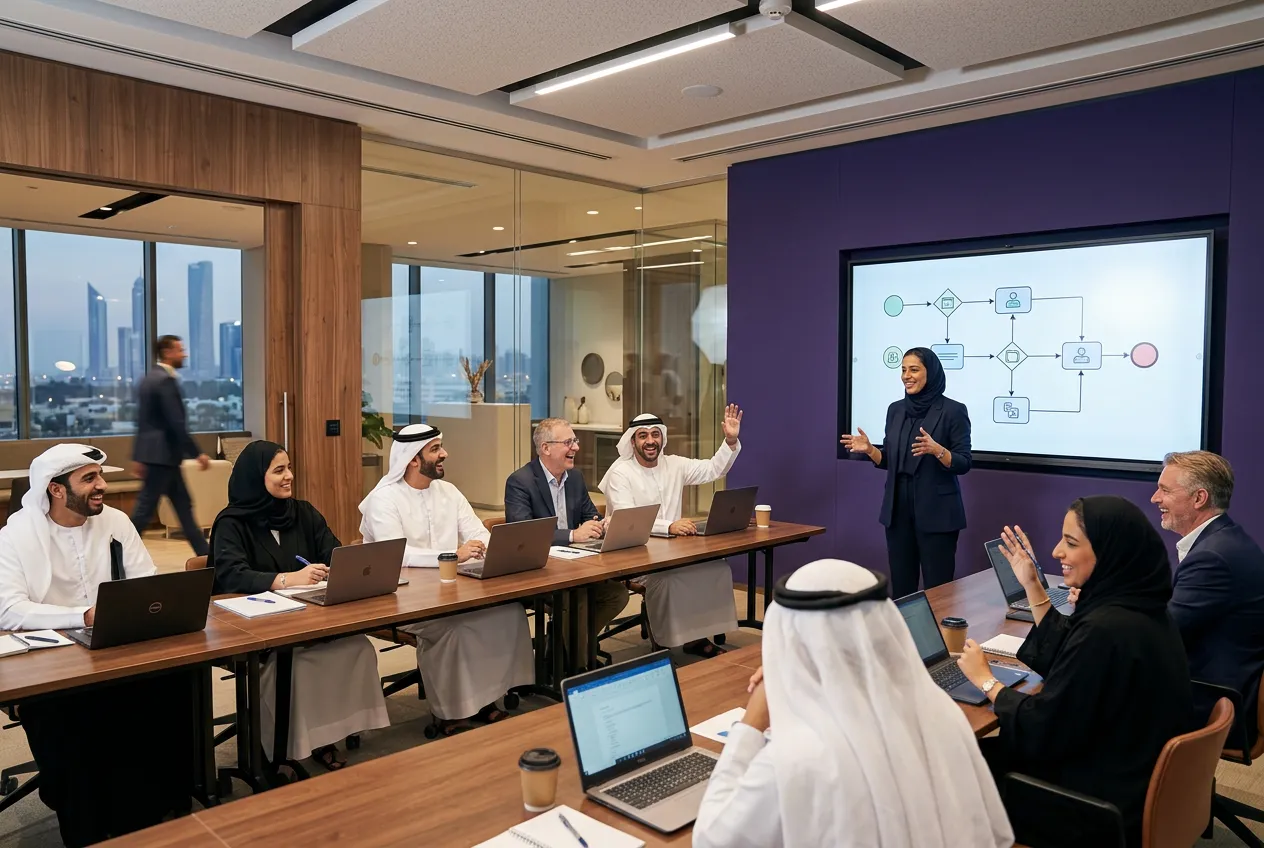
Every facilitator on this programme has managed multinational teams, served Emirati and regional clients and worked in Arabic and English. They teach with warmth, humour and practical stories rather than lists of rules.
Leadership and management faculty
For managers, senior leaders and leadership offsites
- Senior people who have run teams and led change
- Drawn from a visiting faculty network across 9 IIMs
- Coaching, decision making and difficult conversations
- English, Arabic or bilingual delivery
Sales and customer trainers
For sales, account and service teams
- Practitioners who have closed deals and run sales teams
- Role plays built on your real deals and customers
- Discovery, objection handling and negotiation
- B2B, retail and hospitality experience
AI and digital trainers
For AI adoption and productivity programmes
- 17+ years in AI and corporate training
- Have trained 200,000+ professionals in 16+ countries
- Copilot, ChatGPT, Claude and Gemini on real work
- Part of a pool of around 300 trainers worldwide
Why cultural skills matter in the UAE
The UAE is one of the most diverse workplaces in the world, with residents from more than 200 nationalities and expatriates making up the large majority of the population. Arabic is the official language while English is widely used in business, so most teams communicate daily across languages, accents and expectations. Federal Decree-Law No. 34 of 2023 on combating discrimination, hatred and extremism also sets clear legal expectations for respectful conduct.
Diversity becomes an advantage only when people can work through their differences calmly. Our Cross Cultural Communication Training UAE sessions concentrate on everyday behaviour: greetings, meetings, emails, feedback and client relationships, with Emirati customs explained respectfully. We deliver on site in every emirate, from Abu Dhabi to Fujairah, with a live online option for colleagues based elsewhere in the Gulf.
How the programme can be scheduled
Half day essentials
Self awareness, styles and local etiquette in three to four hours, ideal for onboarding groups.
One day workshop
The full core outline with extended rehearsal on meetings, feedback and client situations.
Two day programme
Adds leadership of diverse teams, relationship building with partners and a capstone simulation.
Onboarding module
A short recurring session for new arrivals, built into your induction calendar.
Live online
Interactive virtual sessions for teams working across countries and time zones.
Cross Cultural Communication Training UAE: FAQs
Will the training stereotype nationalities?
No. We talk about communication styles and habits, such as direct or indirect feedback, and always stress that individuals differ widely within any country. The goal is curiosity and better questions, not labels. Exercises use real situations rather than national caricatures, and the trainer steers discussion away from generalisations about any group.
Does the course explain Emirati business etiquette?
Yes. One module covers greetings and titles, hospitality, relationship building, gender courtesies and respectful conduct during Ramadan and national occasions. It is explained with context and warmth, so participants understand the reasons behind customs and feel confident in meetings with Emirati colleagues, clients and government partners.
Who should attend cross cultural training?
It suits new arrivals in the UAE, managers of mixed teams, client facing staff and leaders of regional offices. Many organisations run a short essentials session for every new joiner and a deeper workshop for managers and relationship managers who work closely with local and regional clients.
What lengths can the cultural programme run to?
The half day essentials session covers self awareness, styles and local etiquette. A one day workshop adds meetings, feedback and client rehearsal. The two day programme brings in leadership of diverse and virtual teams plus a capstone simulation. Short onboarding modules can repeat through the year.
Can Cross Cultural Communication Training UAE be run in Arabic?
Yes. Choose Arabic, English or a blend of both. The blend is especially useful on this topic, because participants can explore how meaning shifts between the two languages. Materials, including the team charter template and etiquette notes, can be supplied in English and Arabic.
Is the training suitable for virtual and hybrid teams?
Yes. A module focuses on video meetings, written communication across time zones and keeping remote colleagues included. The whole programme can also run live online, with breakout rehearsals, for regional teams spread across the GCC and other countries.
How many people can join a workshop?
With one trainer for every 20 people at most, each participant rehearses and receives feedback. Bigger cohorts are split into repeat runs or given an extra facilitator. An awareness talk for a town hall or induction day works for any audience, however large.
Which factors shape the cost?
Participant numbers, programme length, the choice of venue or virtual delivery, language and how deeply we build scenarios from your own situations all influence scope. Adding an onboarding module or manager track also changes it. A short brief from you is enough for us to return a proposal in 24 to 48 hours.
Turn your diversity into a working strength
Keep exploring
Related programmes
The UAE’s one stop shop for corporate training. Hands on workshops delivered across Dubai and all seven emirates. Licensed UAE company registered in Ajman, with a delivery team based in Dubai.
- AI Agents and Automation Training: Build Working Workflows
- ChatGPT Training for Everyday Business Work
- Claude AI Training for Document Heavy Teams
- Microsoft Copilot Training for Microsoft 365 Users
- Prompt Engineering Training Across Every Major AI Tool
- Business Writing Training
- Communication Skills Training
- Presentation Skills Training
- All programmes
© 2026 TrainingInUAE.com. All rights reserved.